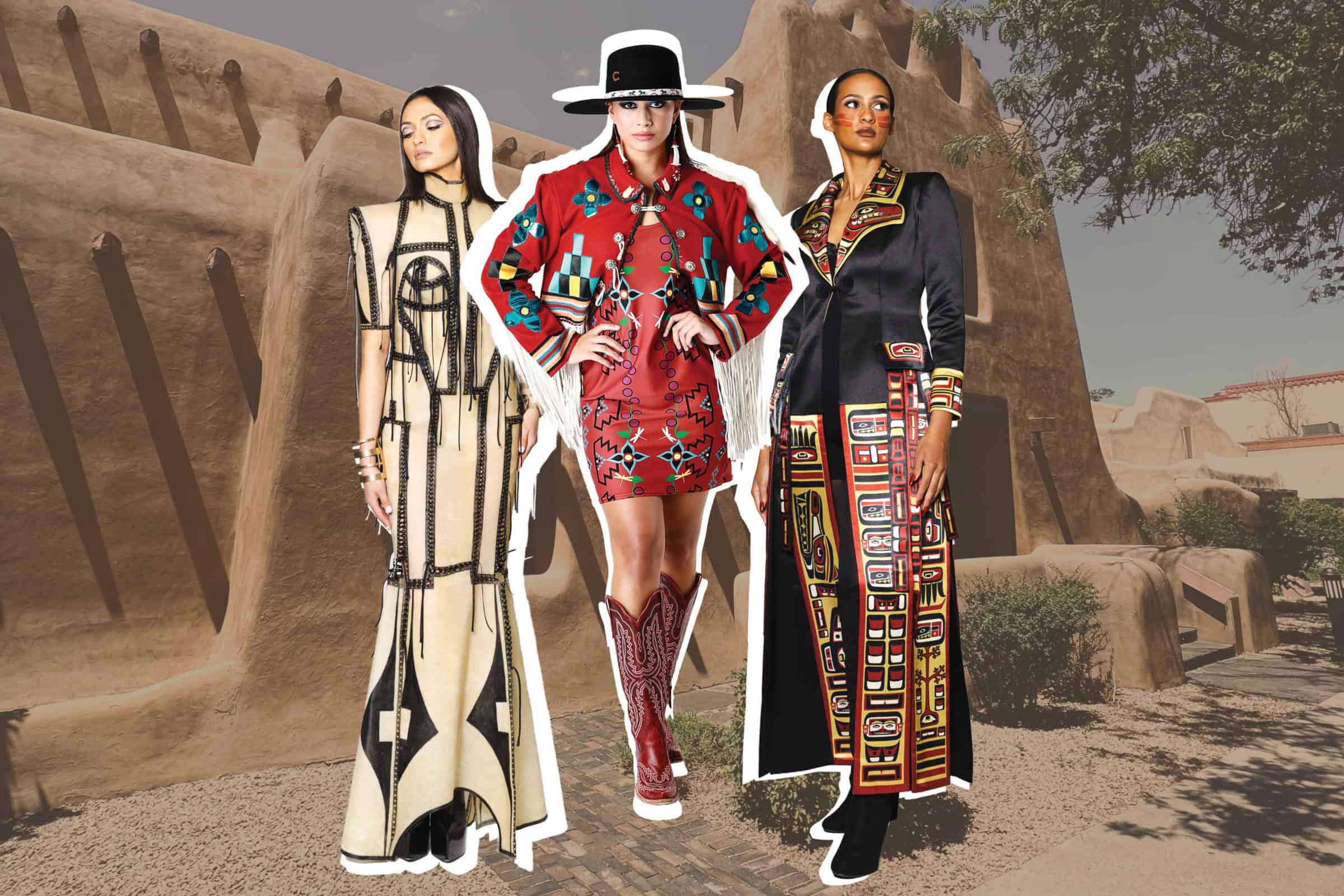
Before my first visit to Santa Fe, New Mexico, a couple years back, I was skeptical of all the hype. Worldly travelers and sophisticated locals alike raved about the destination’s mystical magnetism. I wondered: What is it about this small Southwest city that has everyone hypnotized? As soon as I stepped off the plane in Santa Fe, I felt the pull. And after experiencing the first-ever Native Fashion Week there in 2024, I too became unwittingly entranced by the Land of Enchantment. I’m not the only new devotee. In 2025 and 2026, Travel + Leisure readers crowned Santa Fe the No. 1 U.S. travel destination, and earlier this year, Condé Nast Traveler named it the second best shopping city in America.
So what makes this place — fittingly dubbed the City Different — so special? The scenic setting is no doubt part of the draw. With its earthy shades of clay, sand and terracotta, the unassuming yet attention-demanding high desert landscape looks like a watercolor come to life. (The picturesque panoramas provided endless inspiration for acclaimed abstractionist Georgia O’Keeffe, who spent 40 years there.) Set against that breathtaking backdrop is the striking adobe architecture that’s become synonymous with the American Southwest.
But the real allure, I’ve come to discover, is the incomparable creative community with Indigenous roots. Somehow, this city of some 90,000 residents supports countless Native American artists, designers and creatives whose studios, shops and galleries dot the local map. Here’s how Santa Fe became the undeniable epicenter of Indigenous style.
Photography by Wes Cunningham, Zoe Urness and Emily Seiler
First, a primer: Santa Fe’s history predates U.S. history. The country’s oldest capital city, it was founded by Spanish colonists in 1610. Long before their arrival, the Pueblo Indians called this place home and many still do; today, there are 19 federally recognized Pueblos across New Mexico. The state is also home to some of the oldest evidence of human presence on the continent, with fossilized footprints at White Sands National Park dating back 23,000 years. That historical context is important, because the confluence of Native and Spanish cultures created a unique, ever-apparent design vernacular.
“Santa Fe is completely unlike this world,” explains two-spirit designer, model, filmmaker and creative director Peshawn Bread (Comanche/Kiowa/Cherokee), who has lived there for 18 years. “It’s like you jump into a different time and space. Santa Fe is a hub for Native creativity because of the legacy of the people who for thousands of years lived here and practiced art — and still practice art today.”
That ancestral energy reverberates. Cultivating the continuum between past and present is the SWAIA Indian Market, now in its 104th year. The world’s largest, longest running juried Indigenous art show brings together nearly 1,000 artists representing more than 200 tribal nations from across North America. During that August weekend, the Santa Fe population swells, as more than 100,000 Native and non-Native art connoisseurs and collectors venture to the destination.
The featured creations — ranging from pottery and sculpture to painting and photography to fashion and jewelry — simultaneously honor tradition and embrace innovation. Consider, for example, the Beaded Birkin by design duo Sean Snyder (Ute/Navajo) and Adrian Matthias Stevens (Ute/Shoshone-Bannock/San Carlos Apache), who won first place in the beadwork/quillwork category at the prestigious art market. Requiring hundreds of hours and thousands of beads, pearls and sequins, this Indigenous take on the beloved Hermès handbag fuses ancestral craftsmanship with contemporary luxury.
The Nevada-based couple surrenders to the siren song of Santa Fe, as does seventh generation weaver Naiomi Glasses (Navajo). Her first-of-its-kind Ralph Lauren artist-in-residency catapulted her into the global spotlight, yet Indian Market remains one of very few shows where she and her brother, Tyler, sell their handwoven wares.
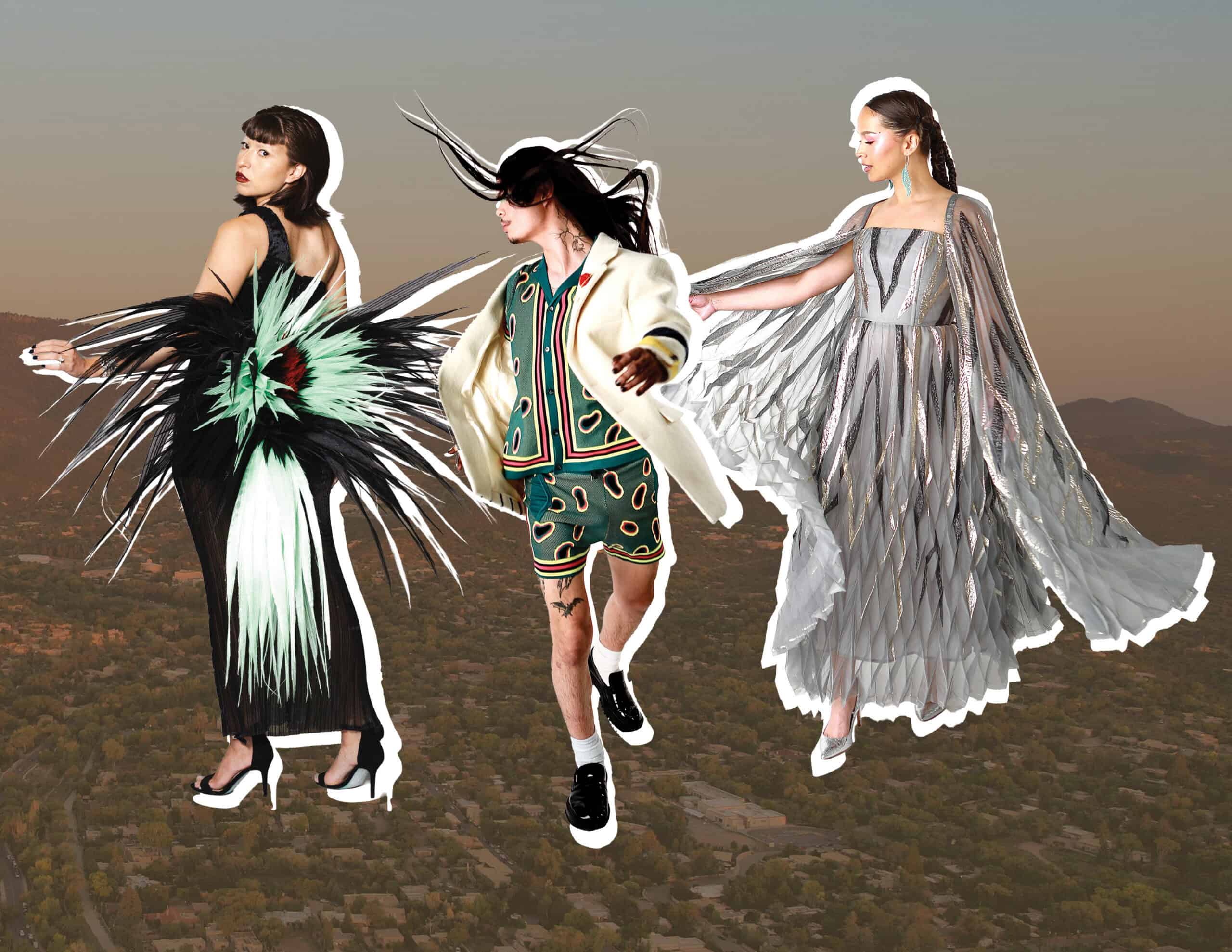
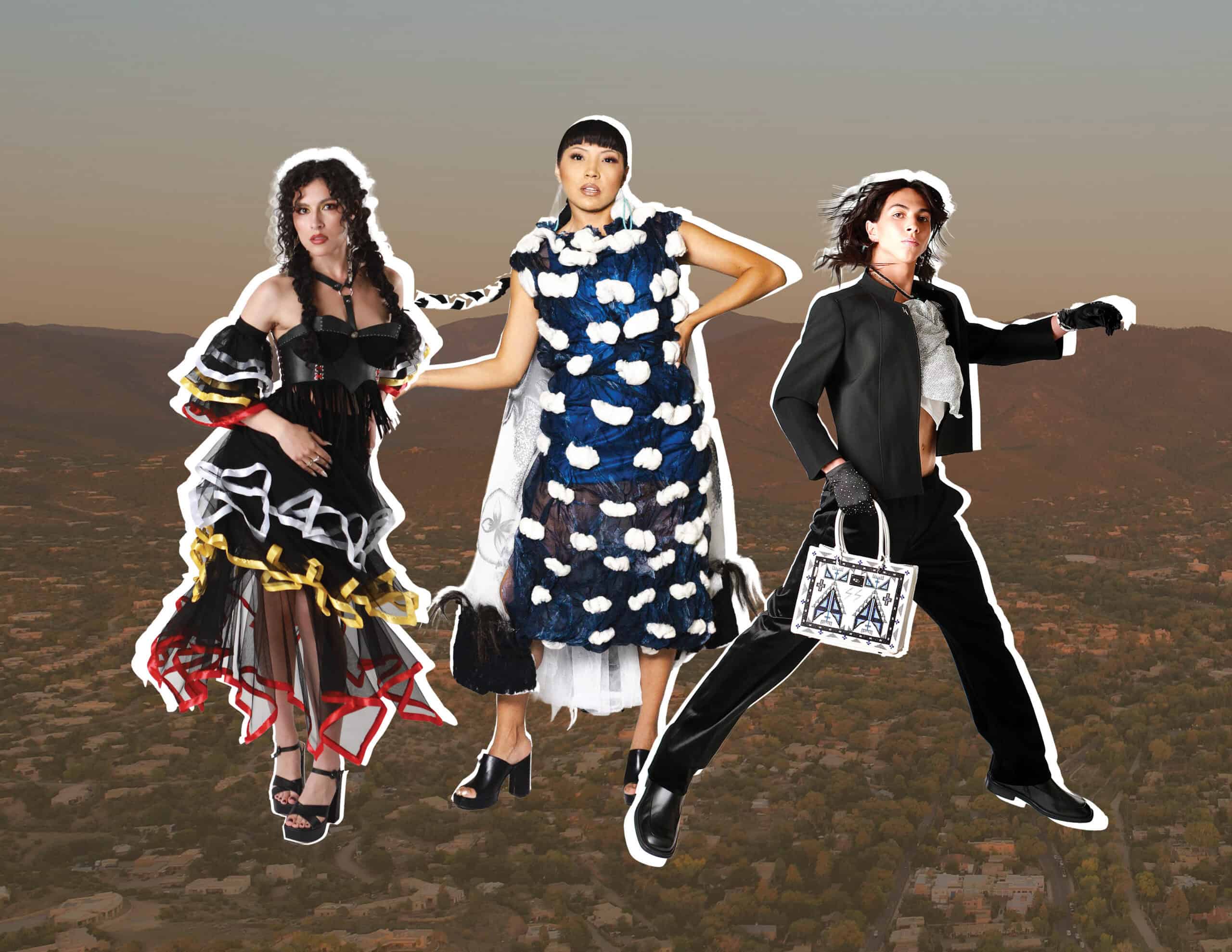
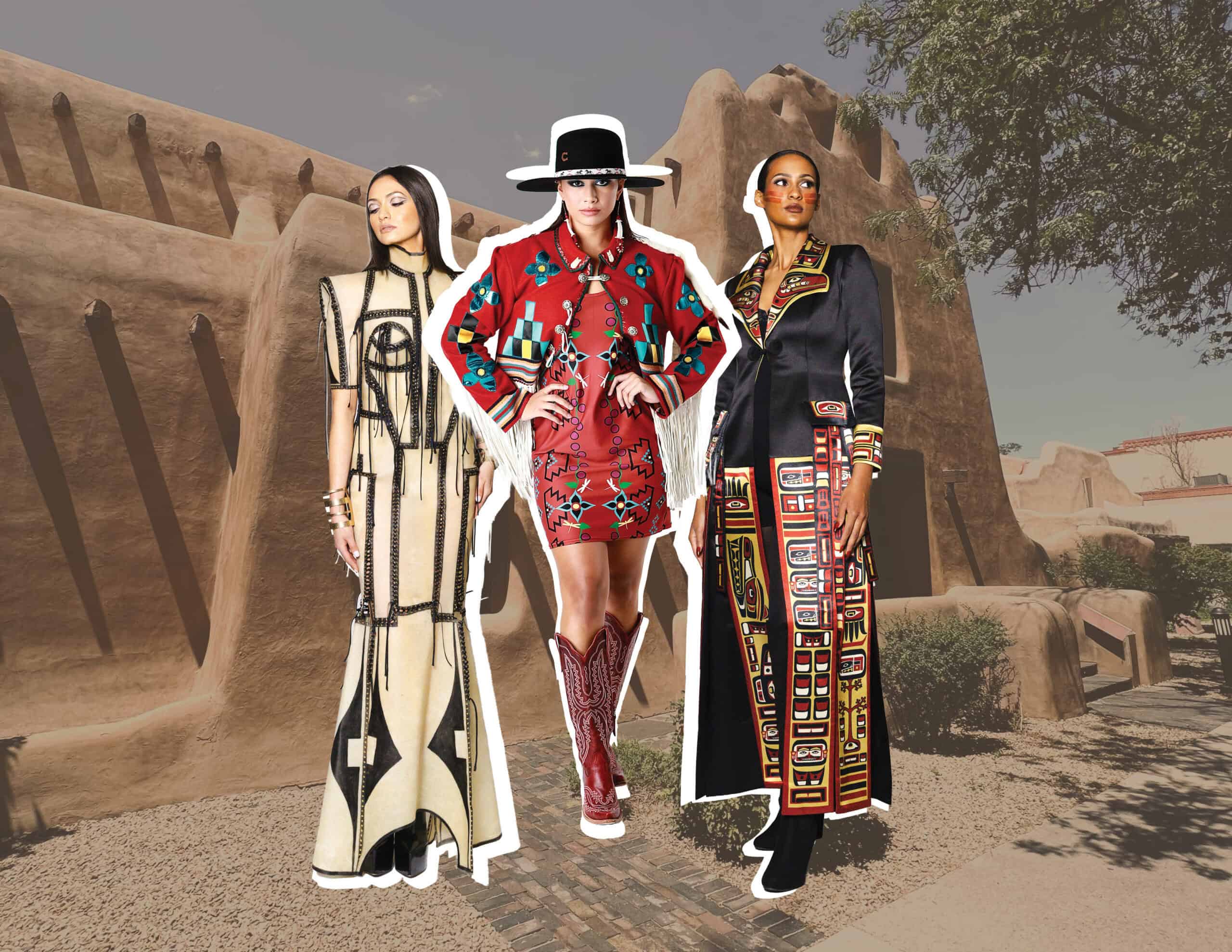
The popularity of the SWAIA Native Fashion Show, which closes out Indian Market, prompted the 2024 debut of Native Fashion Week. Twice a year, Indigenous designers, models, hair stylists and makeup artists convene in the City Different to showcase the latest looks — think couture pieces like a feathered technicolored frock by Jontay Kahm (Plains Cree) or a stitched rawhide dress by Jamie Okuma (Luiseño/Wailaki/Okinawan/Shoshone-Bannock). The varied visual presentation is a reminder that there’s no universal Indigenous style; each creation embodies its designer’s heritage, community and lived experiences.
A fixture of the local fashion scene, Bread has walked that runway, debuted their inclusive luxury House of Sutai brand there and even produced the storied Indian Market fashion show. The creative gene is in their DNA, as evidenced by their acclaimed artistic family, including late textile artist/educator Josephine Myers-Wapp, film producer Jhane Myers, ledger artist Wakeah Jhane and international fashion model Phillip Bread. Their Santa Fe impact is evident: In 1962, Myers-Wapp helped found the Institute of American Indian Arts (IAIA), the only U.S. college dedicated to the study of contemporary Native arts.
“Santa Fe is inspiring to so many people, because they come here and realize it’s possible to become successful making and selling art,” Bread says. “It’s really beautiful seeing the next generation coming together, experimenting and having fun. Art is just instilled here in a way that sticks with you for life.”
That’s not just anecdotal; it’s backed by empirical data. To wit: The Santa Fe metro area is home to the highest concentration of fine artists across the United States, per the National Endowment for the Arts, and it generates more than nine times the national per-capita arts economic activity, per advocacy organization Americans for the Arts.
The omnipresent collaborative, community-oriented spirit reflects an Indigenous worldview and resonates with other artists around town, like jewelry designer and silversmith Cody Sanderson (Navajo). He had a hardscrabble upbringing on the nearby Navajo Nation, the largest Indian reservation in the United States, and didn’t start making jewelry until his late thirties, in 2001. The first in his family to pursue a creative career, he learned from local artists like sculptor and jeweler George Rivera (Pojoaque Pueblo), who founded the Poeh Cultural Center to preserve traditional techniques.
These days, Sanderson — who has become known the world over for his bold, sculptural jewelry often adorned with stars and cheeky sayings — is the one passing down the knowledge. “I have an open studio, open book policy,” he says. “If you want to learn how to engrave, do inlay or set stones, come on by and I’ll show you.” He has had students show up from far-flung places like Japan. Their sole stateside destination? Santa Fe.
Like me, they can’t resist the pull of this place, whose allure can’t be fully explained. It’s the land. It’s the people. It’s the energy. “Santa Fe is considered a spiritual vortex, which can be found in different parts of the world,” says Sanderson, who often travels internationally for work but chooses to call the City Different home. “There’s just something about Santa Fe. It’s comfortable. It’s a small town where you know everybody. For me, Santa Fe just feels right.”