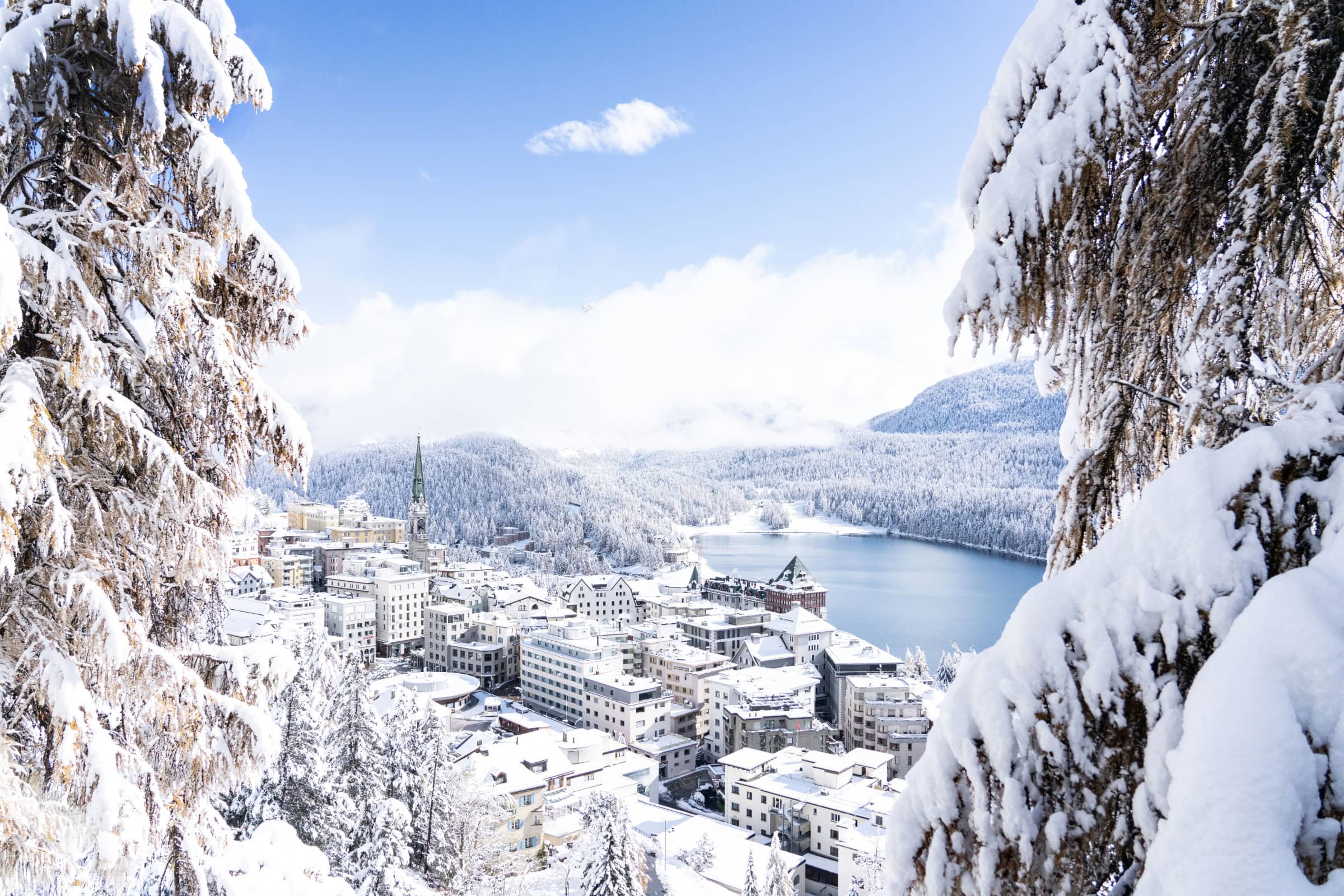
As the world readies for the Winter 2026 Olympics in Milan and Cortina d’Ampezzo, Italy, the spirit of alpine adventure is once again in the air — and on the ice. For the well-heeled traveler, winter is not a season to endure but a stage on which to perform: the sparkle of sunlight on fresh corduroy runs, the hush of snow falling outside a private chalet, the thwack of a curling stone meeting the ice with Champagne flutes at the ready.
Since the first Games in Chamonix, France, more than a century ago, the Winter Olympics have embodied grace, grit and grandeur — qualities that still characterize the world’s most exclusive cold-weather playgrounds. Today, luxury winter travel has evolved into something more experiential: heli-drops over Patagonia’s untouched peaks, cross-country tracks winding through Big Sky solitude, ice rinks framed by the glittering spires of Old Québec. Each destination fuses athletic prowess with indulgent escape, pairing Michelin-caliber dining and exceptional design with therapeutic spa sanctuaries.
From Austria’s exalted ski circuits to Switzerland’s chic curling salons, we chart five of the most decadent ways to chase winter’s edge — places where luxury is measured not in gold medals but in unforgettable moments carved in powder and ice.
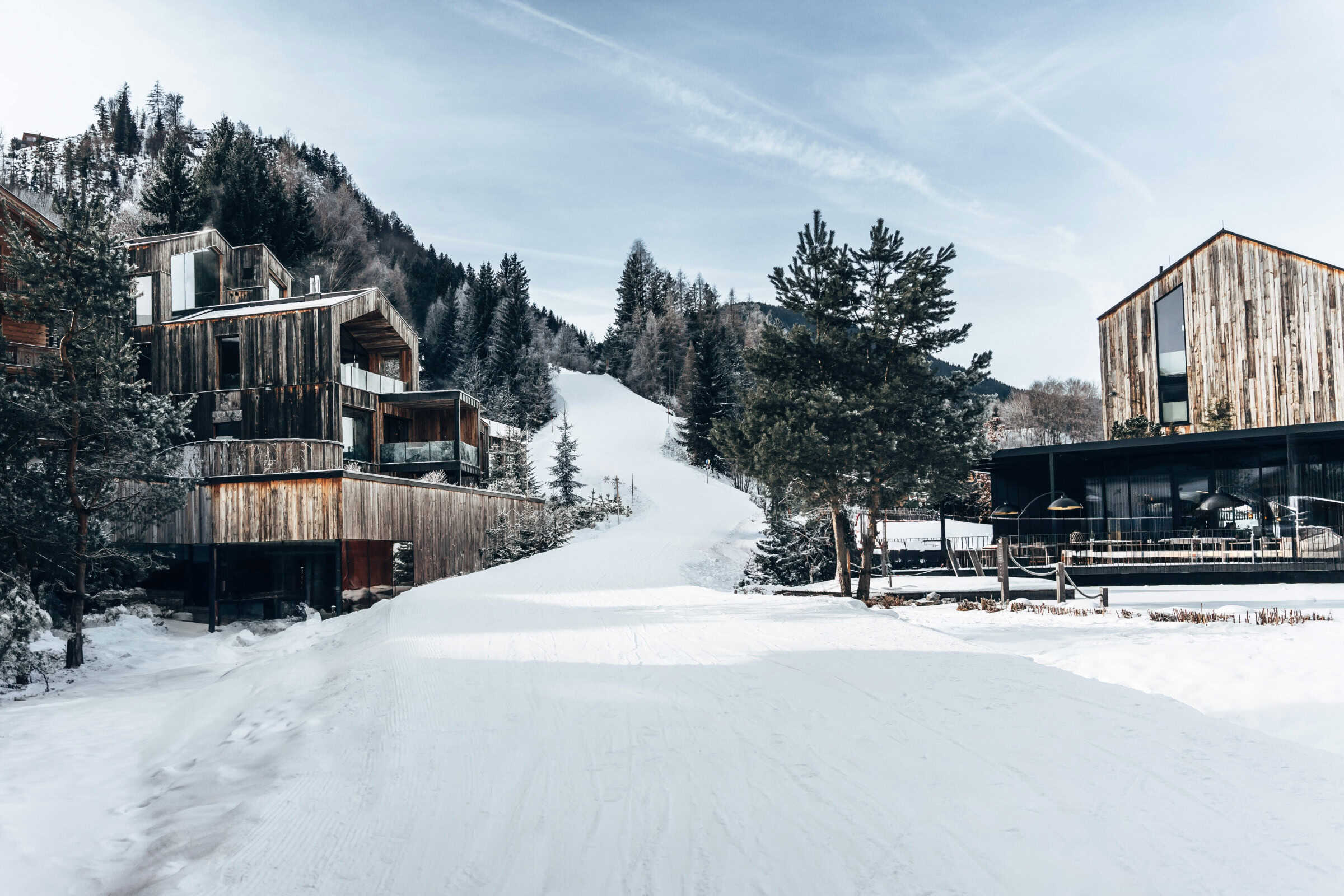
Photography provided by Forsthofgut Nature Hotel
Alpine Skiing
Where world-class runs end in a restorative retreat
For skiers in search of a place that weds top-tier terrain with discreet luxury, Leogang remains one of Austria’s best-kept secrets. Set within the vast Skicircus Saalbach Hinterglemm Leogang Fieberbrunn region, this mountain enclave connects four valleys and more than 168 miles of groomed runs — one of the largest linked ski areas in the Alps. Even with neighboring Saalbach Hinterglemm having hosted the 2025 FIS Alpine World Ski Championships, Leogang flies refreshingly under the radar. The destination is an insider’s alternative to Europe’s marquee resorts — Courchevel, Kitzbühel, St. Anton — offering the same adrenaline and sophistication without the see-and-be-seen attitude.
The skiing here is as varied as it is scenic. Gentle blue runs wind through snow-covered forests, while the Challenge, a 40-mile circuit encompassing 32 lifts in seven ambitious hours, is enticing for advanced skiers. Freestylers flock to Nitro Snowpark for its jumps, rails and boxes, while families find their stride on the new Funslope and Funcross tracks. And with the Skicircus joining the Epic Pass network for this year’s season, Leogang is poised to welcome more U.S. travelers than ever.
After the last lift, there’s no better refuge than the luxurious ski-in/ski-out Naturhotel Forsthofgut. Originally a forestry estate dating back to 1617, the property has evolved into one of Austria’s most lauded mountain retreats, with 109 rooms and suites that blur the line between nature and design. Its 61,000-square-foot waldSPA tackles post-slope rejuvenation with glass-walled saunas, a mineral-rich, Japanese-inspired onsen where steam curls through falling snow and heated infinity pools overlooking the Leoganger Steinberge range. Cryotherapy chambers chilled to -166°F, fascia-release therapy and a dedicated health wing offering IV infusions make this as much a high-performance lab as a spa. Guests alternate between hydrotherapy and herbal tea, mountain vigor and utter calm — turning recovery into an art form.
That same attention to detail carries through to the hotel’s restaurants. Evenings stretch from cocktails in the lounge to multi-course dining at silva, a 10-seat tasting room where the chef channels the surrounding forest in every plate. There’s contemporary Japanese fare at Mizūmi and guided tastings of biodynamic wines in the weinWALD cellar.
Beyond the hotel, skiers break for lunch at Hendl Fischerei, famed for its roast chicken and panoramic views, or AsitzBräu, the highest brewery museum in Europe. For serious gastronomy, Dahoam — a two-Michelin-star, four-toque Gault & Millau restaurant — showcases Pinzgau ingredients with modern precision. And new this season, Hüttengaudi Leogang, a stylish bar and restaurant near Leo’s Kinderland by the Asitzbahn valley station, brings a youthful, design-forward energy to après-ski.
From the start of the season, Leogang buzzes with cultural vitality. In January, the Three Days of Jazz Festival fills chalets and village squares with world-class improvisation, while weekly Asitz Winter Nights bring live music and torch-lit performances to the slopes. By March, White Pearl Mountain Days transforms the Skicircus into a full-blown snow party, where skiers pause between runs for DJ sets, saxophone interludes and open-air yoga. Together, these events capture Leogang’s rhythm — sport, style and soul — and prove that its off-slope allure shines as brightly as its legendary runs.
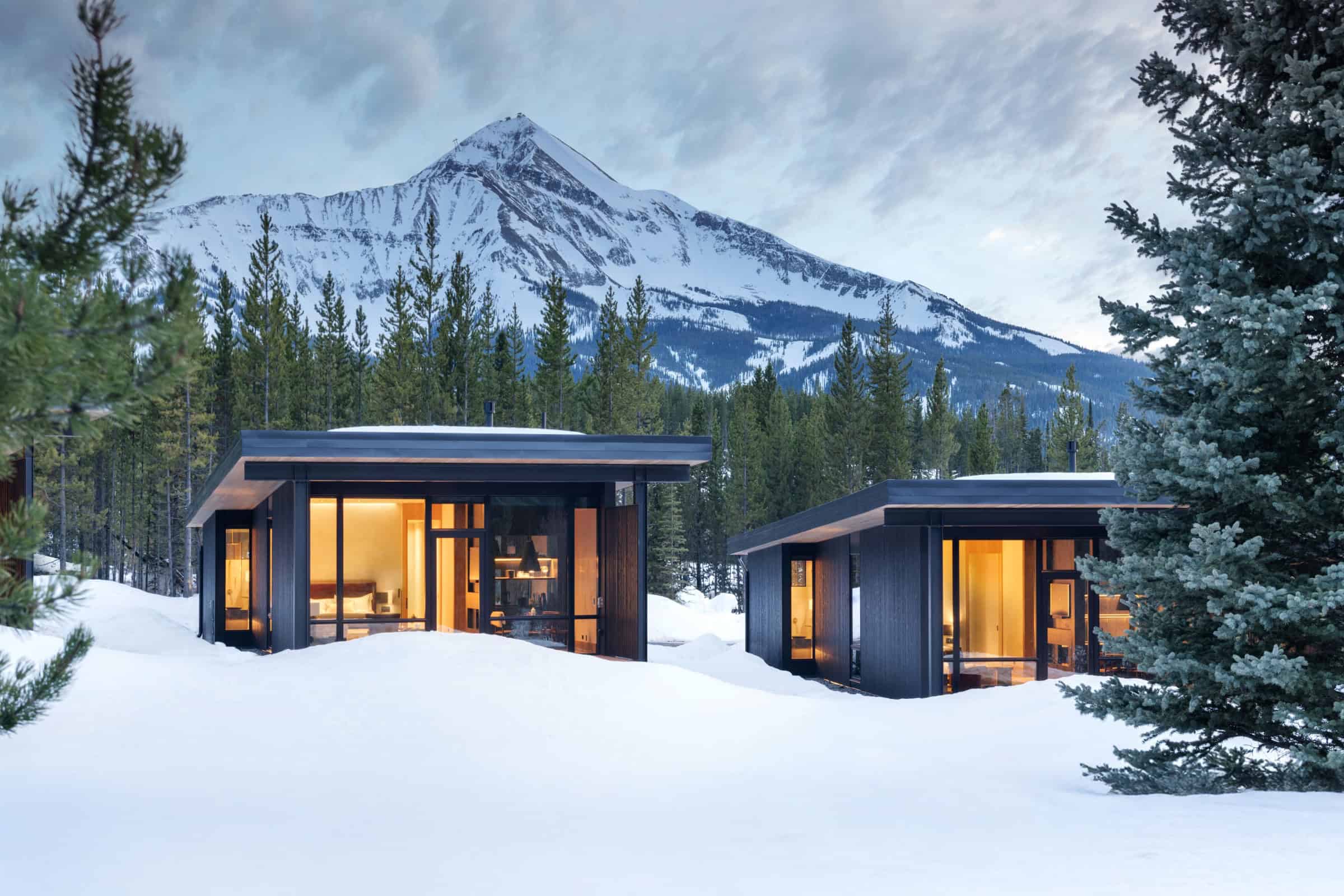
Photography provided by One&Only Moonlight Basin
Cross-Country Skiing
Where Nordic tradition meets Western grandeur
Cross-country skiing may be one of winter’s oldest sports, but in Big Sky, Montana, it feels reborn. Beneath the blue expanse, skiers slash silver lines through snowfields framed by timbered ridges and the jagged pyramid of Lone Mountain. The air smells of pine and wood smoke, the only soundtrack the hiss of skis. It’s a place where endurance meets elegance — a Western classic reimagined for the modern traveler.
At its heart lies Lone Mountain Ranch, a winter sanctuary that’s been welcoming travelers since 1915. The property grooms more than 53 miles of classic and skate trails, connecting wooded glades, open valleys, and postcard views of the surrounding Gallatin and Madison ranges. Morning brings the soft shuffle of skiers passing snow-dusted fences; by afternoon, sunlight filters through the aspens as guides lead daily clinics and private lessons on the ranch’s trails.
Adventurous guests can join guided day trips into Gallatin National Forest nearby or Yellowstone National Park. Conditions are famously reliable thanks to consistent snowfall and expert grooming, while the terrain caters to all levels.
When it’s time to thaw out, the ranch balances frontier charm with five-star sophistication. More than two dozen private log cabins dot the property like a constellation of cozy outposts. This is a choose-your-own-adventure kind of stay: a weekend away in the new Trapper’s Den, a 1915 cabin turned cigar-and-whiskey lounge with vintage vinyl and outdoor fire pits; an evening at Horn & Cantle saloon for huckleberry-glazed elk chops and trout rillettes; or a ride on a horse-drawn sleigh to a lantern-lit log cabin where prime rib feasts come with a side of cowboy singer serenades.
If Lone Mountain Ranch reflects Big Sky’s storied past, the arrival of One&Only Moonlight Basin signals its future. Opened in late 2025 as the brand’s first U.S. property, the retreat sits at 7,000 feet amid the pine forests and alpine lakes. The design favors understated luxury: soft, neutral palettes inspired by the snowscape outside and tactile furnishings in wood and wool. Curated artworks draw on regional craft traditions, giving each of the 19 cabins, four lodges and private mountain homes a quietly bespoke character.
When winter arrives, One&Only transforms into a haven for every pace and preference. More than 15 miles of trails invite snowshoeing, Nordic skiing and fat-tire biking led by seasoned local experts. Afterward, guests unwind in the resort’s tranquil spa, whose sauna, steam rooms and outdoor onsen echo the surrounding elements in cedar, stone and snow.
Evenings unveil the property’s most intriguing secret: Moonshack, a speakeasy-style whiskey bar hidden deep in the woods, reached on skis or snowshoes. Built with reclaimed lighting and antique fixtures, it radiates the warmth of a bygone Montana. A private gondola, meanwhile, links guests directly to Big Sky Resort, connecting Nordic trails, downhill runs and après-ski hideaways.
Big Sky Resort itself is in constant evolution. With 5,850 skiable acres, 4,350 vertical feet and 400 inches of average annual snowfall, it’s one of the largest and most technically advanced ski areas in North America. At the summit of Lone Peak, the new all-glass Kircliff viewing platform delivers a 360-degree panorama spanning three states and two national parks. Down below, culinary icon Grant Achatz brings Chicago’s Alinea magic westward with M by The Alinea Group, a four-month winter residency marrying experimental tasting menus with the raw beauty of the Rockies.
In Big Sky, cross-country skiing isn’t just a workout — it’s a meditation in motion. The trails here stretch as wide as the Montana sky itself, blending athletic grace with a sense of boundless calm. Between the swish of skis and the crackle of a fire waiting back at the lodge, the pioneering spirit endures — polished, present and utterly at peace.

Photography provided by Kulm Hotel
Curling
Where a heritage sport finds a glamorous new stage
Long before designer boutiques lined Via Serlas and snow polo lured Champagne-clinking crowds to its frozen lake, St. Moritz defined winter sophistication. Back in the day, curling was both sport and social ritual — played with poise against an alpine backdrop. For the uninitiated: Teams slide smooth granite stones toward a target, while sweepers brush the ice to finesse speed and line. The sport is similar to chess on ice — strategy, finesse and friendly rivalry in equal measure.
The story of curling in St. Moritz begins, fittingly, at the Kulm Hotel, the birthplace of winter tourism itself. In 1880, Scottish guests introduced the game to hotelier Caspar Badrutt, who imported stones from Scotland and organized early matches. By 1883, Switzerland’s first recorded game was underway, and by 1898, the St. Moritz and Davos curling clubs were chasing the Jackson Cup — a prize still awarded today.
That legacy plays out just steps from the Kulm’s marble lobby. Founded in 1929 on the hotel grounds, the St. Moritz Curling Club remains one of Switzerland’s most storied. Guests can book private sessions led by expert instructors who demystify everything from the release to the synchronized sweep. On a clear morning, the sheet gleams beneath the peaks; between ends, players pause for espresso or bubbly before strolling back to their suites.
Inside, the Kulm is a blend of heritage and high design. Its 150 rooms and suites, many refreshed by French interior designer Pierre-Yves Rochon, balance soothing color palettes with natural woods and windows framing cinematic views of Lake St. Moritz or the Corviglia slopes. The new Alpine Sports Lounge & Boutique, designed by Lord Norman Foster, rethinks the humble ski room as an “avant-ski” salon in Swiss stone pine, while the Kulm Spa entices with a lake-facing heated outdoor pool, FACEGYM’s altitude-minded Ski & Sculpt facial and signature collagen treatments. For deeper unwinding, the nearby Grand Hotel Kronenhof in Pontresina offers a cocooning spa with flotation room (complete with underwater music), saltwater grotto, Kneipp footpaths (an experience involving alternating cold and warm water basins), and more.
Dining is its own spectacle. Amaru, helmed by chef Claudia Canessa, brings Peruvian flair to the Alps, while the Foster-redesigned Kulm Country Club showcases three-Michelin-star chef Mauro Colagreco’s cuisine alongside trophies from St. Moritz’s bobsled and Cresta Run history. For pure atmosphere, the Bob Restaurant serves warming dishes beside the world’s oldest natural ice track still in use, the Olympia Bob Run St. Moritz-Celerina.
Curling’s spirit of camaraderie extends throughout the winter calendar. Suvretta House hosts a weeklong curling program each January with private coaching on its open-air rinks. Meanwhile, the frozen lake stages the Snow Polo World Cup (January 23–25), White Turf horse races and the I.C.E. St. Moritz concours d’élégance, with vintage Ferraris and Bugattis making laps across the same ice where curlers play.
As twilight settles over the Engadin Valley, players feather their brooms and sweep one final stone, its spin catching the last of the sun’s rays. In that moment, you understand why curling endures here: It’s a reflection of St. Moritz itself, equal parts tradition and theater.
Photography provided by Hôtel de Glace
Ice Skating
Where UNESCO splendor frames a ballet of blades
Few destinations capture winter’s enchantment like Old Québec, whose 17th-century ramparts and steep streets form a UNESCO World Heritage Site. Every December, this walled metropolis transforms into a living snow globe: church bells chiming through flurries, cafes flickering with candlelight, sleigh horses clip-clopping over cobblestones and the swish of skates cutting through fresh ice. Here, skating isn’t mere recreation — it’s part of the city’s heartbeat.
Place D’Youville paints the quintessential tableau. Set beside the Saint-Jean Gate, near Le Diamant theater and the Capitole de Québec, the open-air rink hums with laughter and the scent of roasted chestnuts. Families twirl to holiday music while locals pause after work, warming fingers around cups of chocolat chaud from nearby Café-Paillard. For skilled skaters, the Anneau de glace des Plaines d’Abraham offers a 1,175-foot oval flanking the Musée national des beaux-arts du Québec. And for those in search of peak precision, the recently opened Centre de glaces Intact Assurances is the city’s pride: an Olympic-grade complex with a 400-meter oval and shorter track for speed skating, panoramic windows, and group or private instruction by certified coaches. Even beginners can glide confidently after a concierge-booked lesson.
Beyond the Old City walls, the skating turns dreamlike. In Shannon, the Sports Chalet Trail winds beneath spruce canopies, while Lac-Beauport, near Le Relais ski resort, freezes into a 1.86-mile natural rink mirroring the surrounding peaks. Farther afield, Domaine Enchanteur in the Mauricie region stretches nearly 10 miles of forested trails lined with warming huts, while the Red Maple loop in Saint-Valère delights with 3.1 miles of Zamboni-groomed woodland.
After a day on the ice, retreat to Relais & Châteaux’s Auberge Saint-Antoine, a two-Michelin-Key haven in the Old Port. Owned by Québec’s venerable Price family, the 18th-century stone building blends museum-grade history with modern refinement: original beams, contemporary art and unique artifacts unearthed during the hotel’s own archaeological digs. At Coteau, the hotel’s farm-to-table restaurant, 30 varieties of herbs, fruits and vegetables share the spotlight with locally cultured butter and handcrafted ceramics. There’s an onsite spa, but guests seeking additional wellness experiences head to nearby Strøm Nordic Spa, where thermal pools steam beside the river and alternating hot-cold circuits revive chilled bones.
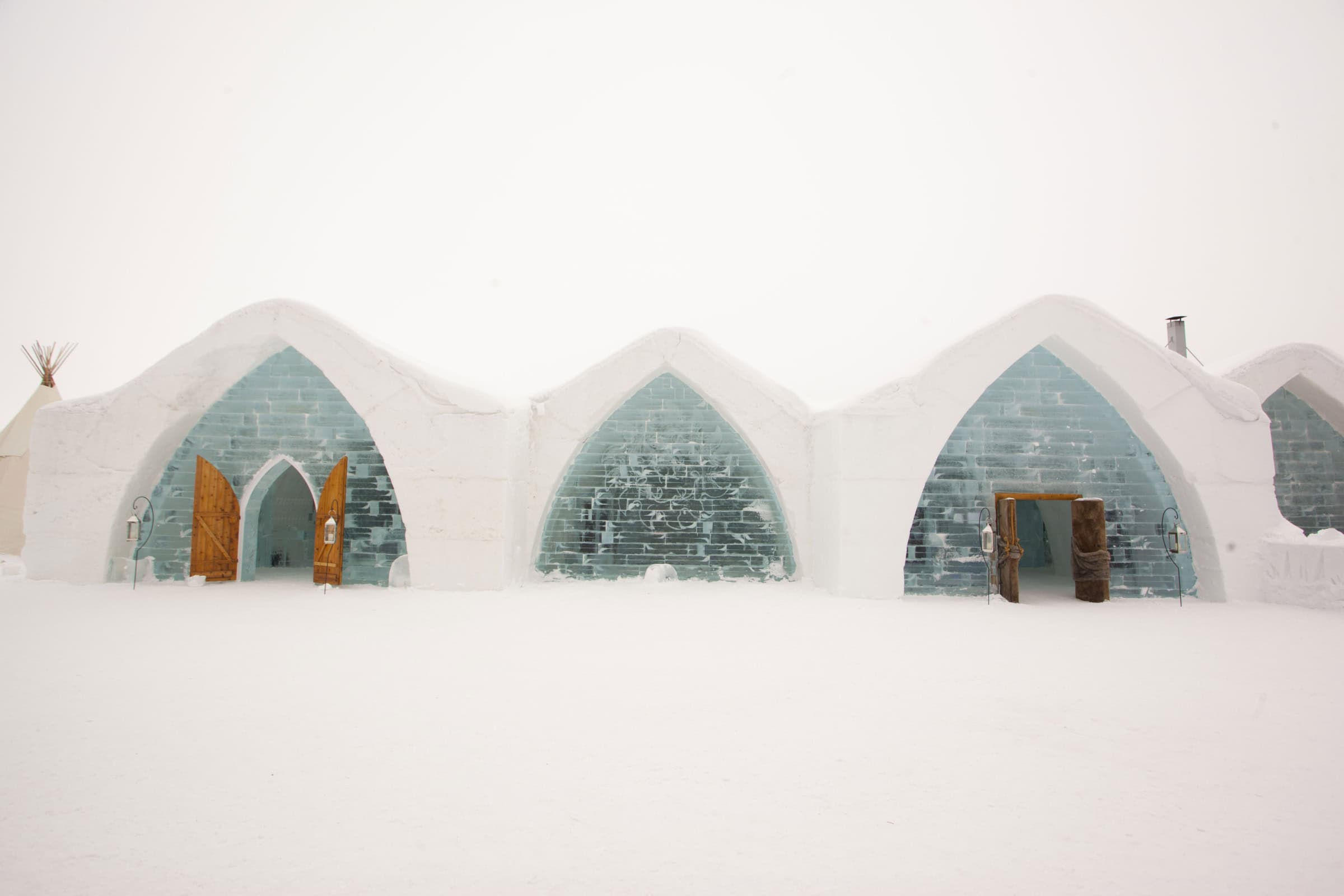
A mere half hour away is Hôtel de Glace, North America’s only lodging built entirely of ice and snow, offering a truly memorable stay. Reimagined every winter with a new theme, the Valcartier property features crystalline corridors, an ice chapel and suites chiseled by hand — some with private saunas and hot tubs. Overnight guests toast drinks in glasses made of ice before curling up in Arctic-grade sleeping bags; day visitors can simply admire the artistry of this fleeting masterpiece.
Québec’s passion for winter extends to the dining table, where chefs turn cold-season bounty into high art. The culinary landscape reads like a Michelin roll call: Tanière³, set in a 17th-century cellar, explores boreal flavors through a 15-plus-course tasting; Le Clan transforms northern terroir into haute cuisine; and beloved Laurie Raphaël remains the feather in the local Québécois’ gastro cap.
If the season here already feels like a celebration, that’s because it is. Every February, the Carnaval de Québec — one of the world’s largest — brings parades, ice sculptures and the iconic Bonhomme mascot. Adventurers can try ice canoeing on the St. Lawrence with seasoned guides or brave Au 1884, the historic wooden toboggan run atop Dufferin Terrace, where riders have been racing downhill for more than 140 years.
Québec City treats ice skating the way some cities treat coffee or transit: as a daily rhythm woven into local life. Rinks are simply part of the infrastructure here, a reminder that winter isn’t a disruption — it’s a season the whole city leans into.
Photography provided by Eleven Experience Rio Palena Lodge
Snowboarding
Where the edge of the world becomes your private playground
For snowboarders who’ve already carved the Alps and heli-dropped in Alaska, one final frontier remains: Patagonia. South of everything familiar, this wilderness of volcanoes, fjords and untracked snowfields offers a purity that borders on myth. It’s the rare destination where solitude and scale align, promising the kind of fresh powder — and perspective — that few will ever experience.
Logistur, a Santiago, Chile–based outfitter favored by affluent travelers, designs bespoke itineraries that set a new standard for backcountry luxury. Working with UIAGM-certified mountain guides (the highest recognition awarded all around the world) and Eurocopter AS350 B3 helicopters (the same models used in high-altitude Himalayan rescues) the company has access to more than a million acres of untouched Andean terrain. Between late September and mid-November, when the austral spring brings bluebird skies and deep, stable powder, guests trace first descents across granite spires and open bowls that have never seen skis, let alone snowboards.
Each journey is crafted from the ground up: Travelers can spend three nights feasting like royalty in the Colchagua Valley, with exclusive wine and culinary experiences designed by a private chef and enologists at Montes, Neyen de Apalta and Vik vineyards, before warming up with heli-laps at Valle Nevado or Portillo in Central Chile. From there, globetrotters can fly to northern Patagonia and transfer by private charter to an elite guest house set deep in a temperate rainforest.
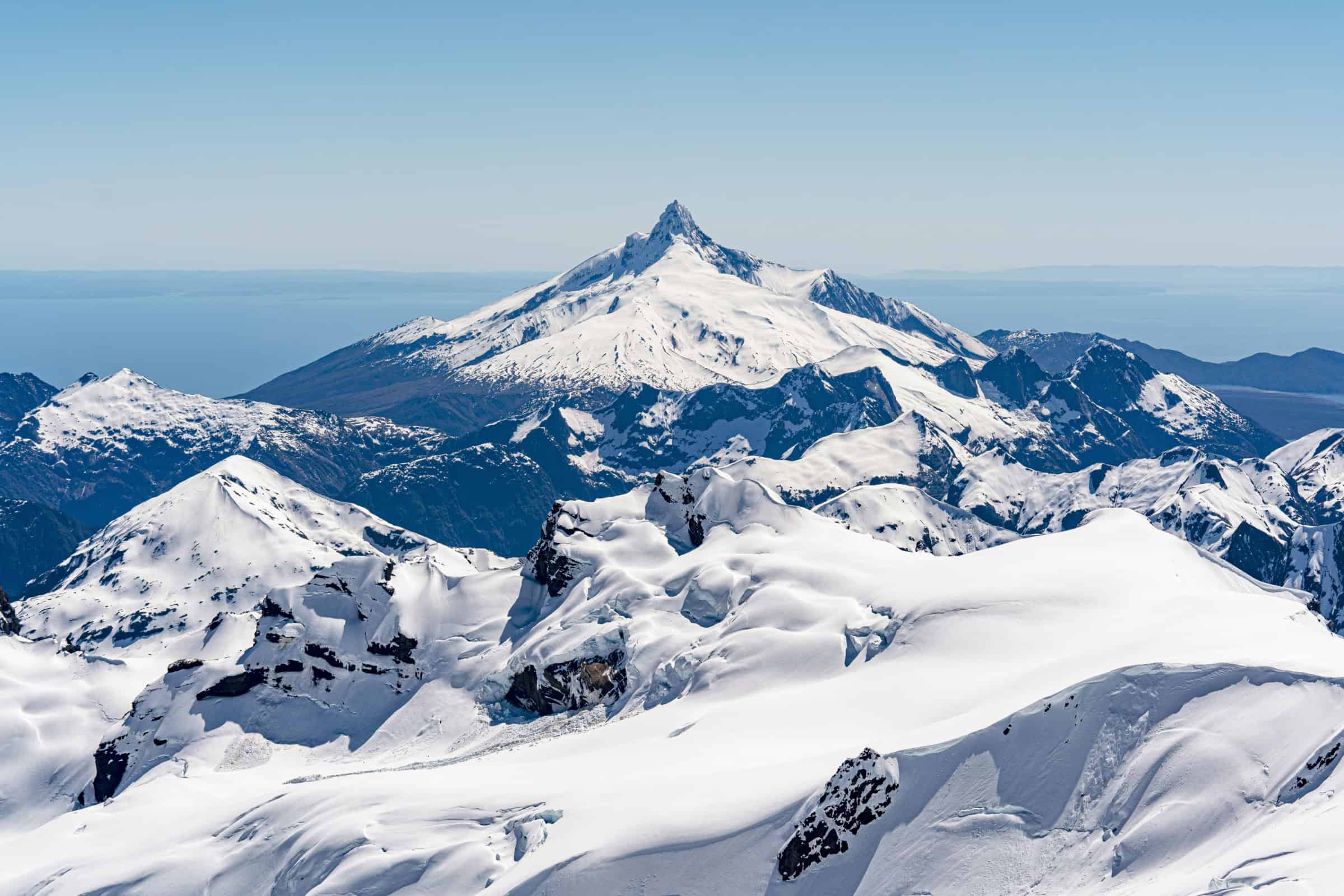
At Eleven Experience’s Rio Palena Lodge, boarders lift off from a riverside heli-pad toward peaks that rise like shark fins above the Palena Valley. Days unfold in rhythm: an early-morning avalanche briefing, hours of surfy descents through knee-deep powder, then pisco sours in the wood-fired hot tub as condors circle overhead. The terrain is as varied as it is vast — wide-open fields for freeriders, narrow chutes for the more adventurous and gentle slopes for riders who like to take it slow. Evenings promise slow-grilled Patagonian lamb and fine Chilean wine.
Barraco Lodge, on the shores of Lake Tagua Tagua, offers another spectacular counterpoint. Here, Logistur’s guests pair heli-boarding with white-water rafting on the Futaleufú River, horseback rides through native forests and jet-boating to the Pacific. The guiding team — mountain veterans fluent in both safety protocol and local lore — reads the landscape like a map in motion, adapting routes to snowpack and visibility. And because every program is private, there are no crowds, no schedules, no boundaries — only the next perfect line waiting beyond the ridge.
Mawida Adventures, based in Pucón at the gateway to northern Patagonia’s Lake District, curates trips that also fuse mountaineering spirit with Chilean warmth. Director Rodrigo Vera, a former instructor for the Chilean Army’s mountain division, and his handpicked team of certified guides, specialize in volcano descents on both active and dormant cones (Quetrupillán, Calbuco, Corcovado and more). Between heli-drops, guests can soak in hot springs and overnight in boutique estancias that blend Andean craftsmanship with Scandinavian restraint.
Both outfitters share a devotion to Chile’s wild grandeur and to the rare client who seeks not just bragging rights but genuine discovery. This is a place where days are measured in vertical feet and bottles of vintage Carménère wines; where “first tracks” might truly be the first in history. While the snowboarding alone is worth the trek, the streamlined logistics from Santiago to the southern fjords make getting there remarkably easy.
What sets Patagonia apart isn’t just the views; it’s the access. With so few riders on the terrain, guides can tailor every line, every pickup, every descent. For seasoned snowboarders, that kind of space is a luxury in itself.