Photography by Jackie Caradonio
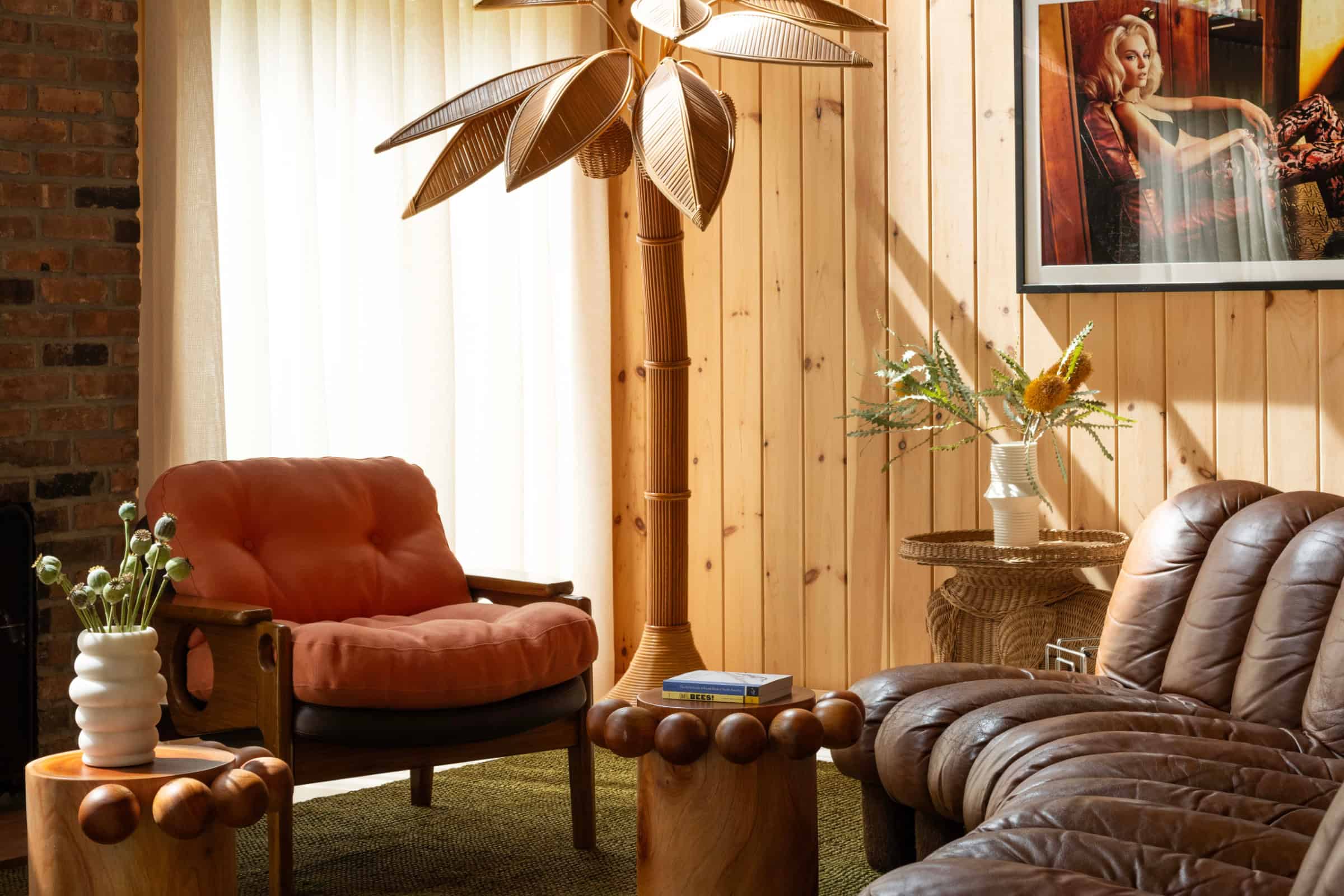
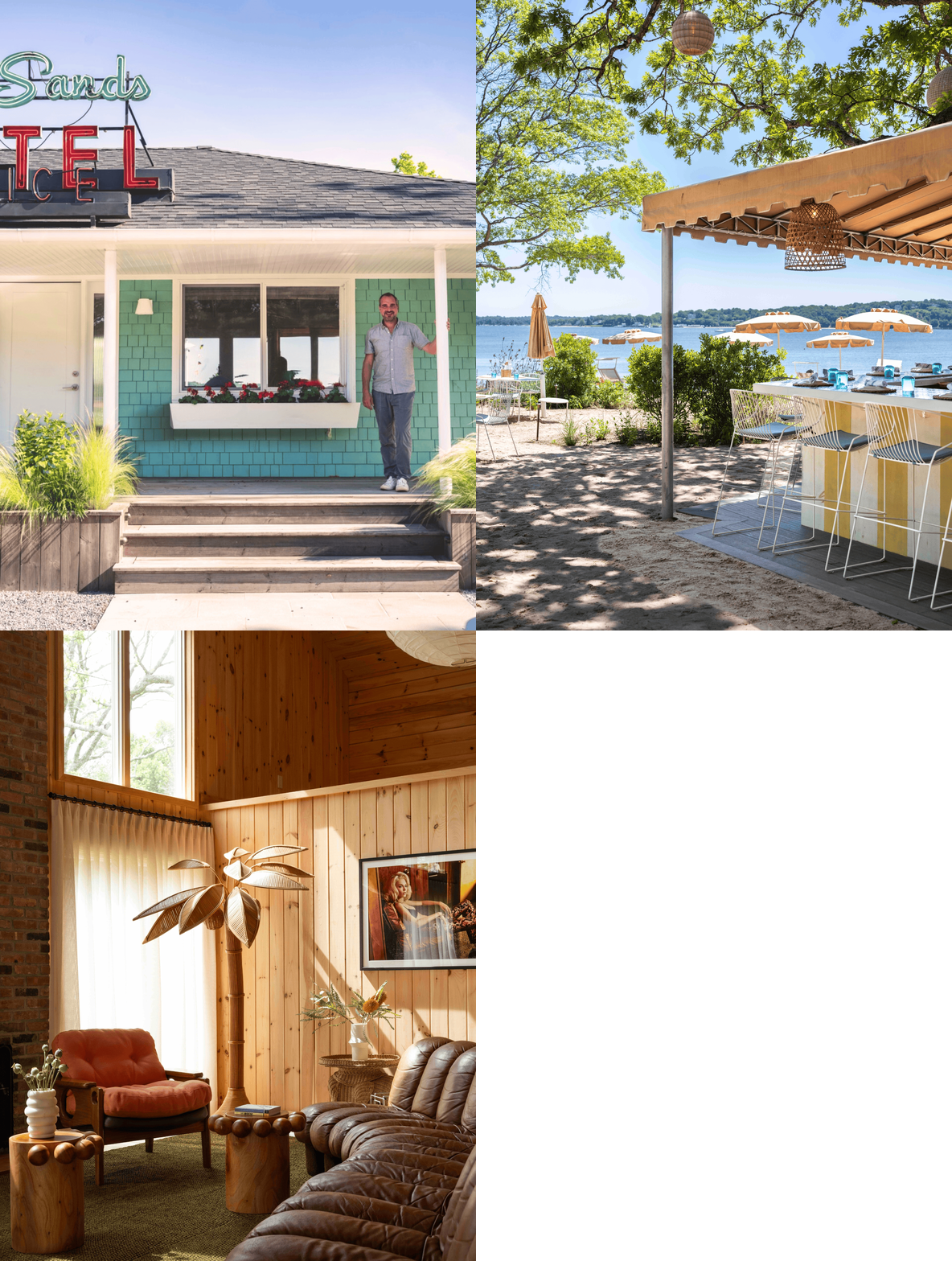
Silver Sands Motel & Beach Bungalows
The first time Alexander Perros turned down Silvermere Road, he was motivated by nothing more than curiosity. The street was marked by a sign that piqued his interest: “Silver Sands Motel,” it read, its capital S’s formed from the curving outline of a big blue seahorse. Down the long wooded lane, he passed a bog full of croaking toads, crossed over train tracks, and skirted a saltwater marsh where cranes and egrets perched gracefully. And then, crowned by blue-and-red neon at the end of the road, was Silver Sands.
Alex and his wife, Anna, had recently purchased a weekend home nearby, and this discovery felt like kismet. He was instantly captivated by the frozen-in-time motel, which he learned dated back to the 1950s. “It was completely serendipitous, but when I saw it, there was just something about it,” he says. He wasn’t the only one who thought so: Despite being rundown, the place was nearly full. Sure, most guests brought their own sheets — even their own cleaning supplies — but they were as loyal as could be, most of them regulars for decades.
“It had so much presence, so much charm, so much history. There was this unexplainable attraction.” Alex asked a local friend, a broker, if the owner might consider an offer. Not a chance, came the unequivocal answer. It was still owned by the family that had opened it, and they’d never sell. Alex told her to give him a call if that ever changed.
In January 2020, the call came: The motel’s second-generation proprietor had passed away, and his sister, then in her seventies, was running the place on a shoestring budget. The family might be inclined to sell after all.
The timing was perfect. Alex had recently left his role as president at Lindsey Adelman Studio and, having found some success in real-estate development, was looking for a new project that would satisfy both sides of his brain — a business endeavor that would allow him to flex his creative muscles. He put in an offer.
The Norumbega Inn
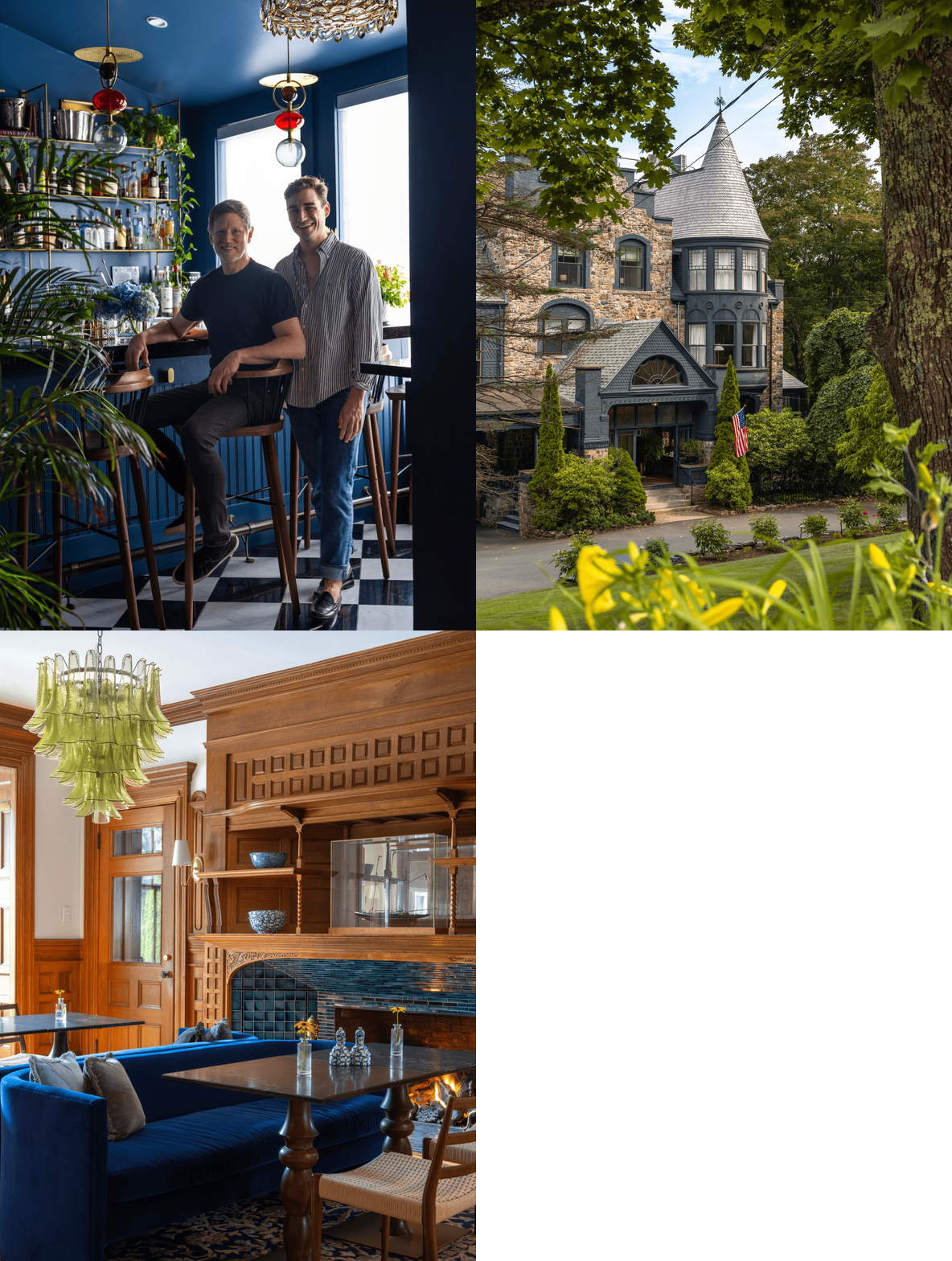
Inns are a dime a dozen in Maine. But a castle? Well, that’s something. Architect Will Tims and his partner, Brett Haynie, knew it was something from the moment they first saw it: Norumbega Castle, an 1886 manor set on a rolling hill, a mere stone’s throw from the Camden Harbor. It had been built by Joseph Barker Stearns, the inventor of the duplex telegraph, who was enlisted by Western Union to take his newfangled technology to Europe. There, he went from country to country selling his communication system and, during his time off, visited the great estates of the continent: Versailles, Buckingham, Balmoral.
When he returned home to Maine a newly minted millionaire, he was moved to build a castle that would be the envy of all. He filled his Shangri-La with his favorite possessions: his library of 10,000 books, his collection of Chiriquí pottery, his Queen Anne antiques. He named it Norumbega, after the fabled golden city mythologized by French explorers who settled the Northeast during the 1600s.
A century and a half later, Tims and Haynie turned down Norumbega’s porte cochere and waltzed (one must always waltz here) through its still-very-grand entrance. Technically they were guests — the castle had operated as an 11-room guesthouse over the preceding decades — but like the 16th-century settlers seeking the lost city of Norumbega, they were on their own reconnaissance mission: for an inn project.
Tims and Haynie were the only guests that wintery evening, the first of four nights they had planned to spend touring inns across Maine. On the market for two years, Norumbega had danced through their dreams ever since they saw its real-estate listing, but the castle’s scale and grandeur were intimidating. All hesitation disappeared the minute they walked through the door. They were spellbound. “There was a crazy storm that night,” Haynie recalls, “and the owners basically gave us the keys and left us in the castle by ourselves.” The couple opened a bottle of wine and wandered about, peeking into every room and envisioning what they might do with each space. “I remember saying to Will, ‘Even if we don’t buy this property, this was such a magical night,’” Haynie says.
What they found behind each door was inspiration: Stearns’s two-story library (empty but still impressive), original clawfoot tubs. The woodwork alone was a sight to behold. And even in the midst of a furious storm, the expansive grounds were undeniably swoon-worthy, with a romantic gazebo designed to match the main house. When the sun came up the next morning, the storm had passed — but none of the sorcery of the previous night had worn off. This was their magic castle. Though they went on to tour the remaining seven inns on their itinerary, their search was already over.

The George
They say when one door closes, another opens. Rarely, however, do the two events happen in the same day. But in 2016, just as beauty mogul Bobbi Brown was closing the door on a 22-year career at Estée Lauder, her husband, Steven Plofker, invited her to step through her next one. It led to an inn.
To hear Brown tell it, that day went something like this: “I called Steven from my office and told him I was leaving Bobbi Brown Cosmetics, and he immediately came out to meet me in the city,” she recalls. “He told me he had bought a building and said, ‘Why don’t we turn it into a hotel?’” Never mind that the couple had never dreamed of, or even talked about, becoming hoteliers. “It was the first time I heard words like that come out of his mouth,” Brown says. “I looked at him and said, ‘Let’s do it.’”
Constructed in 1902 as a private residence, the Georgian-style structure had been granted landmark status in 2008. The house had been operating as The Georgian Inn since the 1970s, and for years, Plofker had courted its owner, who remained noncommittal — until one fateful day. “He had entertained a few other offers that had fallen through, and he called me and asked if my offer was still on the table,” he recalls. “I said, ‘I’ll buy it tomorrow.’” The timing could only be kismet. Brown still had a few years left on a non-compete agreement with her former employer that prohibited her from starting any beauty brands. Why not run out the clock with a new creative endeavor? So what if the couple didn’t know the first thing about making a hotel? They had built Bobbi Brown Cosmetics together on gut instinct, banking on natural makeup at a time when red lipstick was all the rage, and there was no denying that they’d been outrageously successful. They’d do it again.
And so it was in this familiar can-do spirit that the couple embarked on their first hotel: as outsiders, keen to stay on the outside and do everything differently — their way — combining his real estate and renovation acumen with her artistic savvy. Things started off on the right note: The bones were good, and many historic details — the grand double staircase, the dentil moldings, the exquisite stained-glass window panels — were remarkably preserved. Sure, the wallpaper was peeling, the carpet threadbare, but all of that was cosmetic. The duo played to their strengths, with Plofker spearheading the construction and Brown dreaming up the decor. He focused on the big picture. She targeted the fine details. And every decision was made together.
Text excerpted from The Inn Crowd: Artistic Getaways and the Modern Innkeepers Who Crafted Them by Jackie Caradonio, published by Monacelli (2025).