The blessing and the curse of being young is that you presume any minor ailment will work itself out. You sleep well, soreness doesn’t linger, hangovers are brief — so why worry? Then you get older, and less wine does more damage. The lower back doesn’t feel too hot. And, possibly worst of all, some of your clothes seem to have shrunk. How did this happen? Well, we know how it happened. Some of your youthful habits don’t adapt to aging. And, if you’re like me, despite endless talk in the news and on social media about wellness, wellness, wellness, you may have been reluctant to change.
For many years, my health routine, such as it was, could be described as relatively laissez faire: good intentions, a fair amount of procrastination and the occasional smoothie. A gentlemen’s squash game, which I tell myself occurs weekly, is really more of a monthly (or even quarterly) affair. “I like to swim laps,” I tell anybody who inquires about my exercise regimen. What I fail to add is that these laps happen only when I’m staying at a hotel with a pool, which is even less often than the squash game.
But the wellness industry comes for you, whether you want it to or not. I live in New York City and am bombarded with people walking around in technical clothing, as if this great city is one big workout class. These leisurewear partisans are usually drinking water from the largest bottle ever seen. Hydration doesn’t have to be part of your public personality, for goodness sake.
Yet despite these rants, I’m not as set in my ways as it seems. I recently went on a 10-day fasting retreat in Spain (Buchinger Wilhelmi in Marbella, for those interested). Though I approached it with a healthy amount of skepticism, the experience turned out to be surprisingly good. I survived on 250 calories per day, swam (those famous laps!) and lost enough weight that I could visit my tailor for some welcome alterations. Alas, this didn’t take permanently, and the fasting life didn’t translate to New York City. After a number of months, I had to visit the tailor again, and in a shameful turn of events, this time for alterations in the opposite direction.
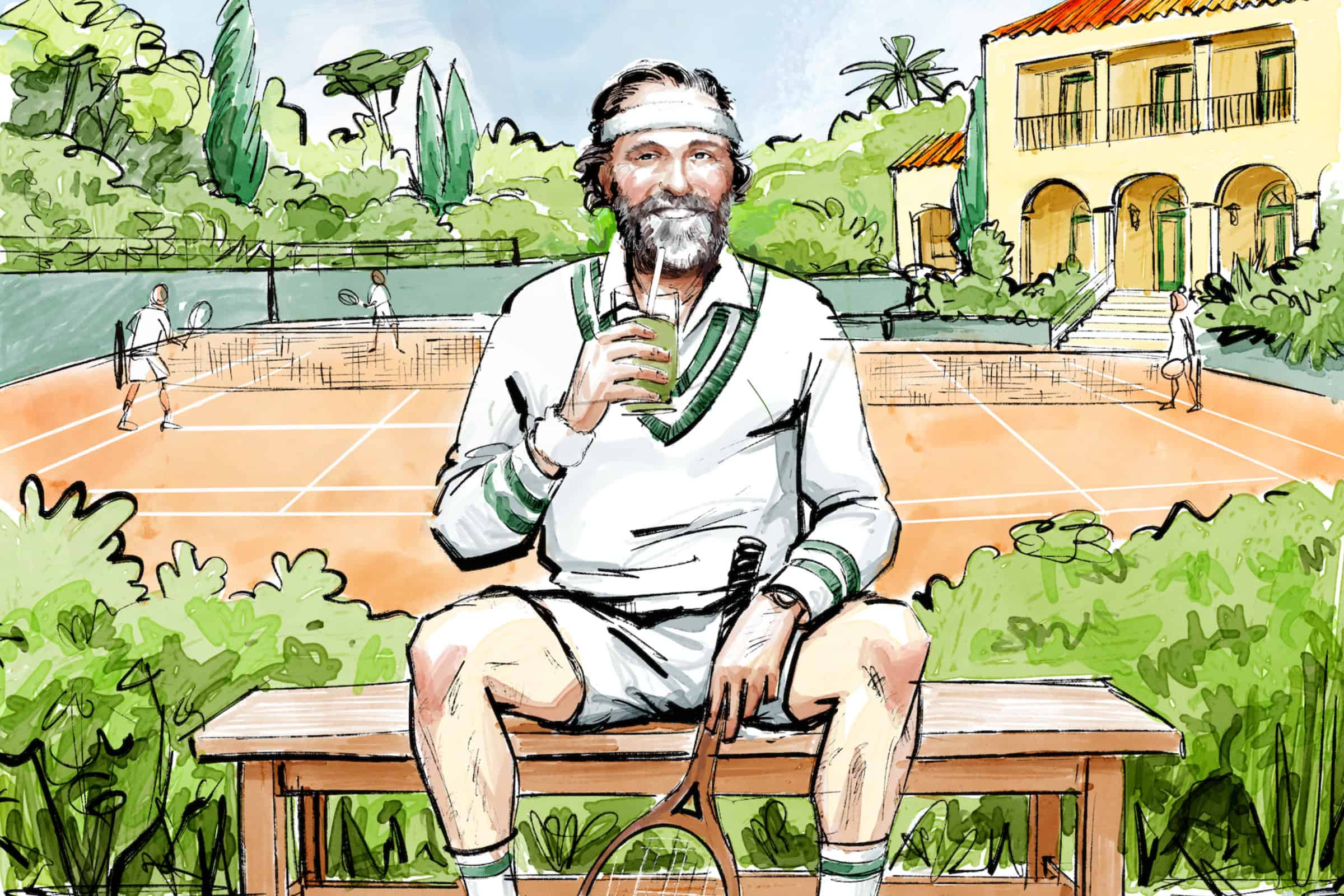
Then I turned 50, which tends to focus the mind. I knew some things had to change. So I returned to the fasting clinic, this time with a more ambitious agenda. Not only would I fast, I would bring my tennis game out of retirement and even — perish the thought — dip my toe into the world of Pilates.
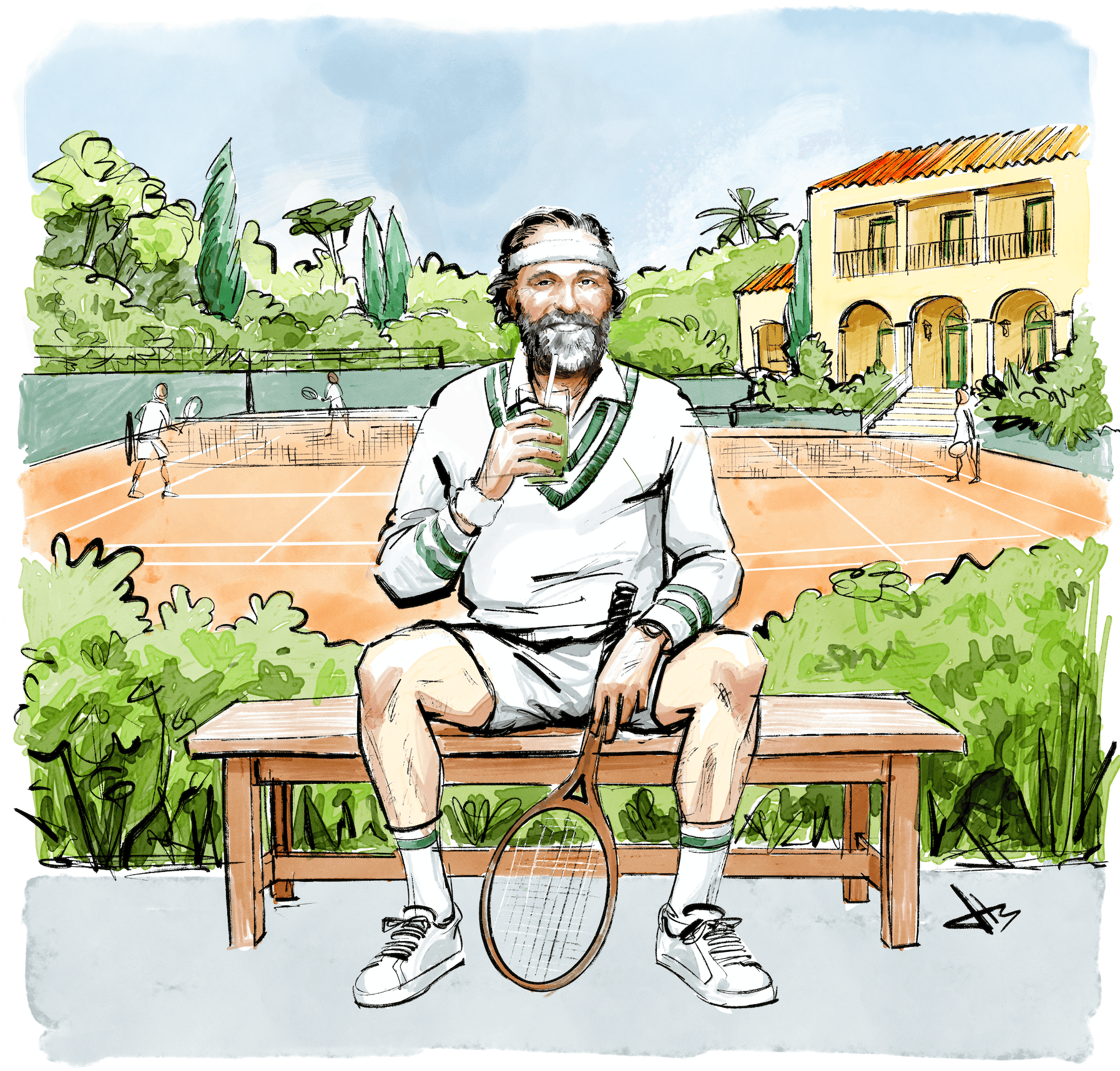
Illustration by Hilbrand Bos
One good thing about getting older is the acquisition of a certain amount of self-knowledge. One bad thing about self-knowledge is that you’re more aware of your shortcomings. All of which is to say, I was painfully aware that my tennis game had deteriorated to intense mediocrity since its peak during my high school days back in Minnesota (go Spartans!). My forehand is a bit like my French, which also peaked when I was 17 and has similarly unraveled. I felt like a freshman but with lower back pain.
In Spain, the tennis pro couldn’t have been more positive or supportive. It took me a moment to stop apologizing for the current state of my skills and just listen to his advice. When somebody says, “Don’t forget to watch the ball,” you know there’s room for improvement. When I stopped thinking about what could have been if I had kept playing all these years and instead just focused on getting into position, I started doing better and enjoying the process. Sometimes (if you excuse the cliché) you really do have to stay in the moment.
Pilates was a different matter. I have never felt more awkward than during my first class. It was like I was inside someone else’s body. And this stranger’s body was not at all flexible. I quickly realized I gravitated to almost every lazy tendency. How did I know this? Because when the very kind instructor said, “Good, now point your toes up,” things suddenly got infinitely harder. I persevered, remained terrible, but still found satisfaction in that feeling people talk about: walking away from a Pilates class a few inches taller than when you walked in.
Doing all these activities in the cocooned environment of the clinic was good for me. A little isolation made it easier to be a novice at things, as opposed to the chaos of the city, where one is surrounded by intensity and experts (real or imagined).
But did I bring my good habits back from Spain? Well, I’m fighting the good fight. I’m on the court more often; in Manhattan, squash is easier to arrange than tennis. I am at the Pilates studio and don’t look at the reformer with unmitigated fear, which counts as an improvement. Is there less Armagnac in my life? Fewer martinis? Yes. And that’s alright. There’s an art to moderation, though I’m still trying to master it.
A Minnesotan turned New Yorker, David Coggins is the author of the New York Times bestseller Men and Style and writes a recurring column for Artful Living.