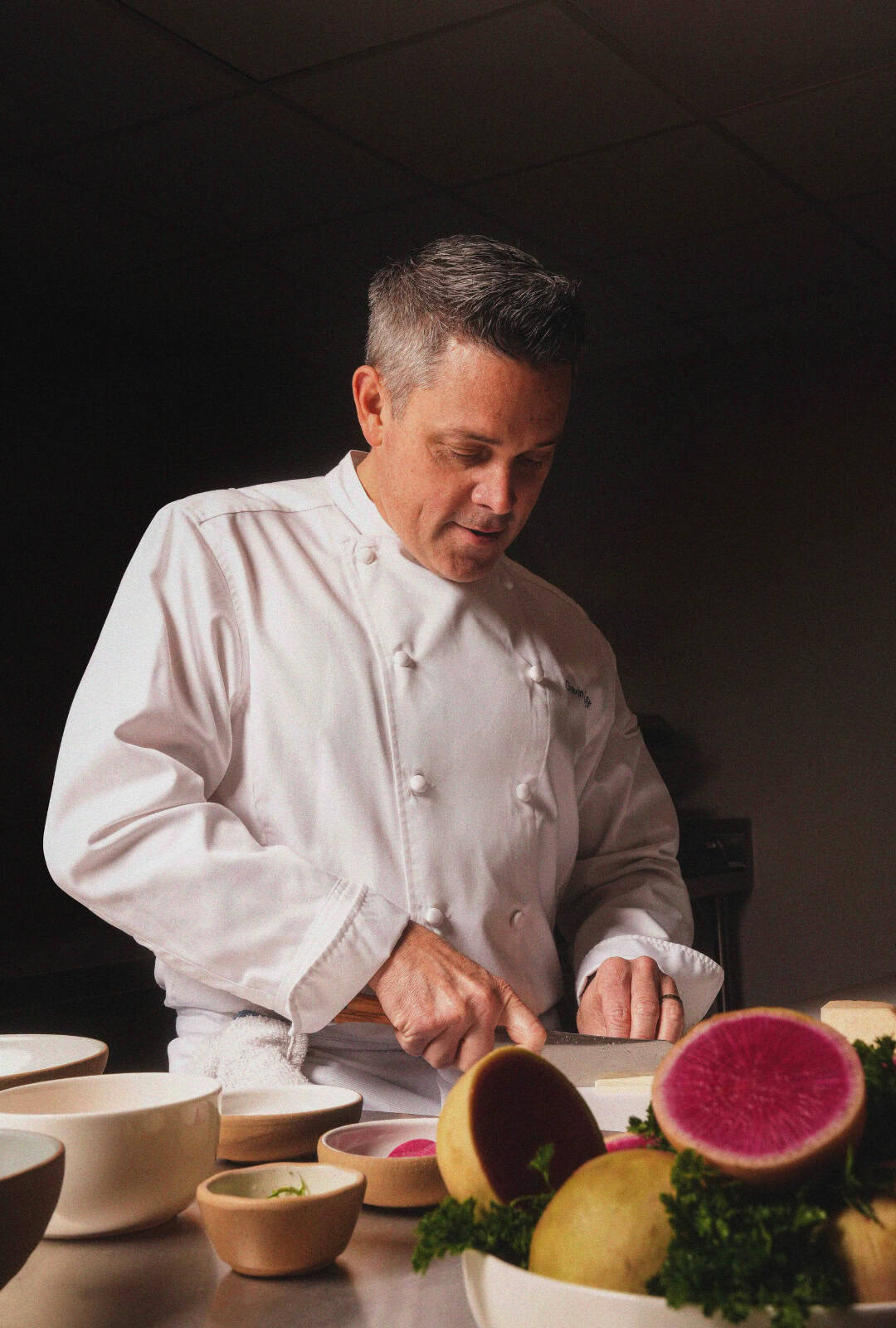
Gavin Kaysen needs no introduction here in the Twin Cities, but we’ll give him one anyway. A Minnesota native who returned home in the midst of an impressive run in the New York City restaurant world under the mentorship of French icon Daniel Boulud, he’s the two-time James Beard–winning chef behind Minneapolis institutions like Spoon and Stable, Demi, Mara and Bellecour.
The newest addition to that culinary empire, The Merchant Room, is much farther afield, situated in Southwest Florida at the newly opened Naples Beach Club, A Four Seasons Resort. In addition to scoping out the property ourselves, we got the inside scoop from Kaysen about why he decided to debut this New American brasserie so far from home, what it took to bring the eatery to life and where his latest venture fits within his family of restaurants.
Photography provided by Aura Groupe
What interested you about branching out your culinary empire to Naples, Florida?
A big part of it was our existing relationship with the Four Seasons brand in Minneapolis at Mara. When we started exploring what we wanted growth to look like, I didn’t want it to feel forced or like a burden. So it was important that it felt like the right relationship and the right opportunity, because it certainly changes things when the restaurant isn’t just down the street from you. We have a really beautiful restaurant in Naples, but there’s also a lot of travel, sacrifice and hard work involved. It’s a stunning property, which means guest expectations are high. So we wanted to make sure we could do it in a way that felt right for us and where we can meet those expectations.
And you have a personal connection to Naples, too, right?
Yeah, when I was growing up, we used to go there to vacation; we also went to Sanibel a lot. It has definitely changed since I was a kid, but to me, it’s the hidden coast of Florida. The beaches are gorgeous with beautiful white sand, and because it’s the west coast, you get the best sunsets in the world. It’s very popular here in season, but it’s still so relaxed. Unlike someplace like Orlando, you can come here and just unplug for awhile.
How is The Merchant Room similar to your Twin Cities restaurants? And how does it stand on its own?
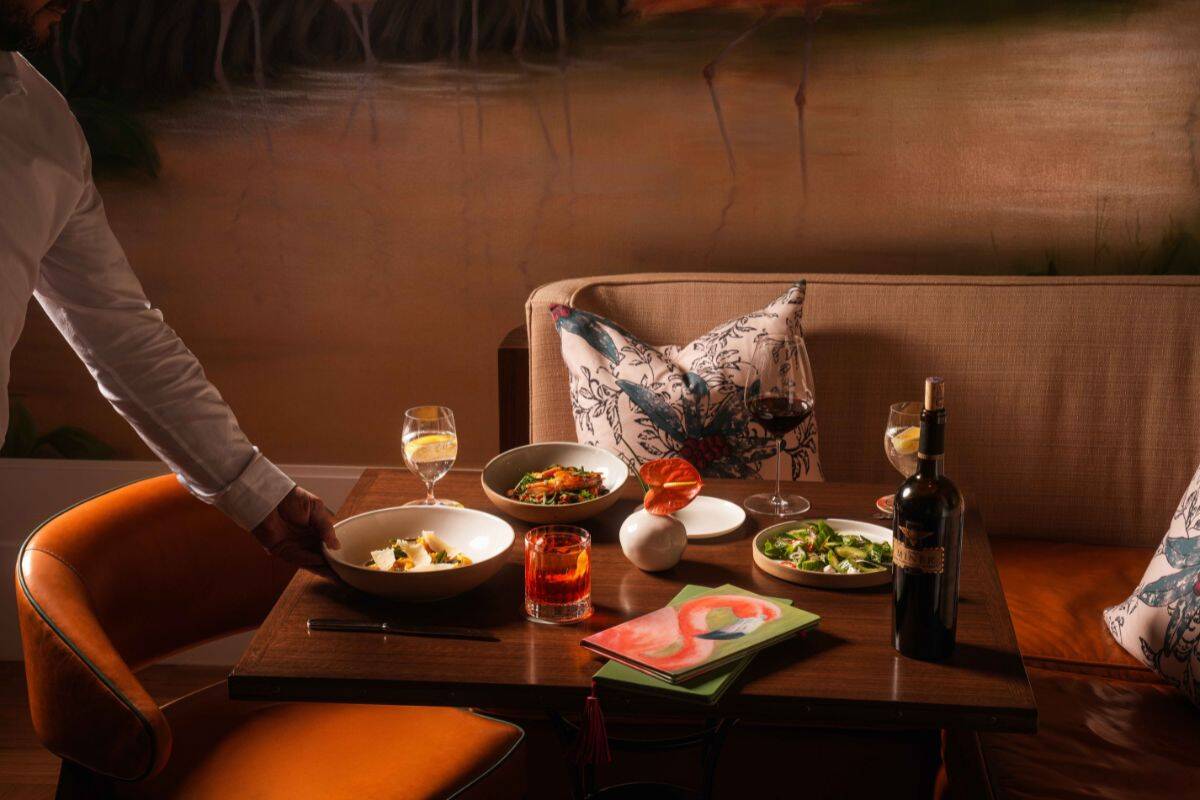
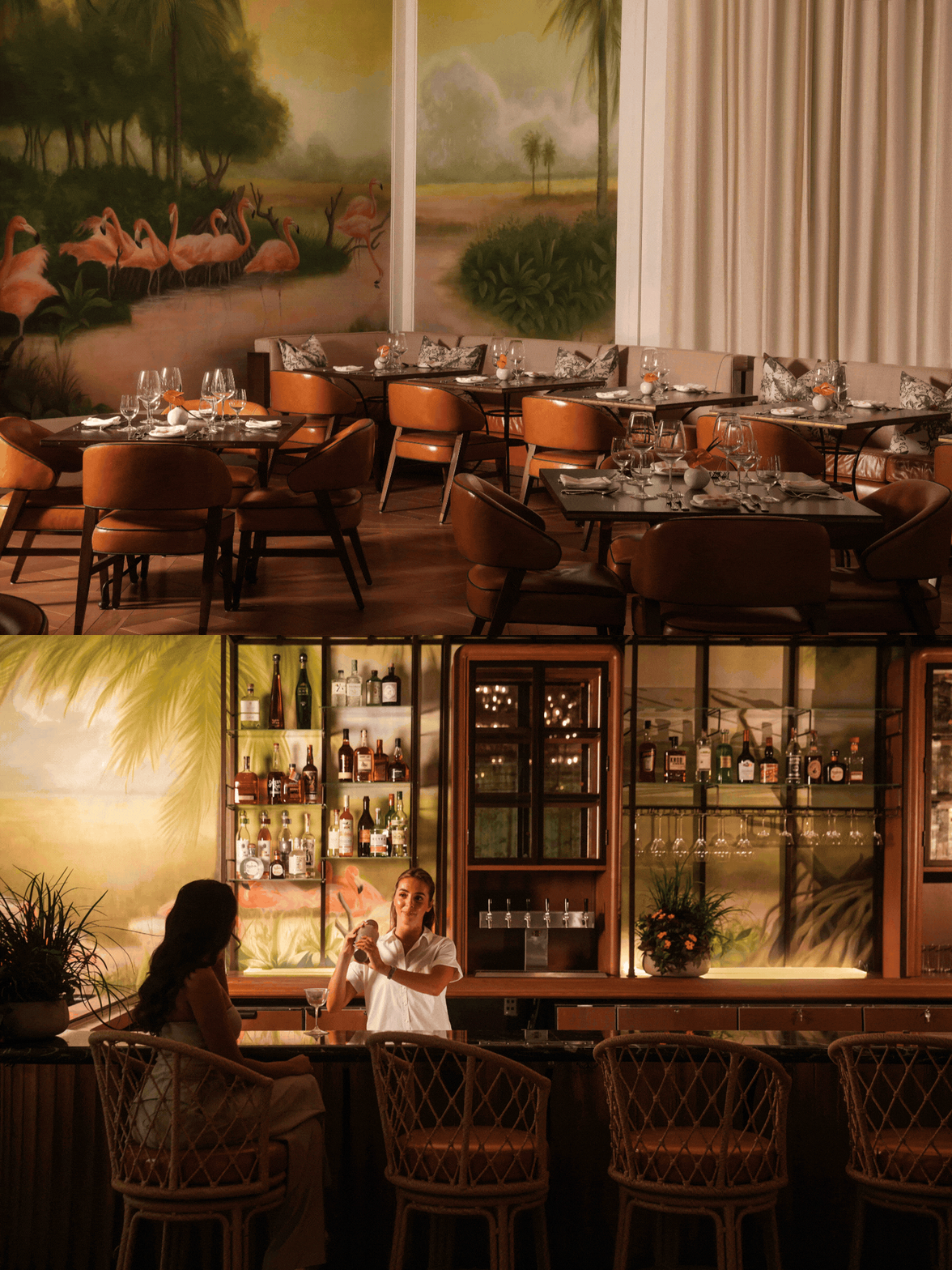
In terms of the design, it definitely feels like a Florida resort. In terms of the food, we brought a little bit of Spoon and Stable down there. So there are a few dishes that come pretty directly from that menu, such as the spaghetti nero, the tamarind-glazed pork chop, and the creamy spinach with fried cheese curds. It’s not a duplicate of Spoon, but we wanted to have some of the DNA of Spoon’s cuisine down there.
You know, the reason we call it The Merchant Room is because Spoon was originally supposed to be called Merchant, then I changed the name about a month before we opened. When we were deciding the name of this restaurant and everyone was coming up with all these different options, we ultimately landed on The Merchant Room as sort of an homage.
If you think of your restaurants as a family, how does The Merchant Room fit into the mix?
I mean, Spoon and Stable is my first born and is genuinely my favorite. Demi is the high-touch middle child. Bellecour is the rambunctious one, because the personality shifts from day to night. I only have three kids to compare to, so I would say that The Merchant Room is a distant cousin in many respects.
This isn’t your first rodeo opening a restaurant, but can you talk through some of the unique considerations for this one?
First, there are the turtles. You might look out on the terrace at The Merchant Room at night and wonder why the lighting isn’t better. But we needed to use red lights so that it wouldn’t disrupt the turtles during nesting season. That was definitely a new consideration I had never encountered before when designing a restaurant.
There are also a lot of differences when you’re making the menu, because what’s in season in Florida is so different from what’s in season in Minnesota. So in the winter, when we opened The Merchant Room, in Minneapolis we were making dishes with rutabaga and all these root vegetables; meanwhile in Naples, we wanted to capitalize on the delicious tomatoes and cucumbers that were in season. It reminds me of when I ran Café Boulud in both New York City and Palm Beach, Florida at the same time. There was such a stark difference in the menu items I was making for each location.
What are the fan-favorite dishes so far?
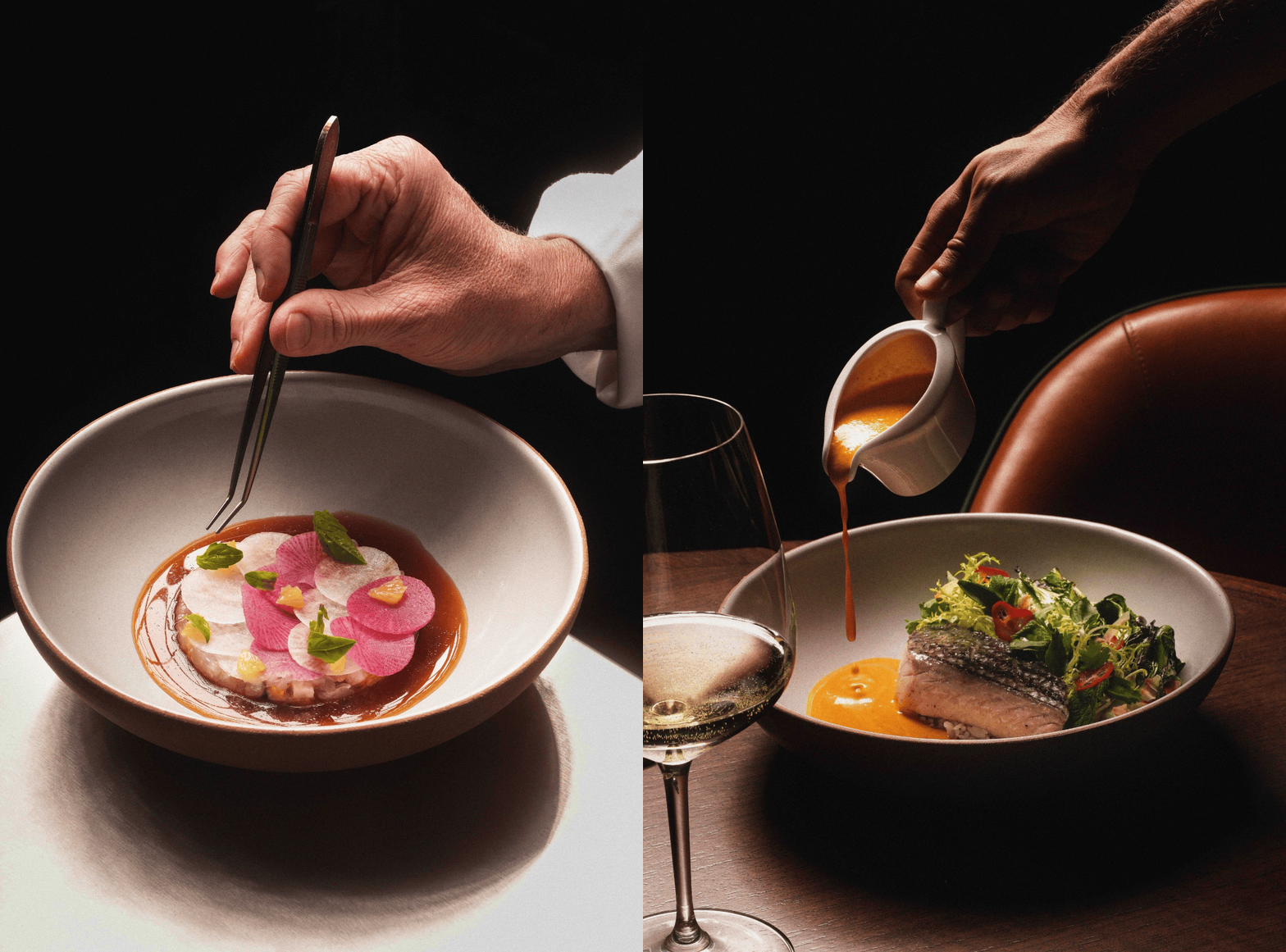
We’ve already seen that the pasta program has become really popular; it’s pretty similar to what we do here in Minneapolis. And to no surprise to me, people love the creamy spinach with fried cheese curds. A lot of that has to do with the fact that many resort guests come from the Midwest, so there’s a cheeky familiarity to seeing this on a menu down in Florida. And then we have some very “Florida” dishes, like a snapper tartare that comes with radishes and a ponzu broth. I think some version of that will probably always live on the menu, because we’ve gotten such great feedback on it since we first opened.
What is the overall dining experience you want to create for resort guests?
Very similar to my other restaurants, we want them to feel like they’re well taken care of in this beautiful space. But specifically at a resort — and this is going to sound weird — I want them to walk away from a meal thinking the food was more delicious than it needed to be. Hear me out: When you’re at a hotel restaurant and you’re having a martini watching the sun set over the ocean while you’re waiting for dinner, that in itself is pretty remarkable. But when the food is also exceptional, it’s a completely different caliber of experience. I really want to create this feeling that an overall sense of hospitality is wrapped all around you — and the food is like this incredible icing on the cake.
Do you have favorite spots at the resort?
The entire property is stunning. It’s so airy and open, and the majority of the sightlines have ocean views. I would say the spot I gravitate toward the most is the terrace at The Merchant Room. It’s raised up 14 feet above sea level, so as a result, your view is the pool, then the beach, then the ocean. It’s pretty amazing to sit there at the end of the night when dinner service is over and everyone is gone and have a glass of wine. It’s a very spiritual thing to wake up in the morning and walk on the beach, then finish a busy workday sitting on the terrace just listening to the ocean waves.