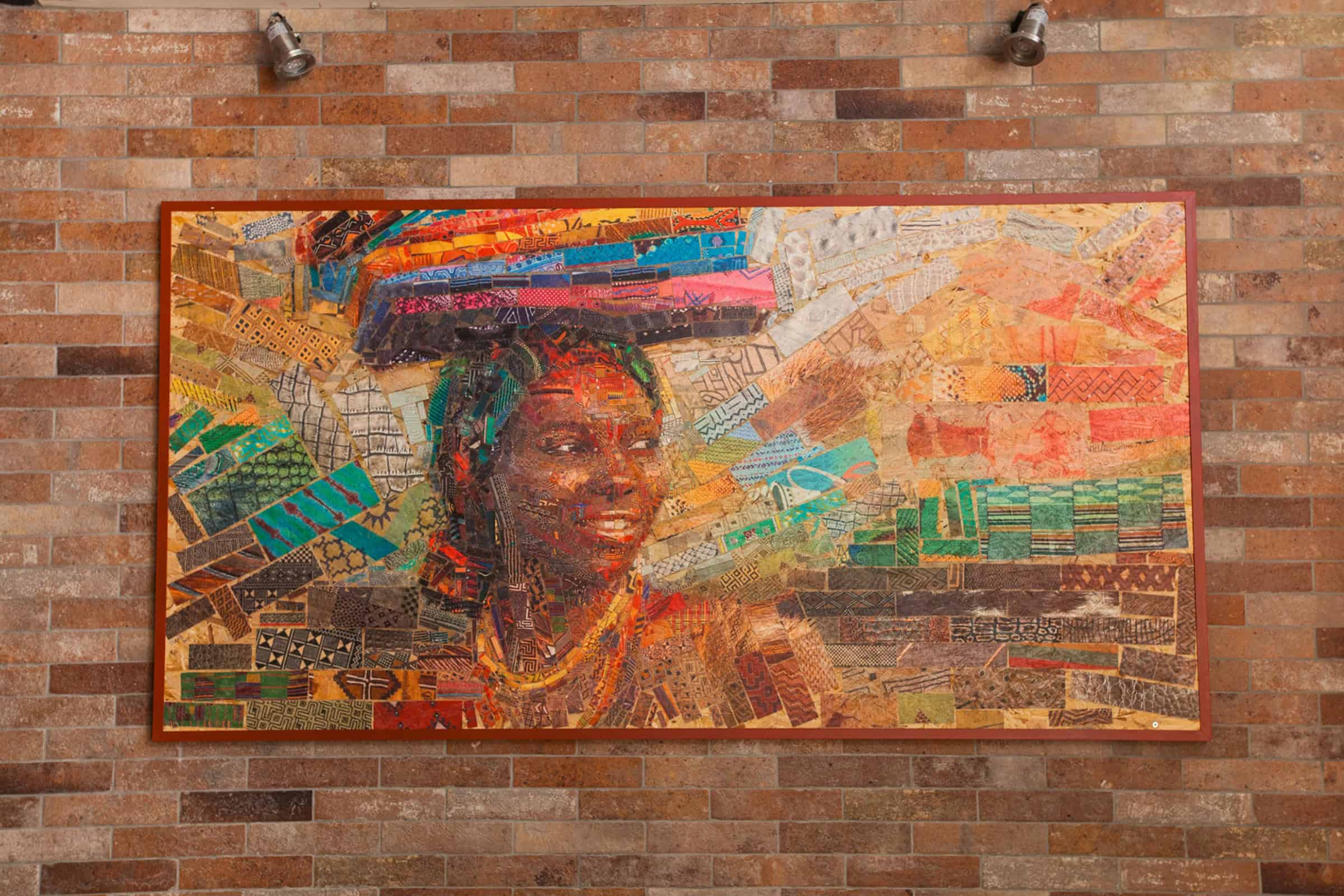
In our ever-changing and fast-paced world, Greek illustrator Charis Tsevis creates truly one-of-a-kind artwork that offers multiple layers of literal and metaphorical depth. His work creating the memorable illustrations for our spring feature, “What is American Food Now?,” is a prime example of how thoughtful details contribute to a larger whole. Taking a more scientific approach to creativity, Tsevis paves the way for structural, collage-style artwork in this digital age. Here, the artist generously cracks the door open for us to understand his background, process, inspiration and more.
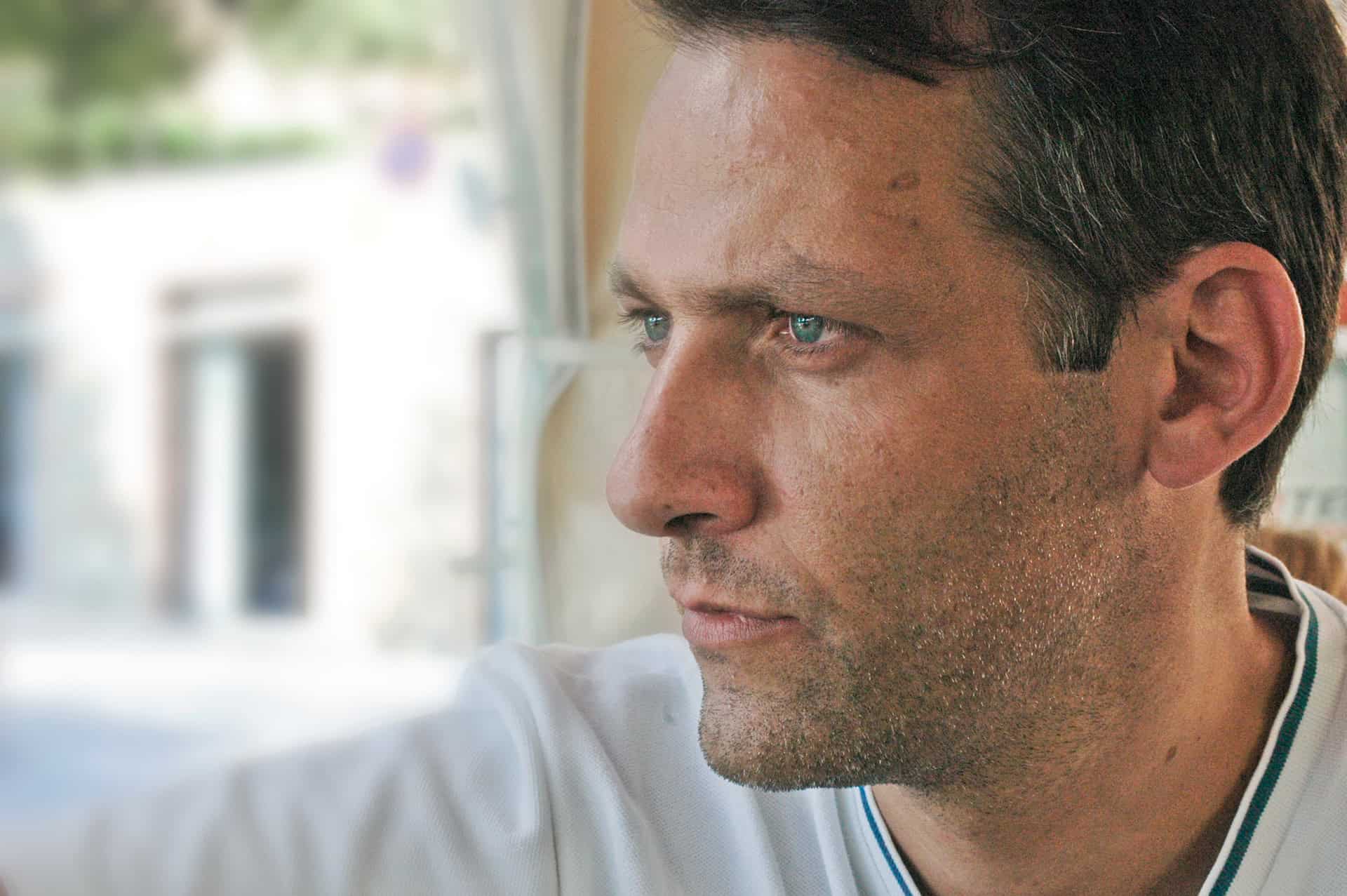
Photography provided by Charis Tsevis
How did you get started in illustration?
I didn’t approach illustration as a separate discipline. It emerged naturally from my work with design, technology and a deep curiosity about how images are built. I was lucky to begin my career in the analog era and transition gradually into the digital one. I moved from rapidographs and brushes to darkrooms and lithographic films, and then into computers. Each step wasn’t a rupture, it was an expansion.
My father played a defining role. He was a kind of 1950s hacker — an electronics engineer who saw technology not just as a tool, but as an ideology. As a child in the eighties, I didn’t immediately see technology as something artistic. He did. He showed me its poetry, its structure, its elegance, its hidden beauty.
Then came the era of Apple Inc. The Mac wasn’t just a machine, it was a revelation. It introduced me to a new kind of visual thinking. Pixels, grids and structures felt very close to mosaics: small elements forming a larger image. Later, my studies at the Scuola Politecnica di Design helped me formalize that instinct. I had an almost religious devotion to Gestalt psychology, which didn’t just change how I designed. It changed how I see. I became fascinated with how the mind constructs reality through vision. So illustration, for me, became less about drawing and more about thinking through images and building meaning through structure.

“By the Pool” | Artwork by Charis Tsevis
Your work is truly unique, how did you evolve your collage style to this level?
I’m not sure I would call it unique. It feels more like a personal path within a very long human tradition. At best, my work is just one small brick in a much larger history of image-making. What is often described as “collage” in my work is actually a structured system. Each image is composed of hundreds or thousands of smaller elements, each carrying its own meaning and contributing to a larger narrative.
Again, Gestalt psychology is central here: the idea that the whole is perceived before the parts. I’ve been exploring how far you can push complexity. How dense can an image become without losing clarity? Technically, this required building my own workflows and tools to allow me to operate simultaneously at different scales. I might adjust a single tiny element while constantly evaluating the full image from a distance. But beyond tools, it’s really about repetition. You build, you step back, you question, you dismantle and you rebuild. Over time, this process stops being experimental and becomes a language.
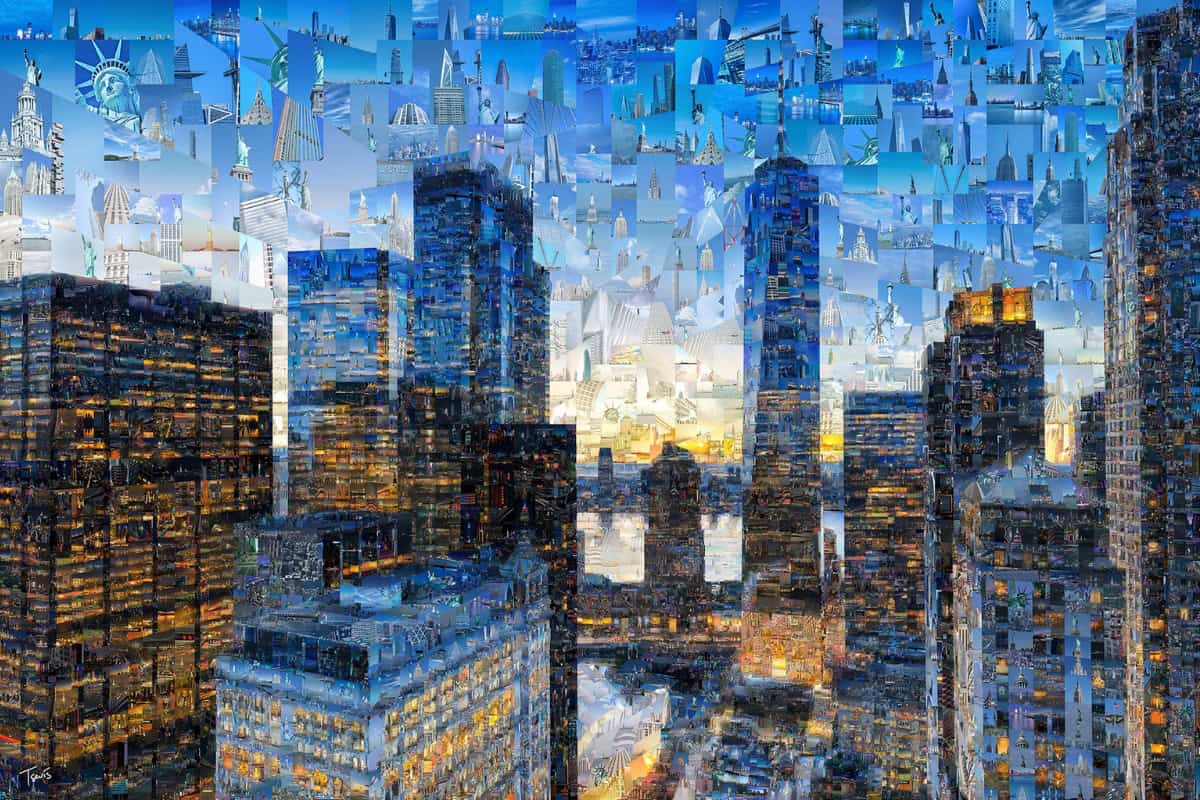
“One City One World” | Artwork by Charis Tsevis
What inspires your work the most?
Inspiration comes from many places, often far outside what we traditionally define as design. My family was one of the earliest and most defining influences. My father taught me to see the beauty of machines. He approached technology almost philosophically. Circuits, signals and structures weren’t just technical components, they were part of a deeper language. Through him, I learned to appreciate precision, systems thinking and the quiet elegance of things that simply work. My mother, on the other hand, brought a very different sensibility. She was an interior designer, but more than that, she had a deeply personal and intuitive sense of aesthetics. Her approach was more classical, more human-centered. Between them, there was a kind of silent dialogue: structure and sensitivity, logic and intuition, machine and human. That balance shaped me early on. It allowed me to move comfortably between the techno-industrial and the poetic, between analysis and emotion. That tension still sits at the core of my work today.
From there, inspiration expanded into everything: literature, poetry, travel, cooking and everyday life. I’ve always been drawn to what is often called minor or anonymous art — the visual intelligence embedded in daily culture. A pattern on a fabric, a market stall, a handmade sign, these carry as much meaning as any formal artwork.
Different cultures have also deeply shaped my thinking. From Brazil to West Africa to Southeast Asia, I’ve been influenced by how identity is expressed visually. These experiences constantly remind me that design is not universal. It is local, contextual and deeply human. I also admire thinkers like John Maeda, who managed to balance technology and human sensitivity.
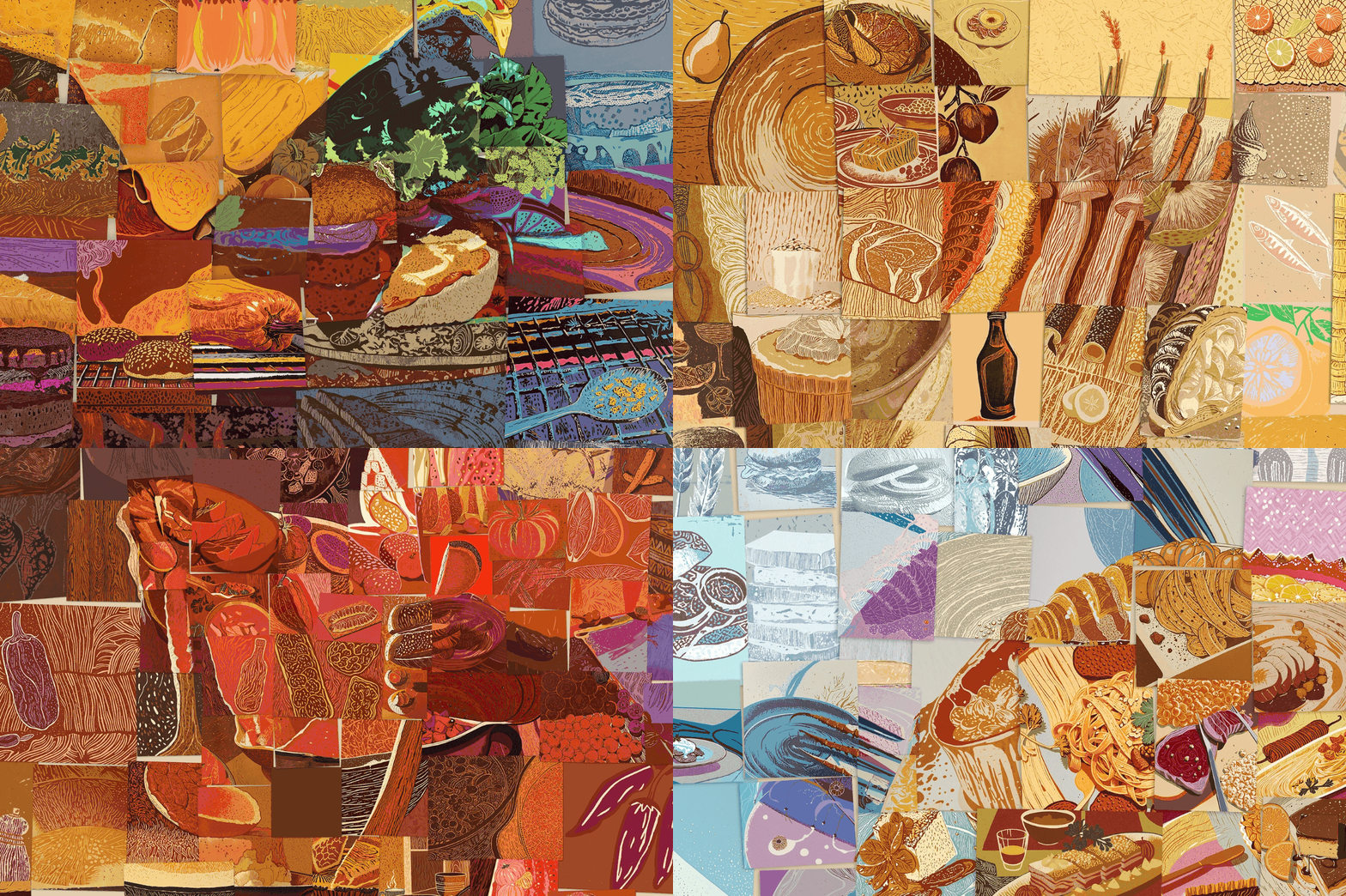
Details from “What is American Food Now?” | Artwork by Charis Tsevis
What kinds of concepts are your favorite to illustrate?
I’m drawn to concepts of identity, complexity and connection. Portraits are a good example. For me, they are not just about resemblance. They’re about constructing a narrative. A face can be built from symbols, cultural references and visual fragments that reveal something deeper about the subject. I also enjoy working on themes of collective identity, such as sports, culture, and shared experiences, where many individual elements come together to form a unified whole.
In general, I’m interested in ideas that work on multiple levels — something that reads instantly from afar, but rewards closer attention with layers of detail and meaning.That tension between clarity and complexity is where the work becomes interesting.
Looking to the future, what goal do you have for your creative work?
The goal is to go deeper, not just further. I’m interested in creating work that is not only visually engaging but also culturally aware — images that carry context, intention and respect for the subjects they represent.
At the same time, I’m exploring how technologies like AI can be used more thoughtfully. Not just to accelerate production, but to expand research and understanding. Technology, for me, is not the destination; it’s a lens. Ultimately, I see my work as a bridge between disciplines, cultures and different ways of seeing the world.
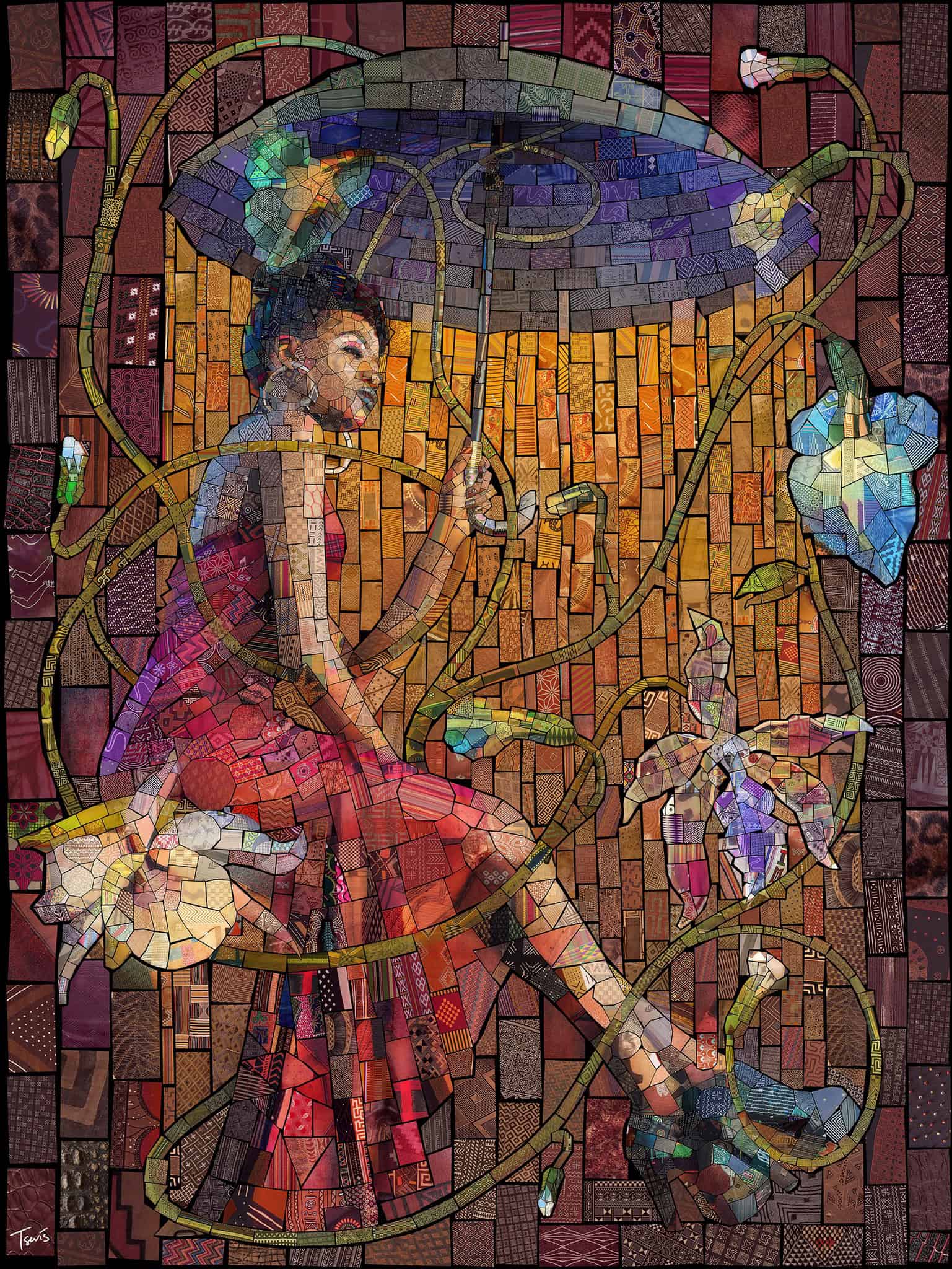
“I Bless the Rains” | Artwork by Charis Tsevis
What’s next for you?
Right now, I’m developing tools and processes that allow a deeper integration between analysis and creation to find ways to translate complex ideas into structured visual systems. At the same time, I continue working on projects centered on global cultural storytelling, where questions of identity and representation are essential. I’m also increasingly interested in sharing the thinking behind the work through writing and talks, opening up the process as part of the creative dialogue.