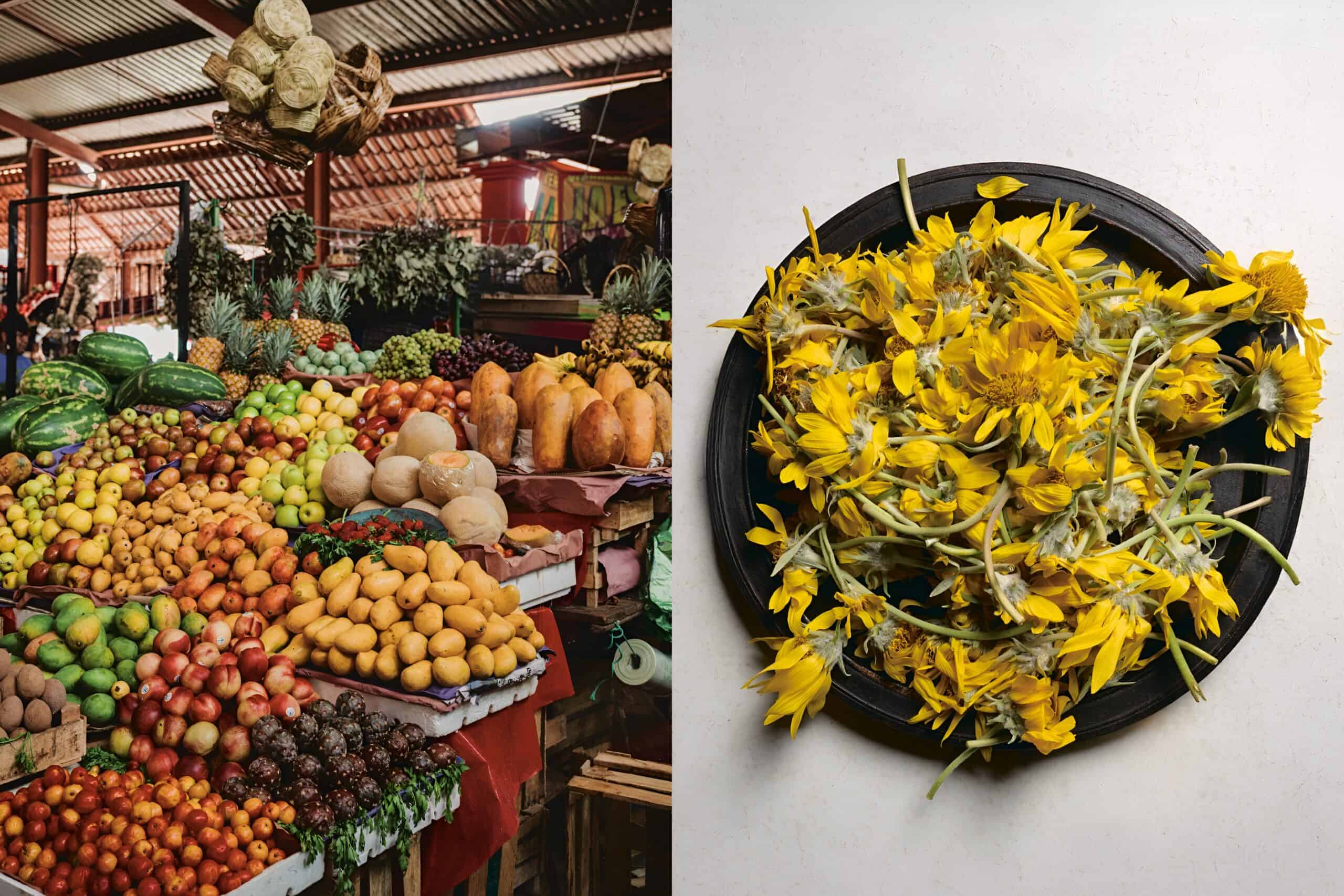
Millennia ago, Indigenous cultures across North America — or Turtle Island, as many Native American communities call it — lived in a way we’re yearning to experience today. A way that’s nourishing and nurturing not only for our bodies but also for our people and our planet. We can all learn from this rich ancestral wisdom that has been handed down from generation to generation.
Over the past several years, I have had the rare opportunity to delve deeply into this carefully preserved knowledge. I joined celebrated Oglala Lakota chef Sean Sherman — whose Minneapolis restaurant, Owamni, and efforts to revitalize Indigenous foodways have earned him three James Beard Awards — on a journey across this continent to learn from chefs, advocates, ethnobotanists and other culture bearers. We synthesized as much of that intel as we possibly could into the book Turtle Island: Foods and Traditions of the Indigenous Peoples of North America.
For me, co-authoring this tome was a transformational experience — not only because it better connected me to my own Alaska Native (Tlingit) culture as well as the Indigenous community at large. But also because it offered a blueprint for how to live well.
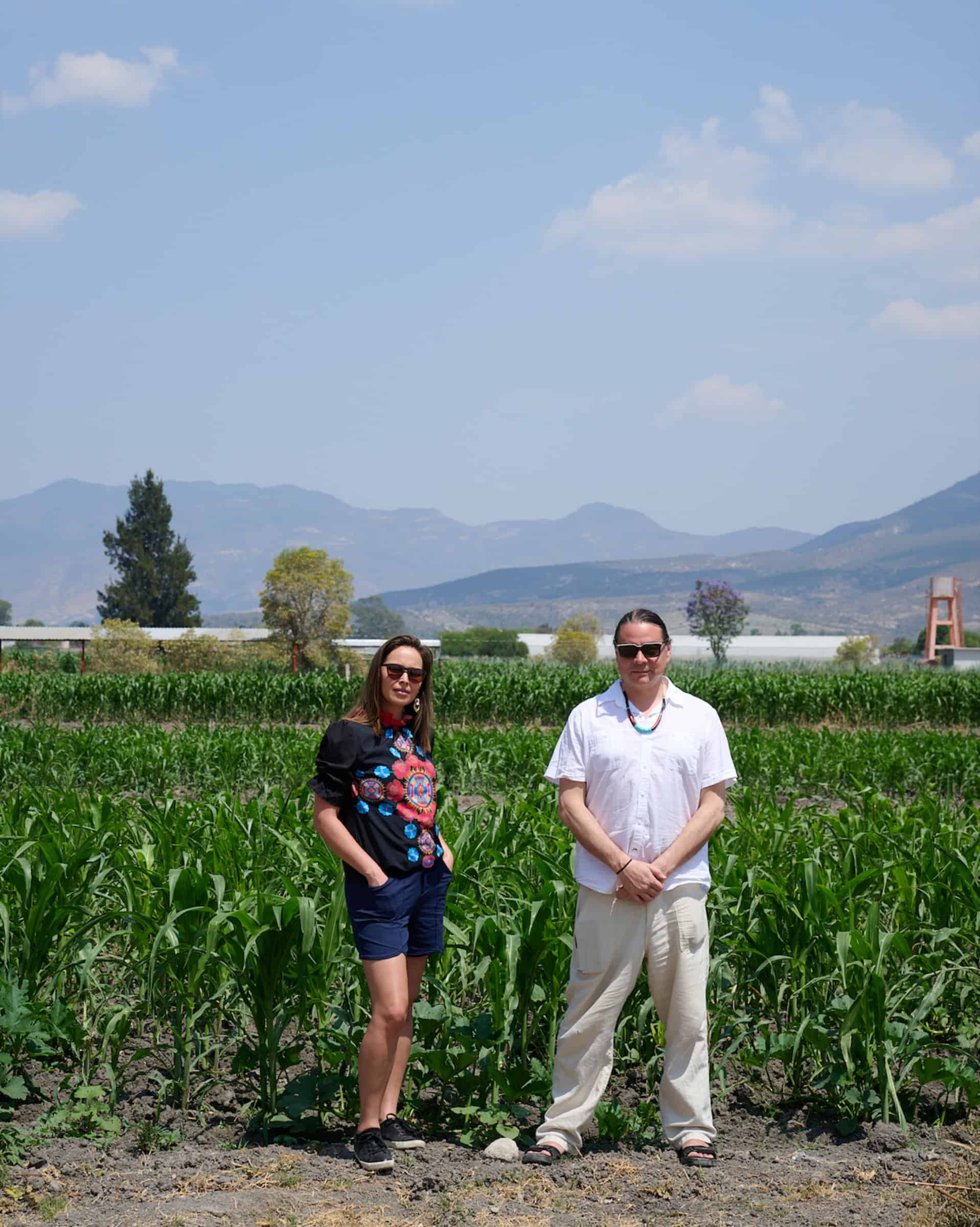
Photography by David Alvarado
First, let me lay down some foundation. All of Sean’s work is centered around his philosophy for decolonized food, meaning he avoids ingredients that aren’t originally from this continent, such as beef, pork, chicken, dairy, wheat flour and cane sugar. He developed that approach in hopes of helping alleviate some of the health problems that have plagued Native communities since European arrival, including disproportionate rates of obesity, heart disease and type 2 diabetes.
But soon he realized that people from all backgrounds could benefit from this way of eating, which coincidentally is in line with many modern-day trends given that it is naturally devoid of top allergens like gluten, dairy and soy. With Owamni, Sean proved not only that decolonized food is possible but that it’s also delicious and nutritious. (All of the recipes in Turtle Island follow this principle, too.)
There’s a cruel irony that in this modern era, we have more interconnectivity than ever before, yet somehow, we feel less connected with ourselves, one another and the natural world around us. That includes a sense of separation from our food, which all too often comes in the form of a bag or a box we pull out of the pantry rather than a plant we pull out of the ground.
Don’t get me wrong; I’m a fan of our many contemporary conveniences. But all too often, I find myself caught up in the hustle and bustle of it all, feeling the toll physically, mentally and spiritually. In those moments of exhaustion from our everyday existence, I’m reminded of the hugely pivotal role that food plays in feeding our bodies, minds and spirits (for better or for worse).
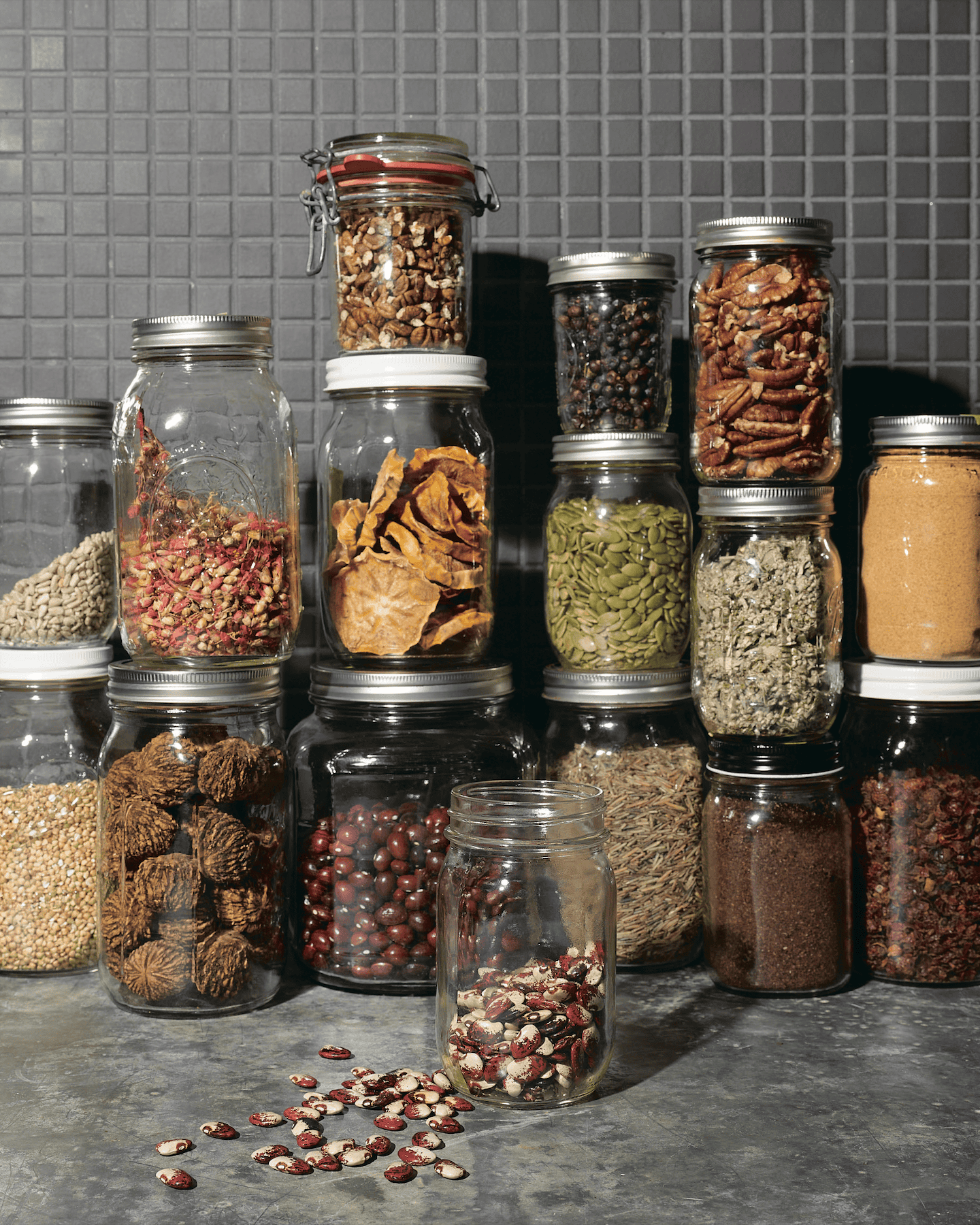
So how do we embrace this Indigenous wisdom? It begins by recognizing the foods all around us — even in our own backyards — which are all too often overlooked as weeds. For example, few people realize that dandelion greens are not only edible but are rich in vitamins and minerals. They’re definitely nutritionally superior to the iceberg lettuce that has dominated our plates for decades, and they deserve a spot at the (dinner) table. But this isn’t just about food swaps; it’s so much more than that. It’s a way of life.
Native cultures have long understood that eating seasonally and regionally keeps us in sync with the land, plants and animals around us. That’s why Indigenous food traditions are inherently hyper-local, varying from one locale to another. For example, here in the Great Lakes region, we’re pretty familiar with wild rice, which is so important to the first peoples of this place (the Dakota and Anishinaabe). Meanwhile, in the neighboring Great Plains, the bison represent a sacred being for area tribal nations. Farther west in the Pacific Northwest, salmon has been a staple for centuries — so much so that there are ceremonies, traditions and legends dedicated to this significant animal.
Even with these regional nuances, there are some universal guiding principles undergirding Indigenous foodways across North America. For instance, Native communities are generally centered around plants, both foraged and cultivated, with animal proteins rounding out those diets. Harvesting of any kind happens with an emphasis on taking only what you need, so that others can also reap that bounty for years to come. Agriculture is rooted in traditional ecological knowledge, ensuring that small-scale farming is replenishing the earth rather than depleting it. And reciprocity — a sense of responsibility to take care of our community, including our plant and animal relatives — is at the heart of it all.
Most notably, there’s always room at the table for others to join. Therein lies the beauty of this Indigenous wisdom: It’s meant for everyone. It isn’t being hoarded by the few or commodified for the wealthy. It’s something we all can subscribe to, no monthly payment required. And like tribal communities, it has always been here. In the following pages, we offer a taste of Turtle Island to help home cooks embrace this knowledge that has kept Native cultures alive — and thriving — for millennia.
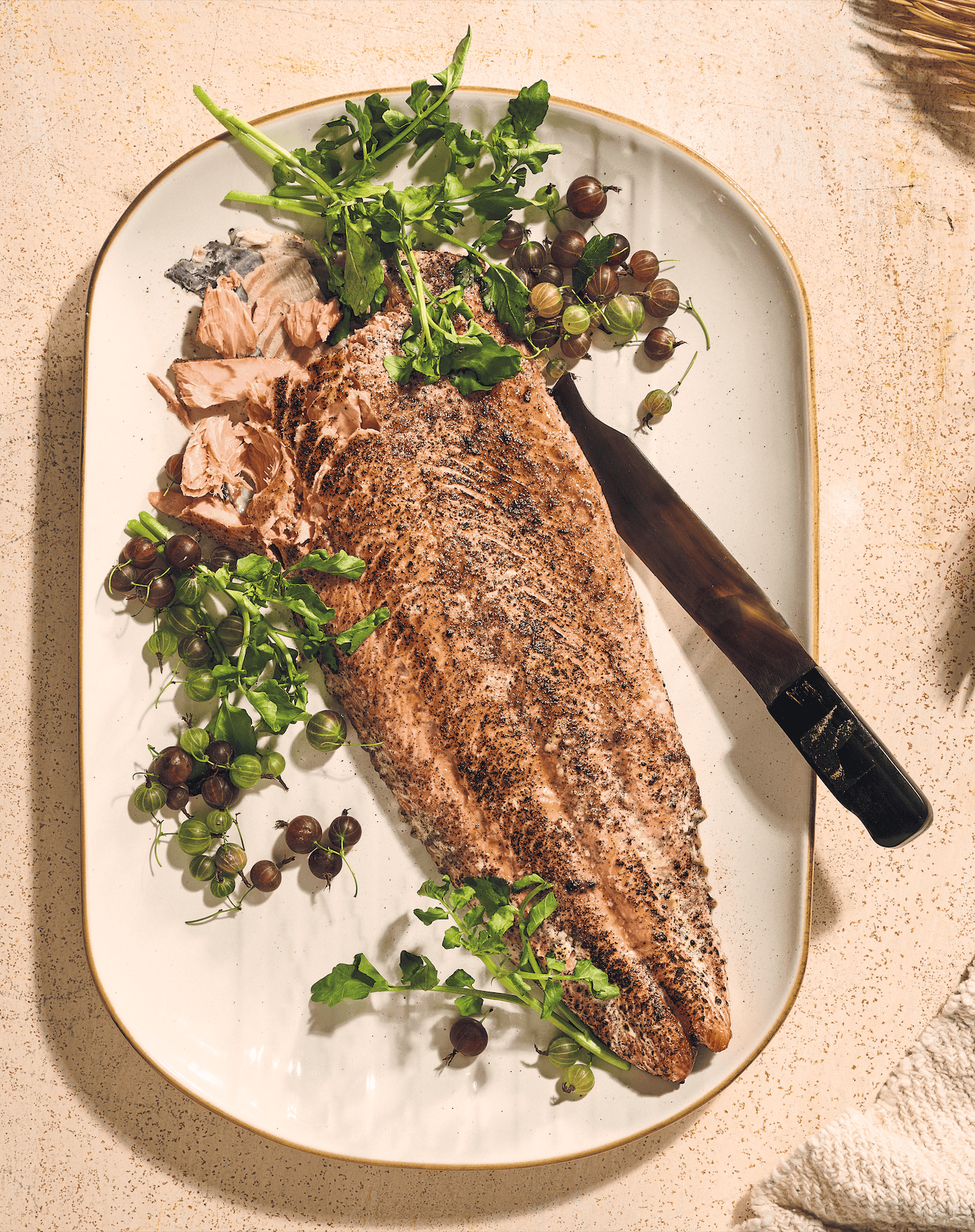
Maple-Glazed Salmon
Makes 4 servings
Salmon is a sacred food for Indigenous peoples in the Columbia Plateau, just as it is for countless people near the coast. While maple trees are not native in the region, big-leaf maple trees grow not too much farther west. Syrup from this Western maple is deep in flavor with molasses-like notes. If you can find it, use it in this glaze, which is enlivened with vinegar and sumac, but any maple syrup will work well.
1 skin-on wild salmon fillet (1½ lbs.)
¼ cup maple syrup
2 tsp. cider vinegar
2 tsp. sunflower oil
1 tsp. ground sumac
½ tsp. onion powder
sea salt
1. Preheat oven to 375°F. Line a sheet pan with parchment paper or aluminum foil.
2. Place salmon on pan skin-side down. Feel for any remaining pin bones and use tweezers to extract them, as needed.
3. In a small bowl, whisk together syrup, vinegar, oil, sumac and onion powder. Use this glaze to brush fish, then season well with salt.
4. Bake 5 minutes, then brush again with glaze. Continue baking about 5 minutes, or until a thermometer inserted into the thickest part registers 145°F. If fish was frozen previously, you can cook it slightly less if you prefer it cooked to medium. If you’d like a bit more caramelization, broil fish on high heat 1 to 3 minutes.
5. Let fish rest a few minutes, then cut into portions and serve.

Desert Greens with Quick-Pickled Wolfberries, Desert Flowers and Popped Amaranth
Makes 4 servings
People often think very few plants grow in the desert, but that couldn’t be further from the truth. You just have to know where and when to look — a kind of knowledge that Indigenous communities have developed and passed on for millennia. This salad showcases some of the abundance available in a desert spring, such as lamb’s quarters, purslane and amaranth greens, but you can use this recipe to feature wild greens from your area. It includes chewy, sweet-tart dried wolfberries, which are pickled lightly with chile to make them plump and juicy. They are closely related to goji berries, so you could use them as a substitute. Popped amaranth seeds add a bit of crunch.
2 Tbsp. dried amaranth, to yield ½ cup popped
⅓ cup dried wolfberries (or goji berries)
2 Tbsp. agave syrup
2 Tbsp. cider vinegar
1 dried chile de árbol
fine sea salt
1 large prickly pear flower bud or 8 yucca blossoms (optional)
6 cups wild baby greens, such as lamb’s quarters, purslane or amaranth
3 Tbsp. sunflower oil
1. For the popped amaranth: Heat a small dry saucepan over medium-high heat 2 minutes. Add 1 teaspoon amaranth, cover and shake pot. If grains start popping almost right away, pot is hot enough. (Otherwise, grains will likely burn and you’ll want to heat pot more before starting again.)
2. After 10 to 20 seconds, when popping noise slows down, transfer popped amaranth to a bowl. Continue popping amaranth 1 teaspoon at a time and transferring to bowl. Use popped amaranth right away or let cool and store in an airtight container up to 3 days.
3. For the salad: In a small saucepan, combine wolfberries, agave syrup, vinegar, ½ cup water, chile and ¼ teaspoon salt. Bring to a boil over medium-high heat. Reduce heat to low and simmer gently about 4 minutes, or until pickling liquid has reduced by half. Let cool completely. Reserving pickling liquid, drain berries.
4. Pull apart prickly pear flower bud or yucca flowers, then discard center stamens and pistils, reserving petals for salad.
5. In a large bowl, combine greens, flower petals, pickled berries and 1 tablespoon pickling liquid. Season with salt. Drizzle with oil and toss to coat evenly. Sprinkle with popped amaranth and serve.

Peeskipaateeki
Makes 4 servings
Our friend Kickapoo chef Crystal Wahpehpah shares this beloved recipe for a breakfast porridge using heirloom white corn. In the Kickapoo language, peeskipaateeki is the name for both corn and for dishes made with corn. The kernels get cracked in a high-powered blender before cooking into a porridge that’s lightly sweetened with maple syrup. By leaving some of the corn pieces fairly large, you get an appealing mixture of textures in the porridge. Crystal likes to top this with blackberries, but you can use any berries.
1 cup dried white whole-kernel corn
1 Tbsp. maple syrup, plus more for serving
½ tsp. fine sea salt
blackberries, for garnish
1. In a saucepan over high heat, bring 4 cups water to a boil.
2. Place corn in a blender, preferably high-powered, and pulse to crack kernels. Stop when most of corn is finely ground, with a few pieces about the size of small peas.
3. Reduce heat to medium-low. When water is simmering, stir in corn. Cook 40 to 50 minutes, until porridge is thick and creamy, and largest pieces are tender, if a little chewy. Stir porridge occasionally for first 20 minutes, then more frequently as it thickens.
4. Stir in syrup and salt. Divide among bowls. Garnish with berries and serve warm.
Learn more about Indigenous foods and purchase your copy of Turtle Island at seansherman.com.
Reprinted with permission from Turtle Island: Foods and Traditions of the Indigenous Peoples of North America by Sean Sherman with Kate Nelson and Kristin Donnelly © 2025 by Sean Sherman. Photographs copyright © 2025 by David Alvarado. Illustrations copyright © 2025 by Jimmy Dean Horn Jr. Published by Clarkson Potter, an imprint of Penguin Random House.