Deciding whether to move or to renovate is the question many homeowners face — especially when rising costs and shifting lifestyles come into play. For a couple in the East Harriet neighborhood of Minneapolis, the answer lies in reimagining the 1923 home where they raised their three children.
Photography by Round Three
The two-story brick Colonial, which has classic proportions, columns, a center entry and a long driveway, is very much in line with the surrounding historic district and not unlike iconic movie homes, like in Father of the Bride and Home Alone. However, a dated and cramped kitchen, lack of accessibility to the backyard, and an unfinished lower level limited the home’s functionality. Rather than leave a neighborhood they were deeply rooted in, they decided to reimagine the home.
“They connected with us because we did a very similar project for their friends two blocks away,” says Quartersawn Design Build Principal Jeff Nicholson. “They love the neighborhood, the friends they’ve made, the institutions they’re part of — dining, theater, proximity to lakes. But they really wanted a house that accommodates them more.”
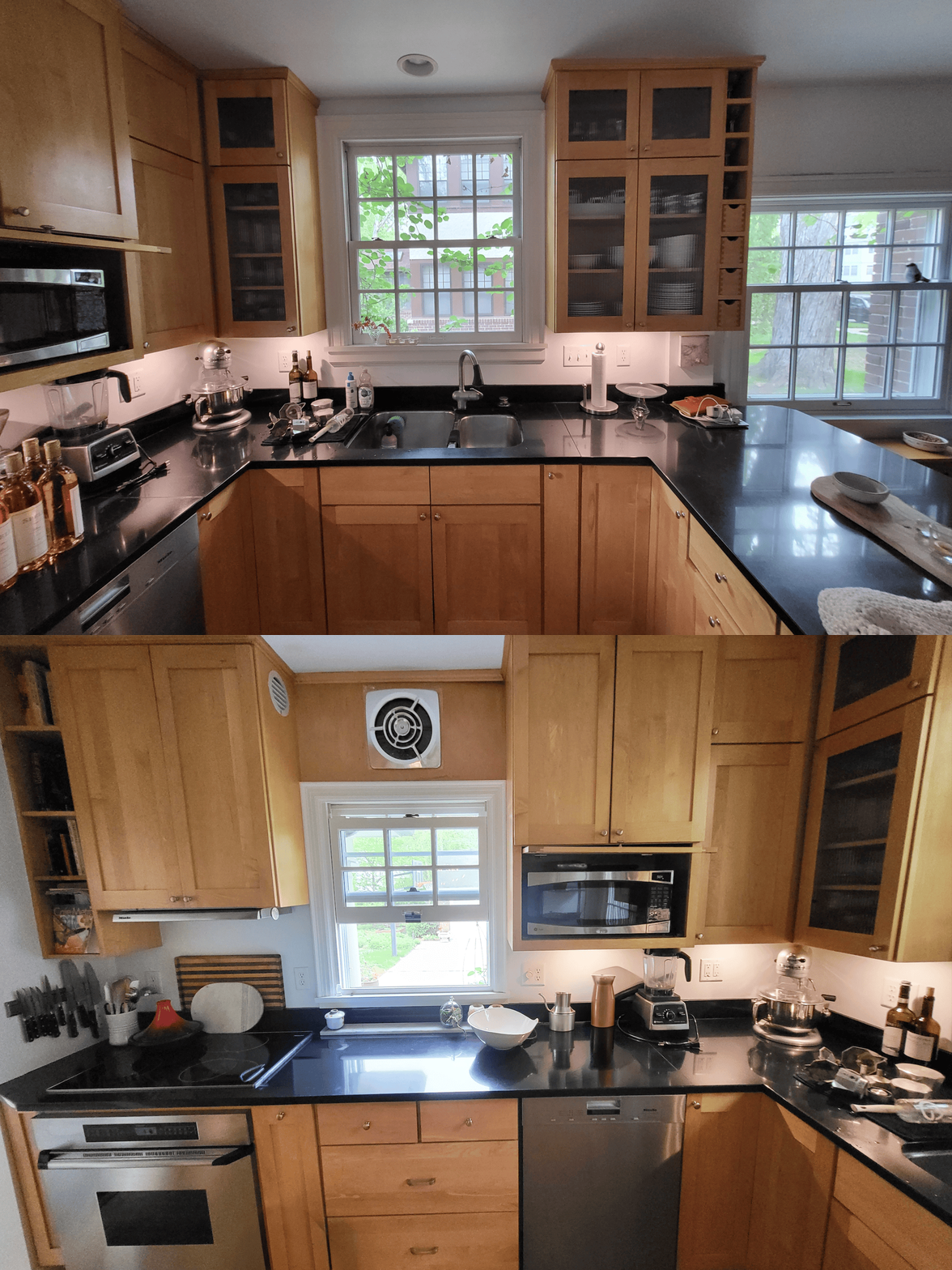
BEFORE
While the couple did renovate 25 years ago, this new phase of life — one in which backpacks and hockey sticks gave way to hosting, wellness, and time spent with family and friends — called for a chef’s kitchen, a new mudroom and furnishings that better accentuated the couple’s art collection.
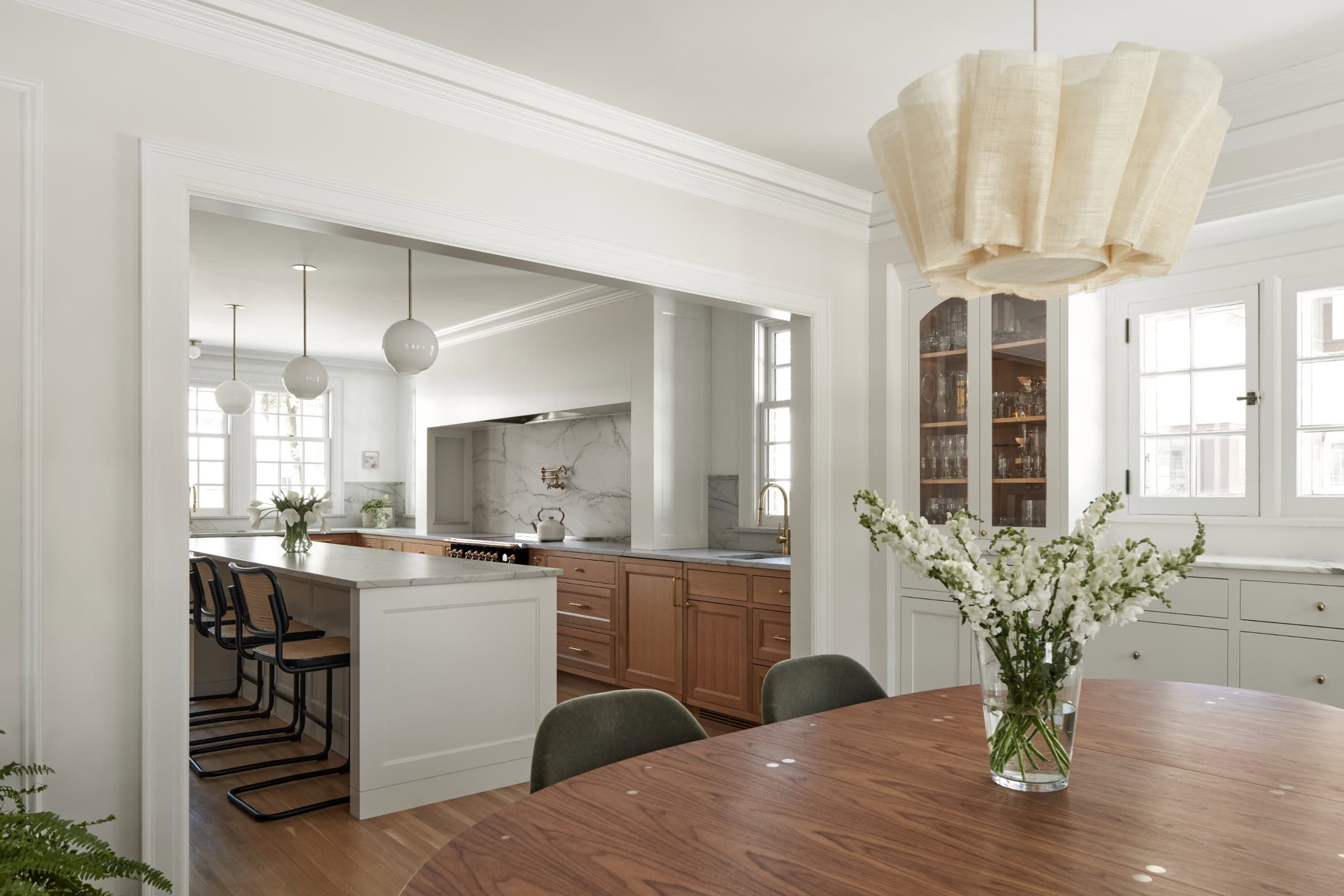
The transformation began with the kitchen, last updated in the 1990s with maple cabinetry, tight appliances and a minimal indoor-outdoor connection. What they wanted instead was a light-filled space designed for gathering that had a large island and was visually aligned with the home’s architecture. “Contemporary yet not in complete contrast,” Nicholson notes.
Photography by Round Three
Quartersawn also expanded the footprint at the rear of the home, which improved circulation and introduced a new series of windows, a choice that now allows the homeowners to see guests coming and going. Warmth is balanced with practicality, as white stone countertops are paired with lower cabinetry constructed from natural wood — a more forgiving option for grandchildren than painted cabinets — while the bar stools and impressive La Cornue range infuse texture and modernity.
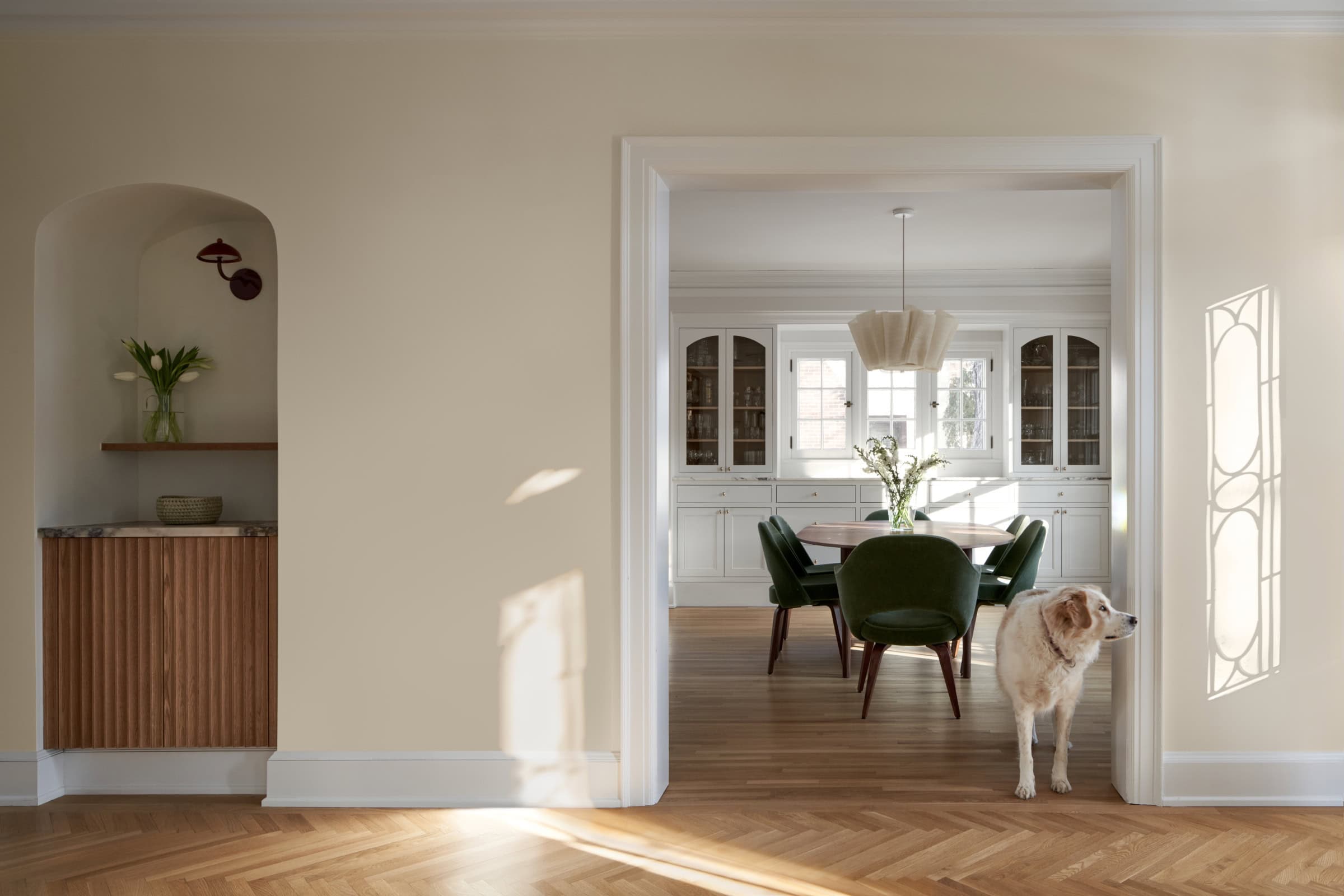
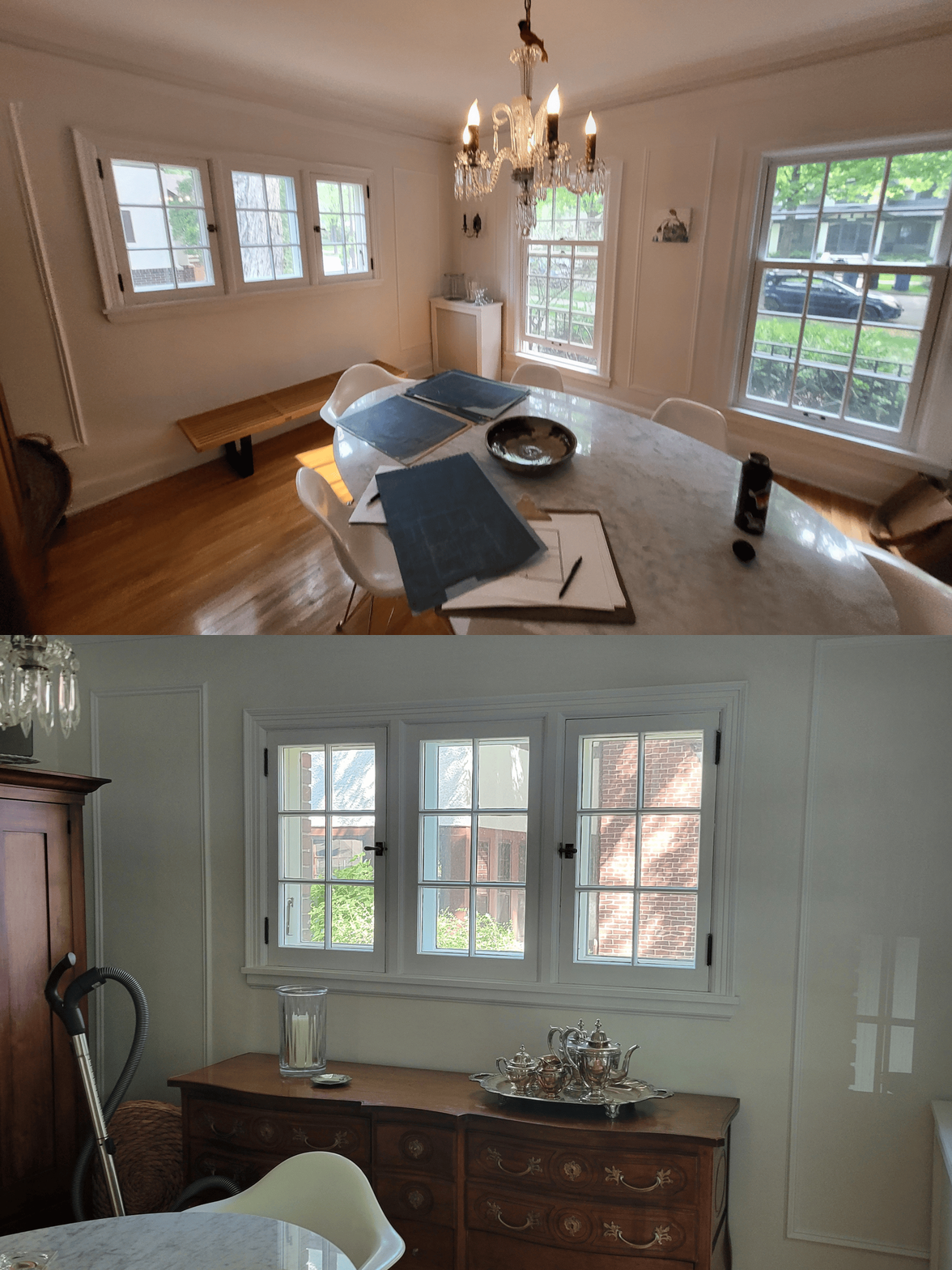
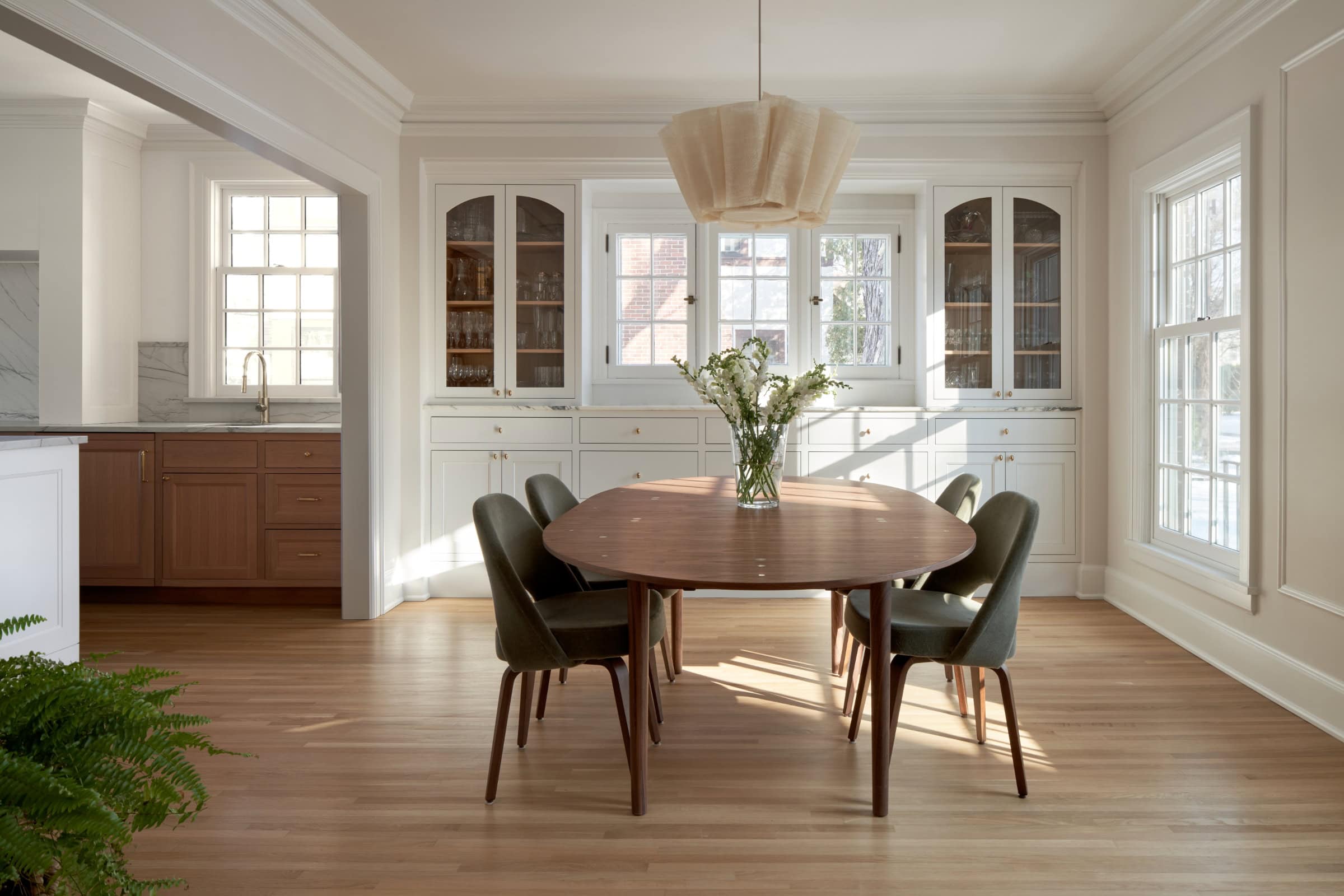
The adjacent dining room was also reworked, with the addition of a built-in buffet that provides storage and reinforces the home’s architectural language. Meanwhile, a delicate pendant from London-based Pinch Lighting complements a walnut table crafted in Denmark.
BEFORE
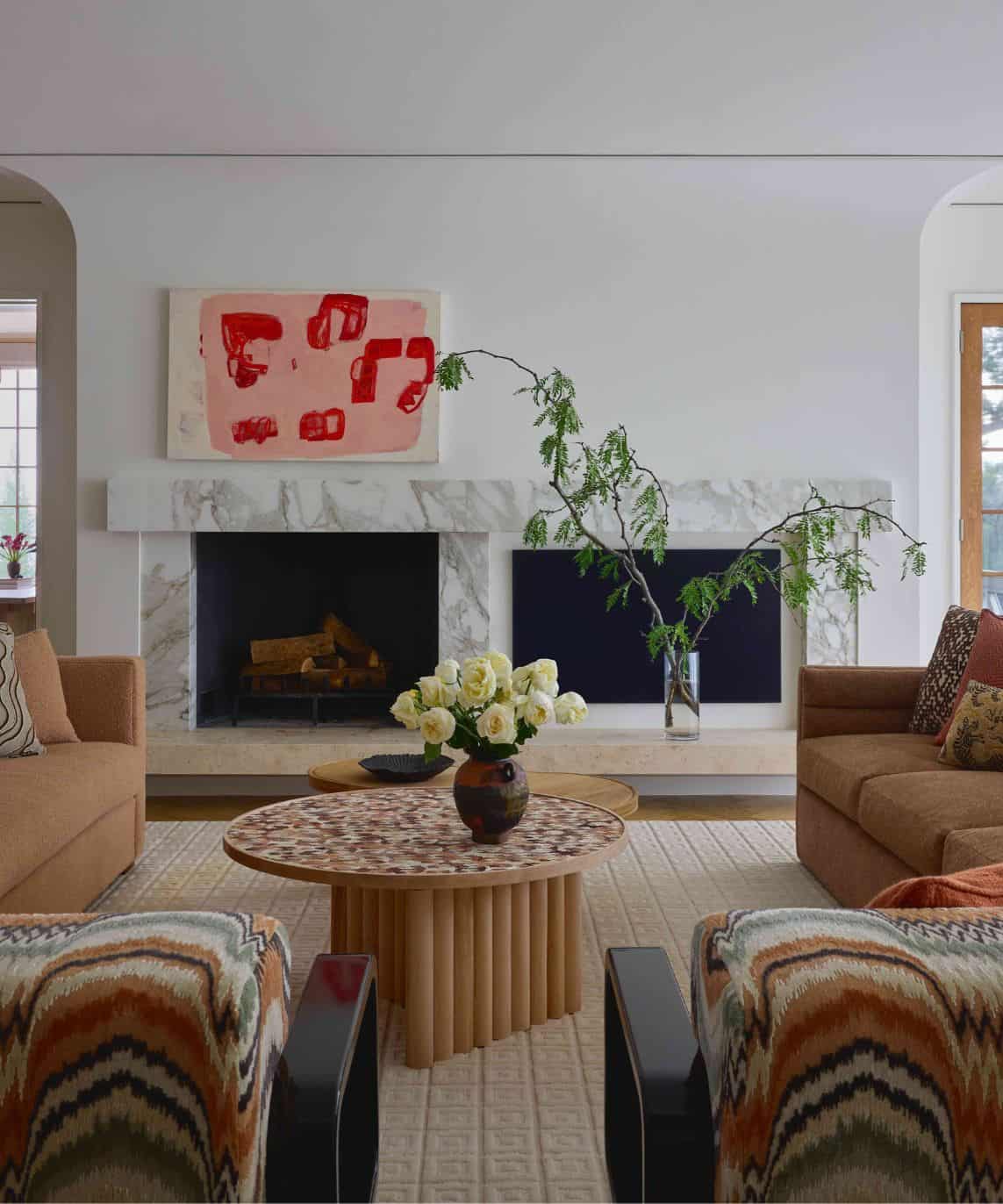
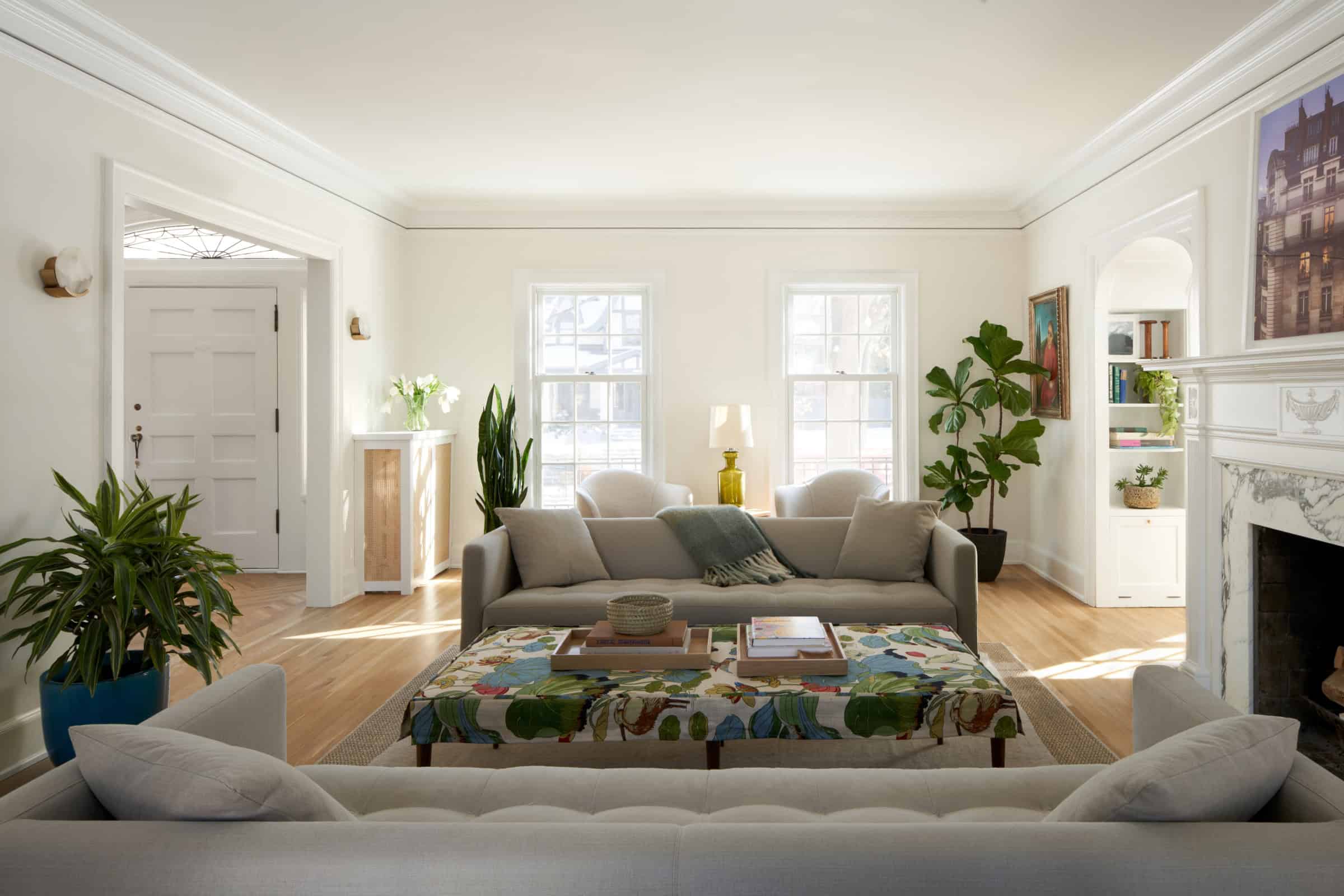
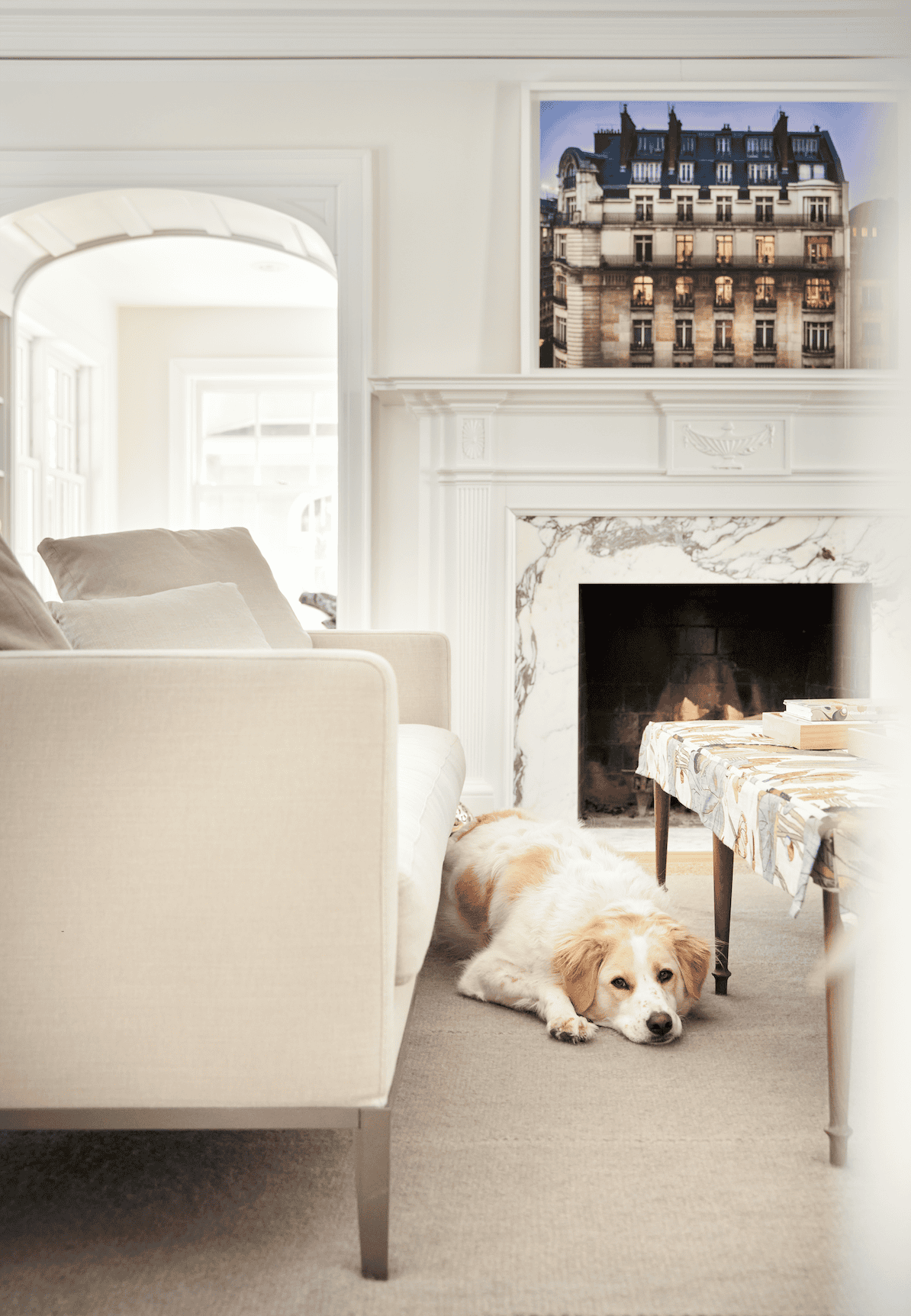
Material continuity plays a key role in tying the home together. Original red oak flooring in the dining room was extended into the kitchen, while a herringbone pattern introduces subtle variation in the home’s entry. In the living room, a new Arabescato Corchia marble surround elevates the fireplace, complemented by custom millwork, updated radiator covers and new furnishings that are reflective of the homeowners’ tastes today.
While the kitchen and back entry addition only expanded the home by 200 square feet, the lower-level renovation unlocked potential and increased total functional living space to nearly 4,800 square feet. What once was a disjointed, storage-heavy space is now a finished extension with a playroom, exercise space, sauna and home office.
Photography by Round Three
Equally transformative was the reworking of the back entry, which had previously been tucked under the stairs and measured a meager three by three feet. “They didn’t have a nice landing space at the backdoor,” says Nicholson. “They entertain a lot outside. They wanted it to flow better than it was previously.”
The reconfigured space now offers a more comfortable and intuitive transition between the garage, kitchen and backyard, and features a basalt bench and ceiling clad in Kelly Ventura Verte wallpaper in fennel. Additionally, the upgraded powder room elevates what was once a purely utilitarian zone. The space, now finished with a Calacatta Viola sink and a bold palette, replaces what Nicholson describes as previously “very vanilla.”
Photography by Round Three
Not all aspects of the renovation were visible. During construction, the team uncovered significant structural challenges in the floor joists above the kitchen, where previous plumbing work had compromised their structural integrity. Resolving the issue required careful coordination to maintain the layout of the rooms above without introducing new structural elements to the kitchen. At the same time, working within a newly established historic district meant navigating approvals for the new window openings.
In the end, the renovation reflects a home evolving alongside its owners. With a new garage and garden room underway and plans for a backyard pool as well, the project continues to unfold — extending its impact beyond the interiors and into all aspects of their lives.
Project Partners
Builder: Quartersawn Design Build
Architect: Quartersawn Design Build