A typical day in the life of Chelsea includes a slow morning with a carefully prepared breakfast sprinkled with supplements. Next she gets a mani/pedi, and a blowout to ensure her golden locks are as soft as can be. Come evening, red-light therapy and a massage help her relax. She is living the life of an Upper East Side girl, after all. Upper East Side girl dog, that is.
Chelsea has two sisters, Brooklyn and Soho, and you might see the three of them, all dachshunds, pushed around in a designer stroller and onesies down Fifth Avenue by their “mom,” Carla Lopez, who says she cares for her beloved children, er, dogs, with a “mix of thoughtful wellness and a bit of elevated routine.”
Pet wellness is nothing new, but it’s growing. Encompassing everything from nutritious food to supplements to advanced veterinary care, pet wellness was valued at $227 billion in 2024 and is projected to surpass $400 billion by 2030, according to Intent Market Research. This also includes spa retreats. And Jean Stelten, owner of Twin Cities–based Top Dog Country Club, offers just that.

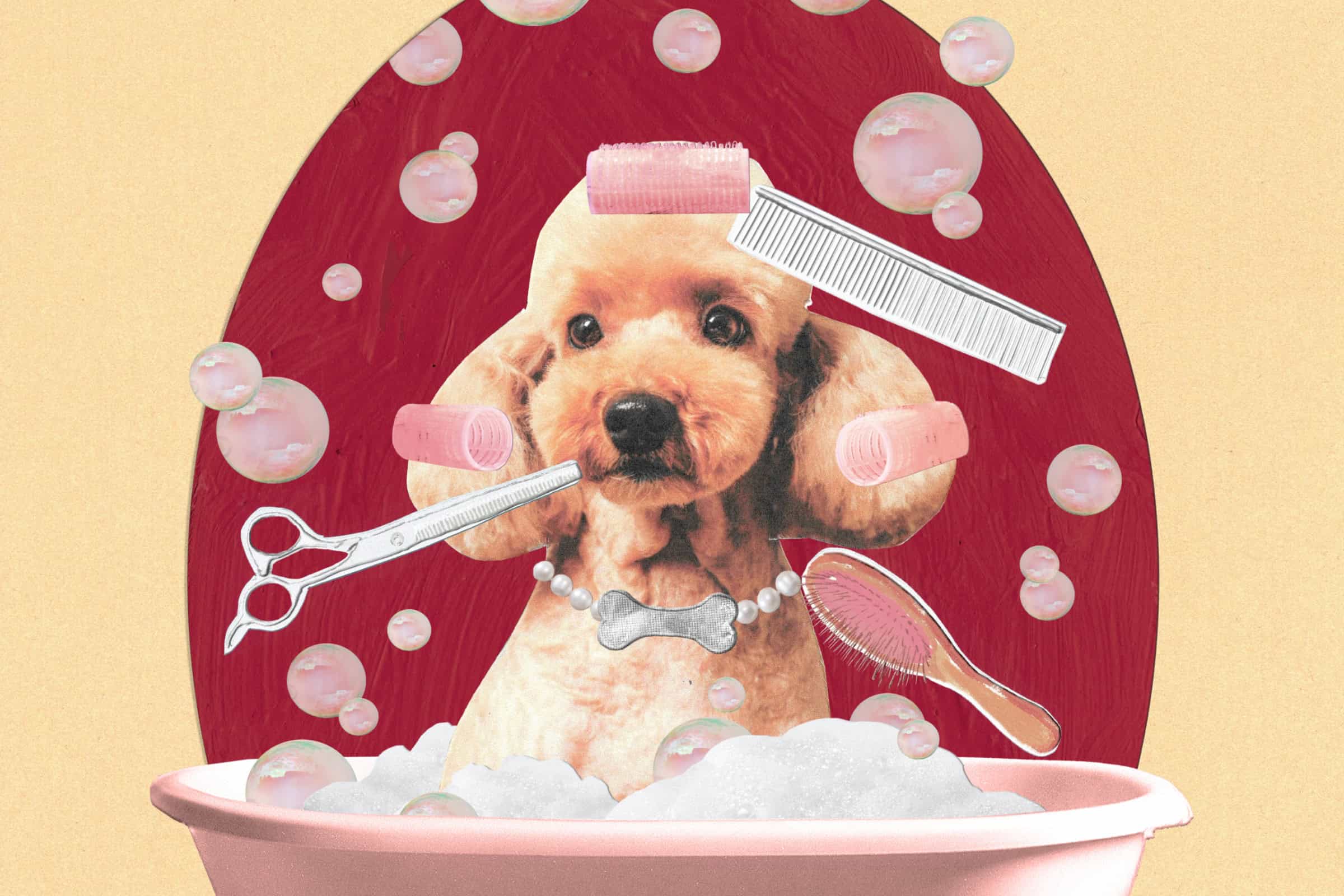
Illustration by Labyrinth of Collages
At Top Dog, after a rigorous day of exercise, dogs will indulge in “yappy hour,” complete with freshly baked apple, cinnamon and oatmeal biscuits, before their afternoon nap. Then it’s time for massages, nature walks, cuddling, swimming lessons, and spa services like bathing, brushing, blowouts and pawdicures. Before calling it a night, dogs are read a bedtime story in suites replete with custom wrought-iron beds, specially upholstered mattresses, purified air conditioning and natural morning light. If that all sounds fancy, so is the Top Dog clientele. “We have a rule that if something does not actually benefit the health and wellness of the dogs, we don’t spend time or money on it,” says Stelten. “That is why we focus on what they need and want most — lots of supervised group exercise, social training, fresh air and mental stimulation. We are in the country, where dogs can be dogs, far from the restraints and restrictions of the city.”
Pet wellness goes beyond blowouts and baby strollers, though. As with humans, longevity is the biggest buzzword in pet care. Because, for most pet lovers, the most difficult aspect of owning and loving an animal is the inevitability of outliving their four-legged friend. Yana Sinkevich, founder and CEO of The Hearty Paw, built her company with the simple mission of helping alleviate that problem. “With the humanization of pets, people are no longer thinking of their dogs as just companions; they’re family,” she says. “And with that comes a deeper interest in wellness, longevity and preventative care, which we are so excited to see.”
Paris Hilton famously credited red-light therapy for extending the life of her beloved Chihuahua, Tinkerbell, to 25 years. The internet took notice, and people began sharing their own red-light masks with their pets. As Sinkevich explains, “It’s important to understand that consumer-grade red-light therapy devices differ from those used in clinical settings,” and that, while promising, red-light therapy is still a novel treatment, with ongoing research to refine use cases and protocols.
Another wellness trend that has crossed over from humans to their animals? Stacking — as in supplement stacking. The trend that’s taken over TikTok for humans is now taking over pet routines. But Johnna Devereaux, a functional human nutritionist and clinical pet nutritionist who owns Whole House Nutrition, says not so fast for Fido. Humans need to understand the “why” behind so many additional supplements to the food. And in a nutshell, “more is not better.”

What does work? AI. Devereaux says that people are utilizing AI to better understand what they are feeling and what symptoms may be the cause of something bigger. Digging into a root cause moves beyond resolving a symptom and instead corrects the underlying issues at play. The same goes for their pets. “As people begin to understand that specific inputs like food, stress and environmental factors impact and shape their own health, they are realizing the same goes for their pets,” she says.
Brit Dunlop, a model in New York City, says that the treatments she gives her 16-year-old rescue dog, Virgil, are “basically identical to human wellness treatments.” The pup’s routine includes laser therapy, massage, chiropractic adjustments, physical therapy, hydrotherapy, acupressure and stretching. “His hydrotherapy focuses on gait training, but it’s also a major workout, which is similar to when I did water aerobics as I recovered from my own back injury,” says Dunlop. Virgil’s hourlong sessions cost $249 a pop.
Proper nutrition is also a top priority for Dunlop’s pup, who’s prone to back issues and therefore must remain trim. But guess what? Animal obesity may soon be a thing of the past. It’s no secret — though sometimes it is, right? — that GLP-1 drugs are sweeping America. In fact, one in eight humans are pushing the poke. And Spot and Mittens could be next. Okava Pharmaceuticals is on track to develop an implantable weight-loss device for pets. Hello, Ozempups and Meowjaro. Bye bye, fat cat.
Thanks to a solid uptick in pet wellness offerings, it’s almost impossible to imagine a time when our animals were raised free-range by parents without access to DNA testing, bespoke healthcare, and, soon, weight-loss drugs. Because wellness for our pets is now an extension of what we do for ourselves. Like mother, like daughter, or, rather, doghter.