Sleeping on Botswana’s Makgadikgadi Salt Pans feels like floating. Tucked inside my warm sleeping bag, I’m sandwiched between two distinct worlds: the lunar-like remains of the ancient super lake below me and a vast galaxy above. Desert & Delta safari guide Isaac Mpuchane tells me that we’re close to the Tropic of Capricorn, where the Milky Way flows past, making this one of the world’s top destinations for stargazing. A full moon complicates our lesson. In total darkness, I learn, its gentle silver glow dominates the sky.
Once a niche pursuit reserved for astrophiles and safari die-hards, noctourism offerings like this sleepout — which let people explore the world after dark — are lighting up as one of travel’s most compelling trends. In fact, the category grew 25% in 2024, according to tour operator Wayfairer Travel, to more than $10 million — a number that’s anticipated to double by 2035, reports research firm Future Market Insights.
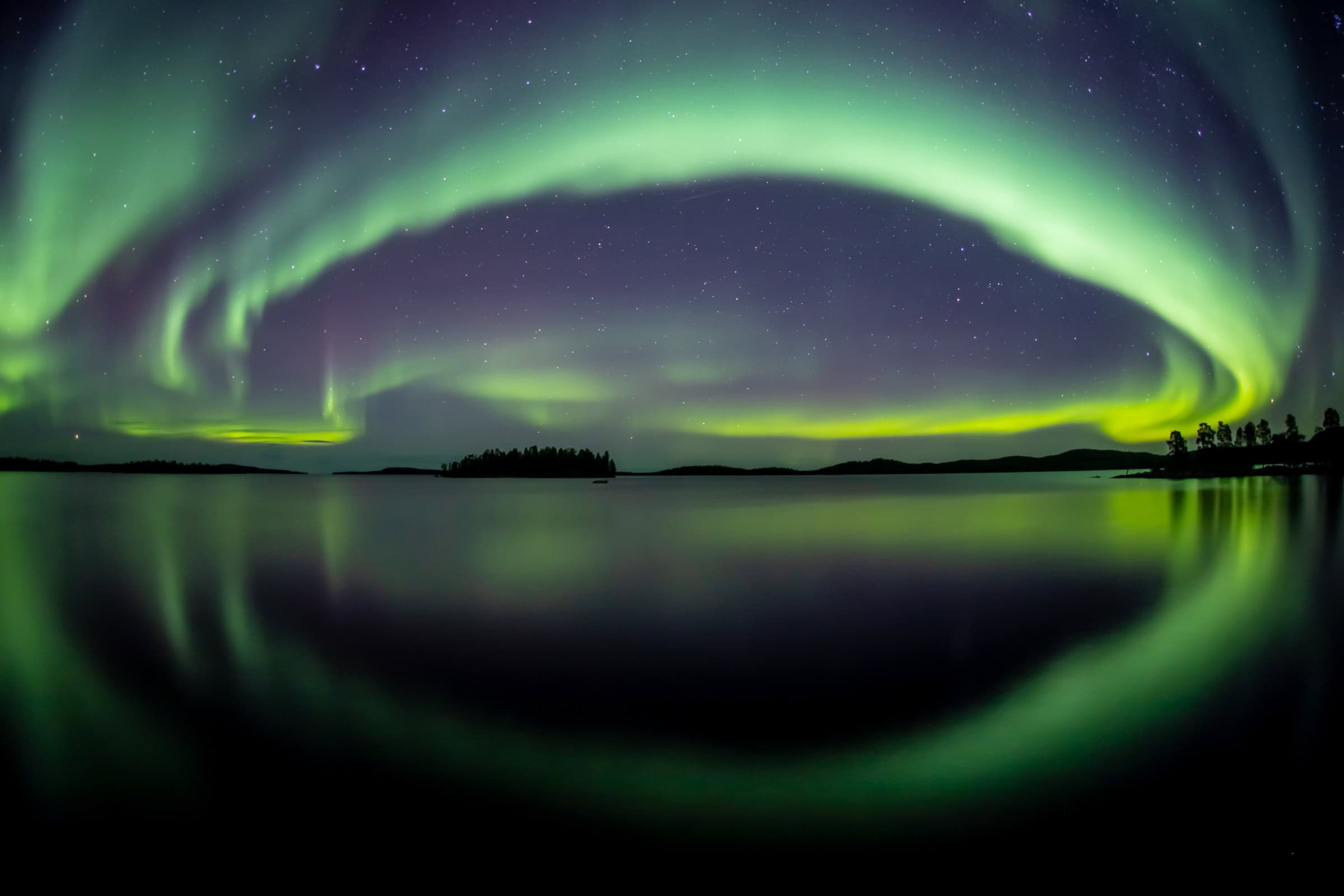
How did darkness become travel’s new frontier? The boom mirrors increased global interest in astrotourism as news headlines get dominated by comets, total eclipses, high-profile space missions and the aurora borealis — which reached an 11-year activity peak in recent years.
“Astrotourism is a gateway to experiencing the larger noctourism movement,” says travel journalist Stephanie Vermillion, author of National Geographic’s 100 Nights of a Lifetime. “Once you go out a few times to see the stars, you start to notice other marvels of the night, such as bioluminescence or fireflies.”
Photography provided by Pertti Turunen & Visit Finland
Another major catalyst is social media, Vermillion notes. Today’s cameras capture the night sky with striking clarity. “Even iPhones can photograph the Northern Lights well,” she says. Those images can spark curiosity, sending travelers in search of the real thing.
What you discover out there might surprise you. “You may have heard the saying many national parks use: ‘Half the park is after dark,’” says Communications Manager Drew Reagan at DarkSky International, an organization dedicated to protecting the night sky through education and advocacy. “The night is full of wonders, from glowing fungi to cool critters that only come out after dark.”
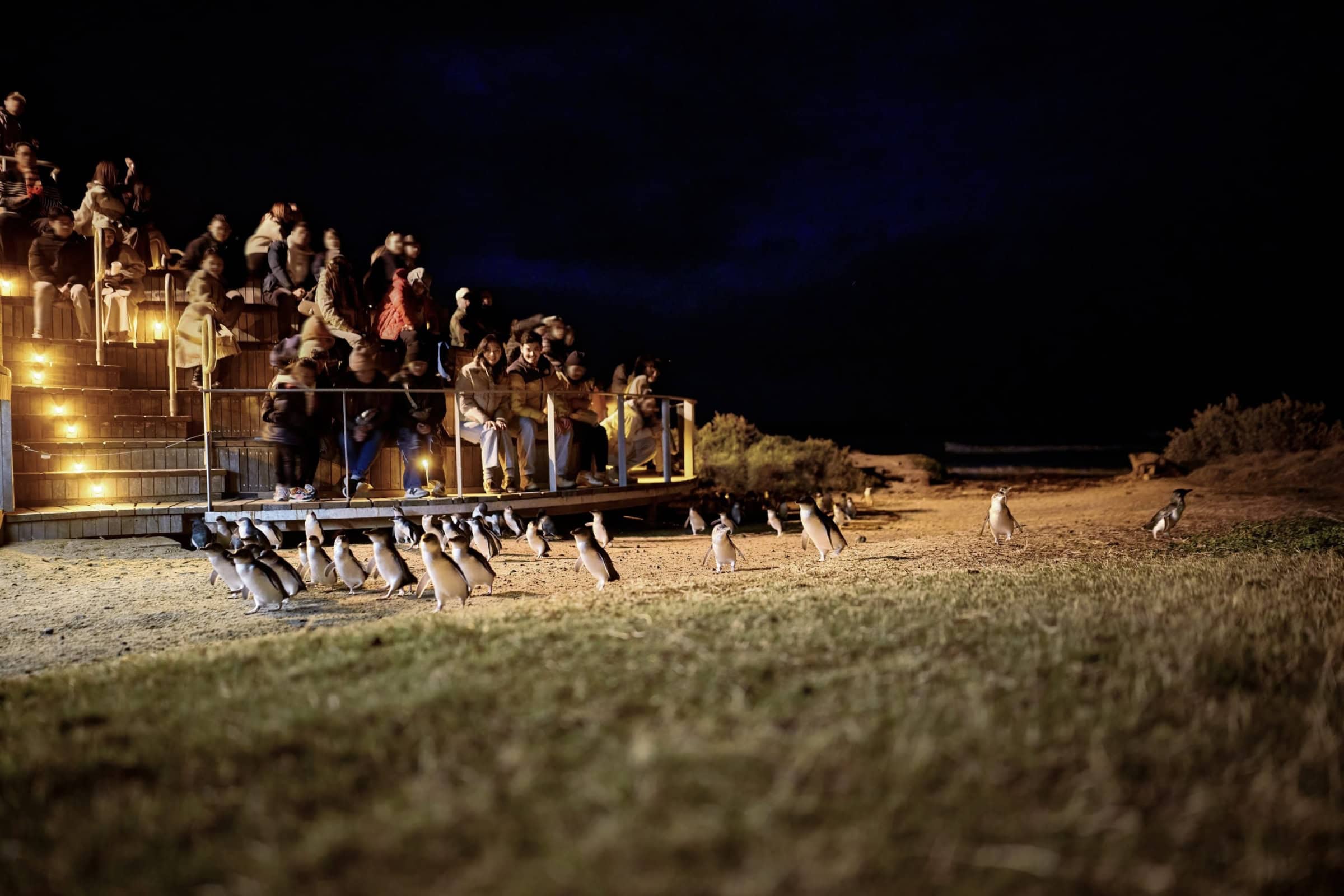
Noctourism unlocks off-the-beaten-path activities that simply don’t exist during the day, like witnessing the Phillip Island’s penguin parade in Australia and snorkeling among bioluminescent phytoplankton at Cambodia’s Six Senses Krabey Island. It also fosters a deeper understanding of destinations. “We’re so reliant on our vision during the day,” says Vermillion. “At night, when our vision isn’t as sharp, the natural world can better engage our other senses.”
The effect isn’t just immersive; it’s meditative akin to the therapeutic effects of forest bathing. “In a world that seems more chaotic than ever, spending time outside at night encourages us to slow down and reconnect with something larger than ourselves,” says Reagan.
Photography provided by Visit Victoria
Noctourism boasts practical benefits, too. Cooler temperatures can make outdoor adventures more comfortable, while visiting popular sites at night lets travelers avoid daytime crowds and enjoy a calmer, more intimate experience.
In response to growing demand, noctourism is expanding beyond simple stargazing as operators cater to travelers seeking vast, dark skies with prime viewing conditions (think no light pollution and low humidity). On a tour with Naya Traveler, guests explore Chile’s Atacama Desert — the driest, non-polar desert in the world — as well as Bolivia’s Salar de Uyuni, equipped with domed stargazing beds.
Peeping the Northern Lights has become a category in its own right. In Yellowknife, Canada — the Aurora Capital of North America where the phenomenon is visible up to 240 nights per year — Joe Buffalo Child of North Star Adventures started the now-popular activity of aurora hunting, a celestial adventure that involves chasing clear skies until the heavens open up and the magical Northern Lights spill across the horizon. At the remote, family-owned Wilderness Hotel Inari in Finland, visitors can search for the aurora by reindeer sleigh ride, snowmobile or snowshoe.
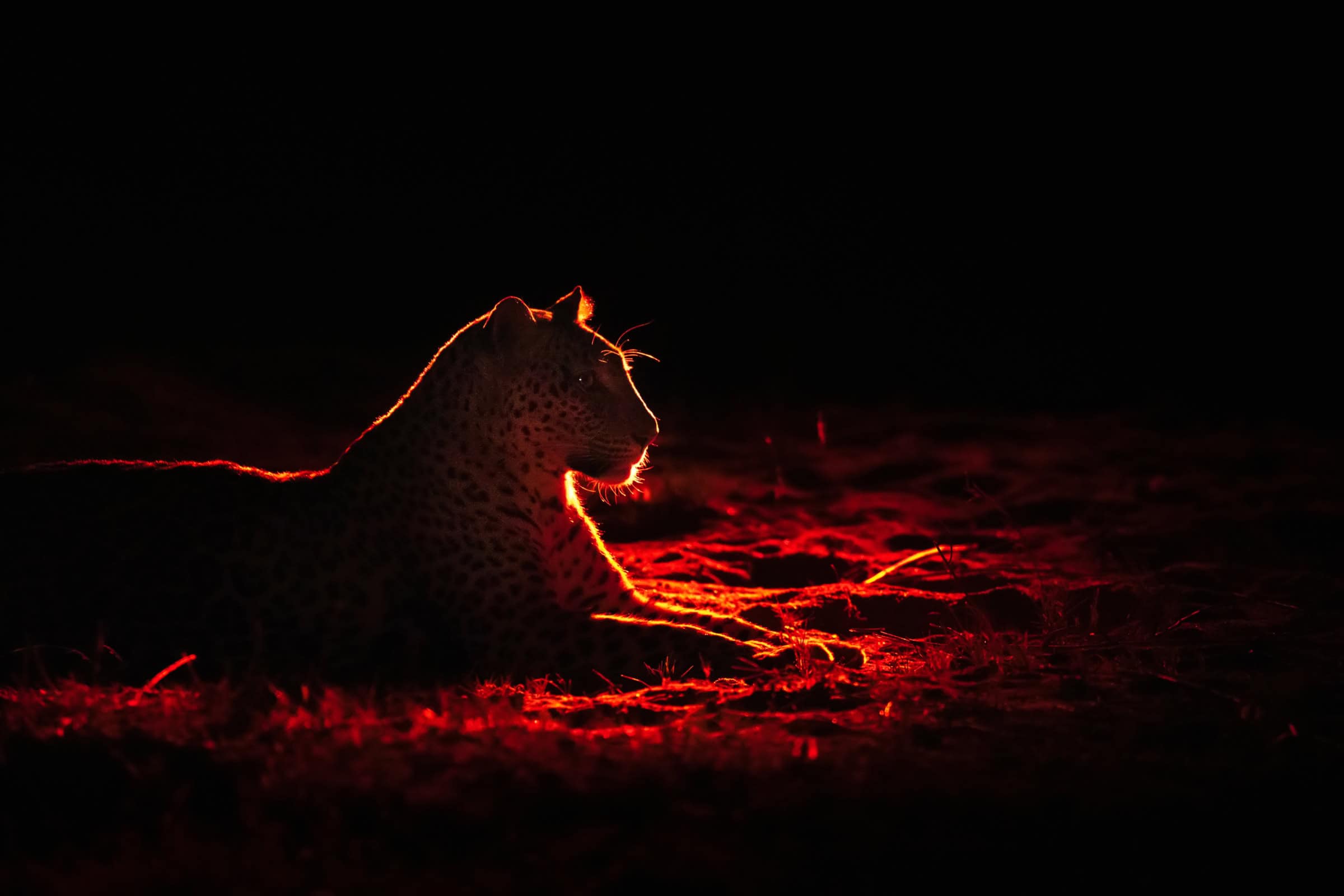
Another hot offering? Night safaris thanks to the fact that 70% of mammals, as well as many species of reptiles, amphibians and insects, are nocturnal. In Costa Rica, Savia Forest Immersion (a partner of Hotel Belmar) leads nightfall hikes into the cloud forest, providing guests with night vision monoculars and black lights to better see the hidden world around them.
Photography provided by Chiawa Safaris
As interest in noctourism surges, so too does the effort to preserve the darkness that travelers crave. Organizations like DarkSky International are expanding their focus from parks to the tourism infrastructure that surrounds them. Currently, more than 250 DarkSky Places — a network where pristine night skies are protected from the light pollution that’s now increasing by 10% every year — stretch across the planet.
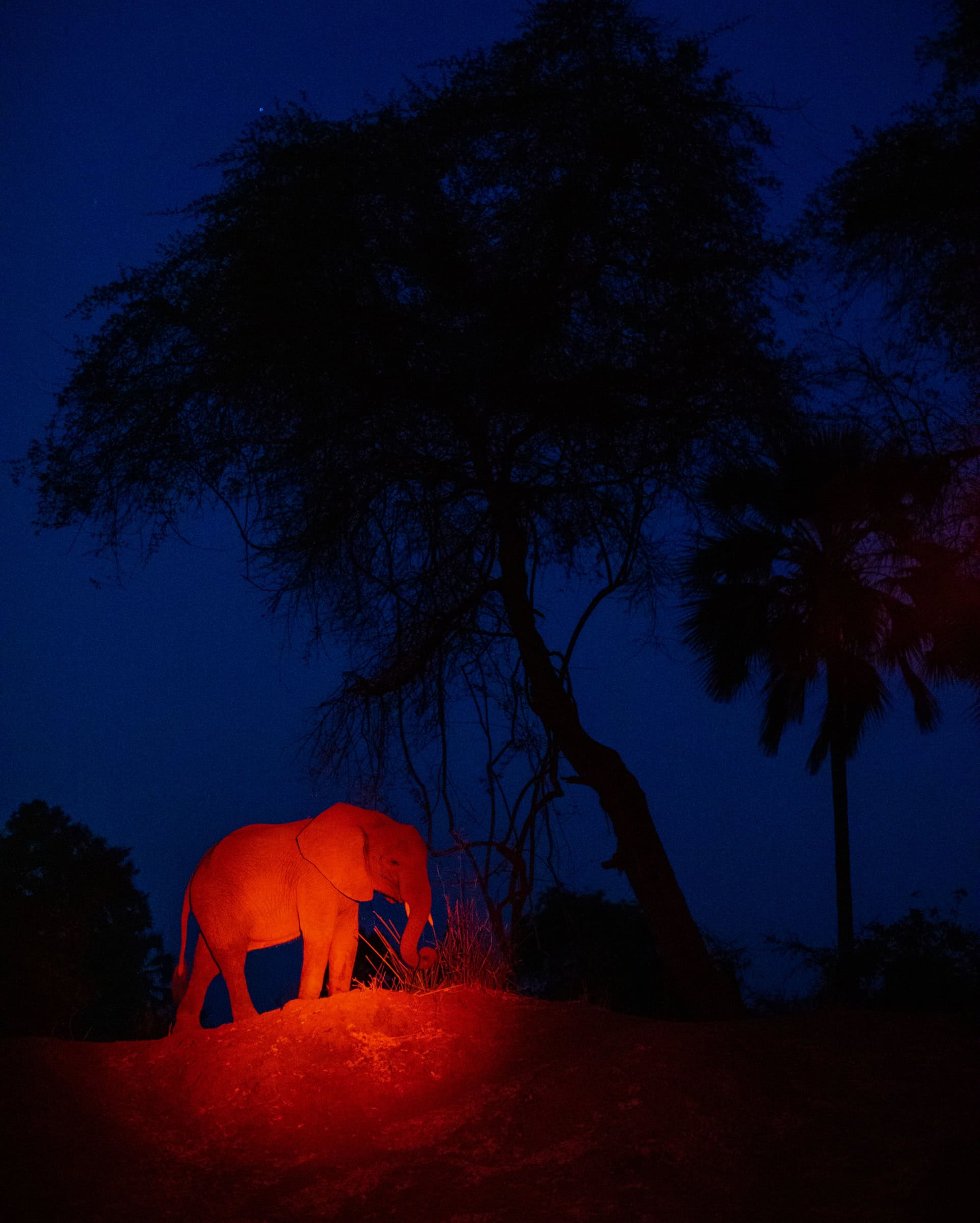
Outfitters are adapting, too. Brands such as Chiawa Safaris in Zambia emphasize the importance of putting red filters on spotlights and prohibiting camera flashes to ensure wildlife isn’t inadvertently disrupted. “Tourism can be wonderful, but it must be done responsibly, or we risk losing the resource that draws people in,” says Reagan.
That’s the quiet magic of noctourism: It invites you to listen harder, breathe deeper and see the world in ways you’d normally overlook. Back in Makgadikgadi, I watch the sun inch above what seems like the edge of the earth. Pink light unspools across the flats and, the darkness gone, I reluctantly pack to leave. When dawn finally arrives, it’s not just the horizon that has shifted — something in me has, too. I haven’t looked at the night sky the same way since.
Feature image photography provided by Chiawa Safaris.