Making history isn’t an easy feat. And the act is often attributed to a voyage that is filled with inevitable sacrifice, singular innovation and an unwavering commitment to stand by and up for what you believe in. Acclaimed Oglala Lakota Sioux chef Sean Sherman knows this journey well, carving out his own distinctive path as an activist, educator, forager and founder of the outstanding James Beard Award–winning restaurant, Owamni. Currently, Sherman is celebrating his latest well-deserved victory lap with the release of his new cookbook Turtle Island, created alongside Artful Living’s very own Editor-at-Large, Kate Nelson.
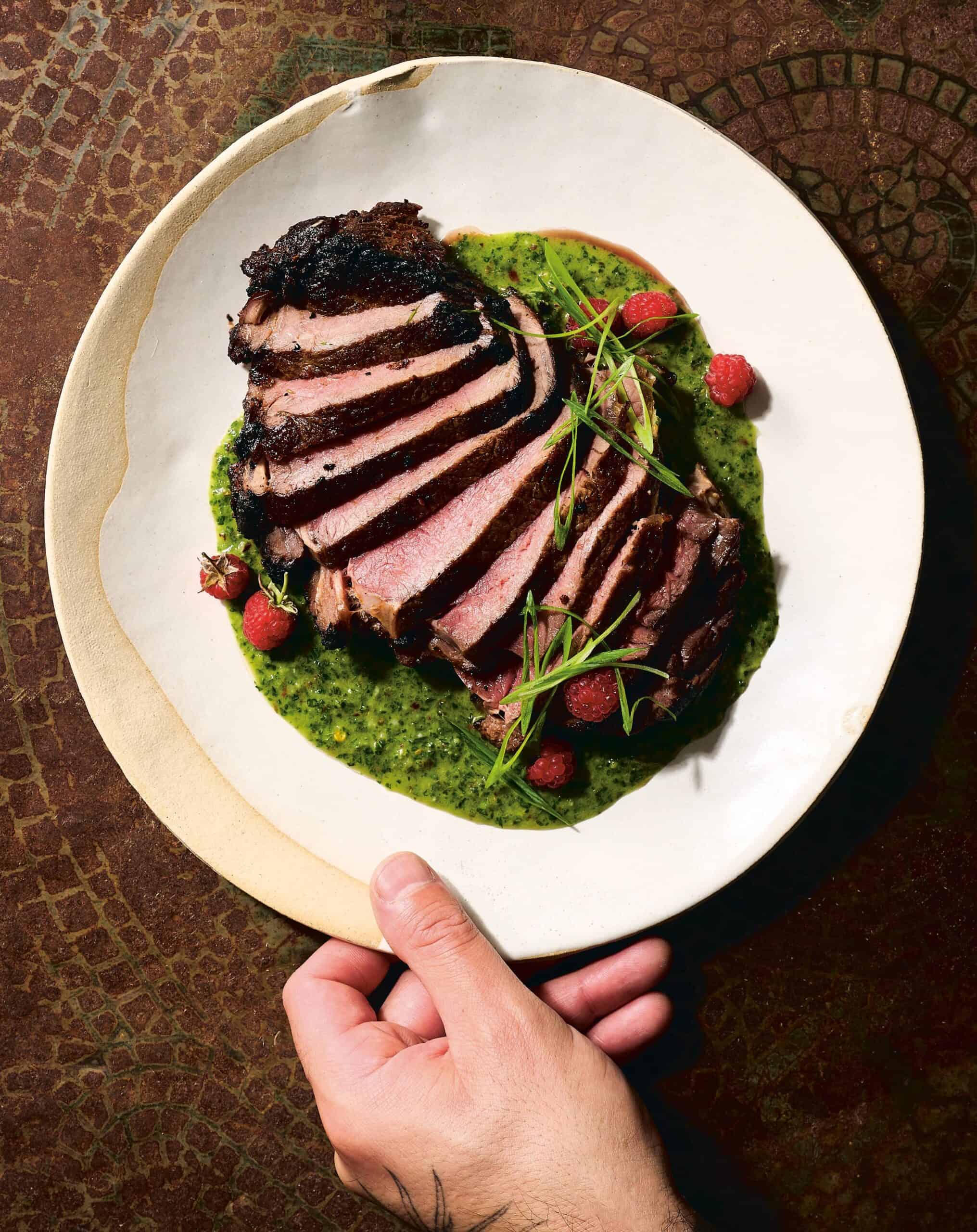
Photography by David Alvarado
The Sioux Chef: Make Americas Borderless Again – Turtle Island Cookbook Tour
Tuesday, November 18 | 6:30 to 9:30 p.m.
Guthrie Theater, 818 South 2nd Street, Minneapolis
Ahead of the duo’s exciting tour stop and performance at the Guthrie Theater on November 18, Nelson shared with us a closer look at the process of bringing Turtle Island to fruition, detailing her collaborative process with Sherman, how food has helped her connect with her personal cultural identity and what she hopes the groundbreaking tome dispels about Indigenous communities and Native peoples.
Turtle Island paints a crucial portrait of natural environments and Indigenous traditions and histories from all across North America. What was your creative process like bringing this important cookbook to life?
This book is the first of its kind, so we really had to carve out our own path during the creative process. This was such an ambitious project and a big responsibility to shoulder, and I have to admit that at times it felt daunting. I definitely relied upon my journalistic skills throughout the research process, which involved having conversations with dozens of knowledge keepers and culture bearers from Indigenous communities across North America as well as traveling to some of those communities. From there, the hard part was attempting to distill all of that really important information into a digestible, approachable collection of stories. With thousands of words about each region and more than 150 recipes altogether, it was tough keeping this book to just 416 pages.
Overall, I think we were successful in painting a broad picture of the vast and varied Native foodways of this place, and this serves as a starting point for people to learn more about our cultures.
You and Sean have been friends and supporters of one another’s work for a handful of years now. Can you describe your collaborative process?
I had followed Sean’s work long before we ever worked together, and back then, when I was attending his pop-up dinners, I never could have imagined that one day we would be such close collaborators. The first time I interviewed him was for a 2021 Esquire story about the opening of Owamni that went on to earn a James Beard Media Award nomination. That article really helped set me on my path to focus my time and talents on Indigenous storytelling, which I believe is my life’s work. As Sean and I became friends in the years since, we realized that our philosophies about uplifting tribal communities are really aligned, so it felt like a natural fit when he asked me to sign onto this book project. I have such immense respect and gratitude for Sean and his work, and I’m grateful that we’ve been able to work alongside each other toward a shared vision of a decolonized future.
How has food helped you connect with your personal cultural identity?
Food has been instrumental in helping me reconnect with my Native ancestry. So much so that I even wrote a personal essay about salmon fishing. From an Indigenous worldview, culture, food, history and place are inextricably intertwined — something we showcase in this book — so it makes sense that tasting the flavors of my birthplace in Southeast Alaska has enlivened ancestral memories within me and deepened my understanding of who I am and where I come from. Culturally relevant foods have nourished my mind, body and spirit along my journey to find myself.
What generalizations or myths do you hope Turtle Island dispels?
Sadly, there are still so many outdated, prejudiced stereotypes about Indigenous communities today. Above all, we’re hoping to dispel the myths that Native peoples are relics of the past and that we’re a monolith. Turtle Island paints a picture of the hundreds of beautifully diverse Indigenous cultures just here in North America. Our message is clear: We are still here, and our communities are thriving.
Do you have a favorite recipe from the book?
It’s hard to pick just one! Sean, recipe tester Mecca Bos, photographer David Alvarado and I got to spend time researching and eating our way through Oaxaca, Mexico, together last spring, so the Central Mexico chapter has a special place in my heart. The Tlayuda con Frijoles, Huitlacoche y Escamoles (tlayudas with black beans, huitlacoche and insect caviar) recipe is a transportive dish that offers an authentic taste of that region, including an ingredient that might seem foreign to many Americans: insects — which are a sustainable, climate-savvy protein source consumed in much of the world. It’s a perfect example of a food that invites us to open up our minds and expand our palates beyond just what we’ve tasted here in America.
What do you hope readers and home cooks ultimately take away from Turtle Island?
That there’s so much deep ancestral wisdom embedded within Native cultures that can help us live better and bring about a lot of cross-cultural healing. This isn’t just about our personal health but also about our planetary health. Indigenous communities have safeguarded sacred spaces and incredible biodiversity employing traditional ecological wisdom for millenia, and we can all learn a lot from this knowledge, which is meant to be shared.
Finally, what’s a thought or advice you’d share with your younger self if you could go back in time?
Trust yourself and trust the universe to guide you on your way. With time, all will be illuminated.