Wood-fired kilns have been used for thousands of years, and potters revere the use of them for the unique results they produce. The process takes at least 24 hours, which is a considerable amount of time to maintain a fire of 600 degrees or more, so kilns have historically been a shared resource used and tended to by communities. This longstanding tradition was one that a Twin Cities potter wanted to bring to his Stillwater-based studio. “That was one of the driving forces behind this project,” says Hagstrom Builder Project Manager Nils Hagstrom. “Our client’s greatest passion is pottery.”
Photography by Scott Amundson
The artisan and his wife purchased the 15-acre property a few years ago to use as a weekend getaway. Because their children are still in school and their lives are in the city, the couple figured they’d start with a wood-fired kiln building, a spacious pottery studio for working and hosting classes, and a modest guesthouse for themselves or visiting potters.
Given the safety considerations of a high-temperature fire that might burn for days at a time, designing a structure for the kiln that was separate from the studio and guesthouse was a given. It was a unique project for the team that helped bring the couple’s vision to life: Nils and Peter Hagstrom and Matt Bobick of Hagstrom Builder, architects Kristine Anderson and Alyssa Portz of PKA Architecture, and Aune Fernandez Landscape Architects. “It’s ideal for us to be brought into the process early so that we can execute the architect’s vision within the budget and building codes,” Peter explains. “That was especially important here, where there were technical considerations to get ahead of.”
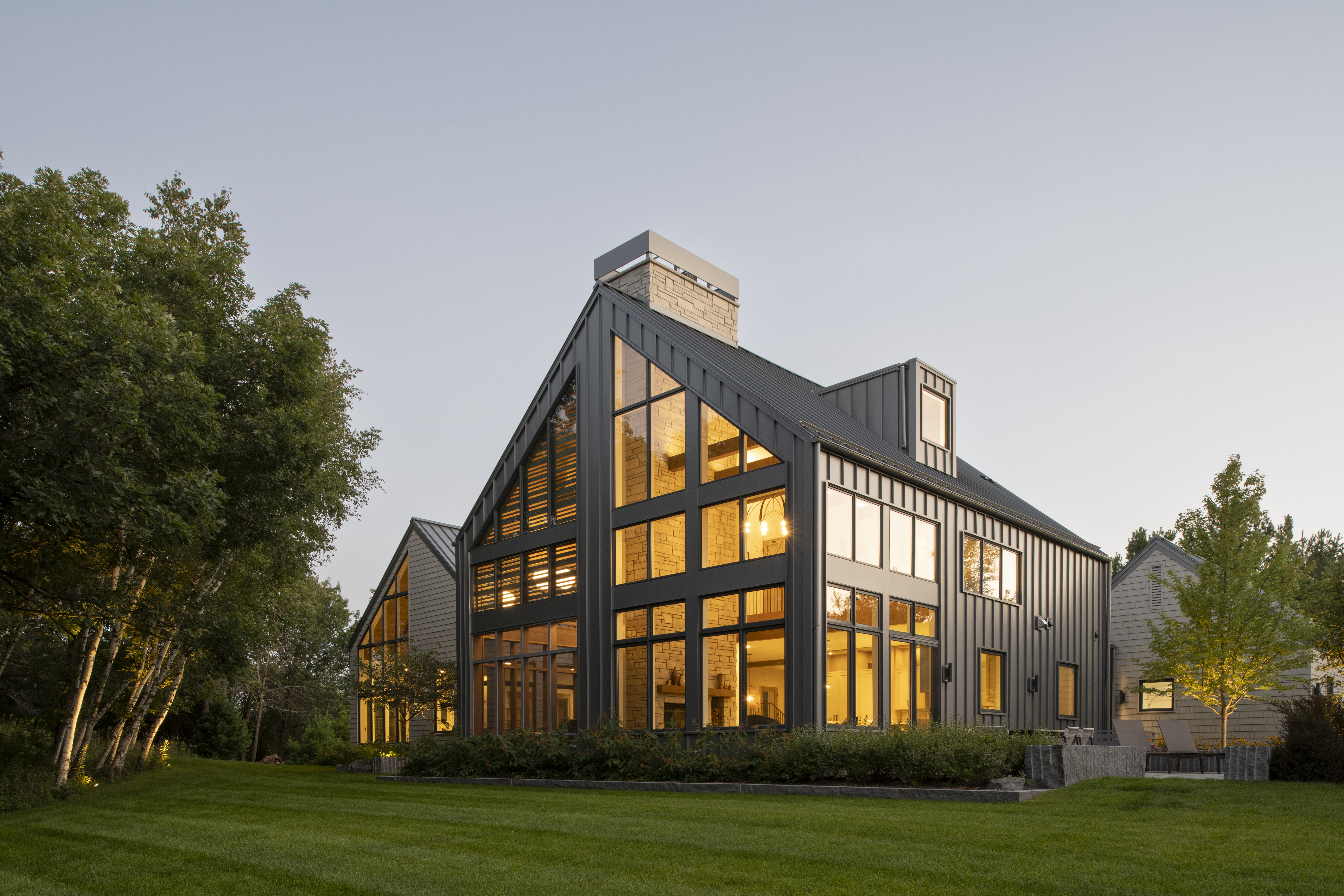
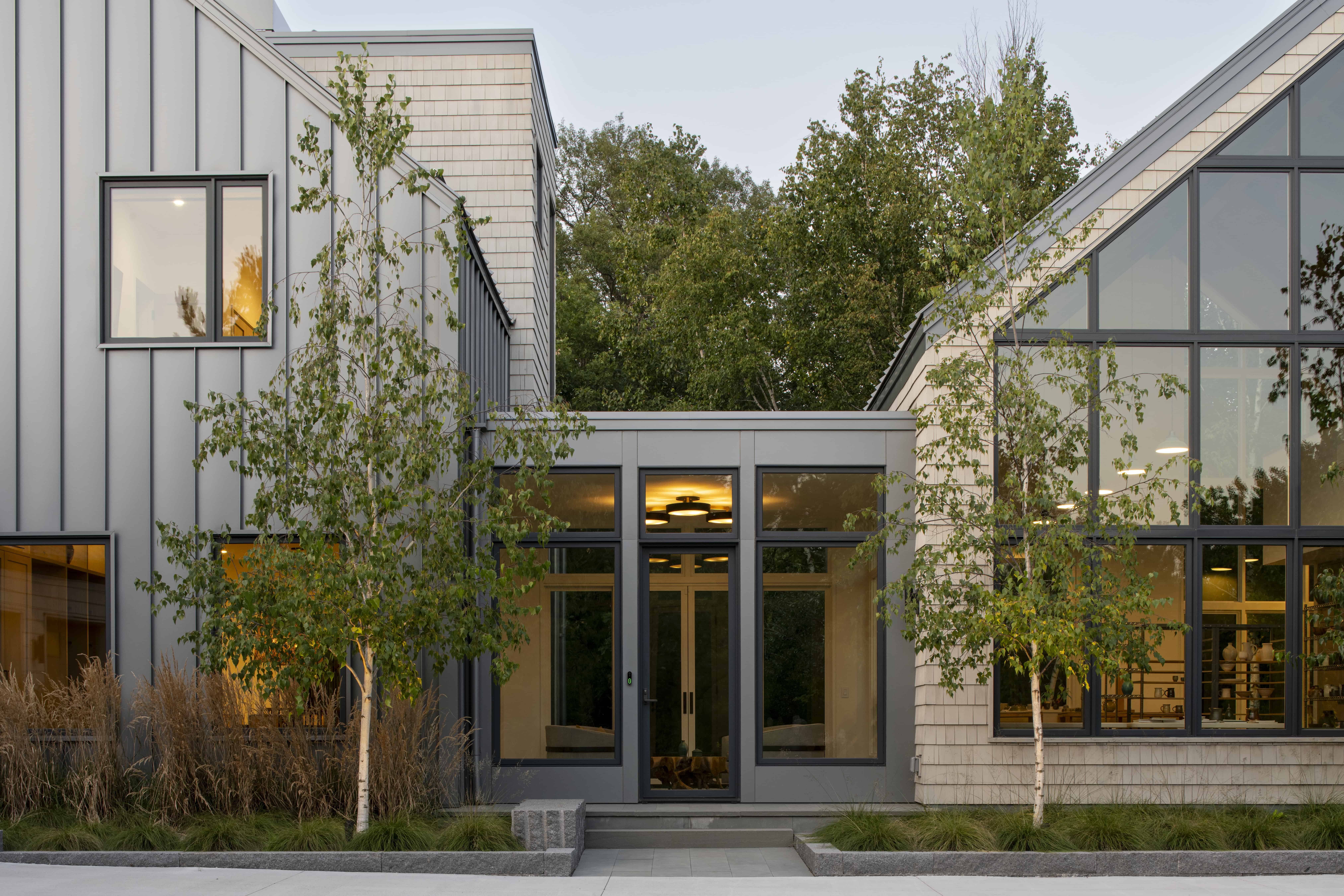
Anderson and Portz designed a cluster of four buildings surrounding a courtyard at the end of a long, winding driveway. But only the kiln structure is actually detached. The pottery studio, house and garage are connected by glass links, which visually separate the structures. “Even though the private home wing is the first thing you see coming up the drive, most of its windows are on the backside to create more privacy from the front,” Portz explains. “On the other hand, the studio wing and entry link welcome guests in with generous glass on both sides.”
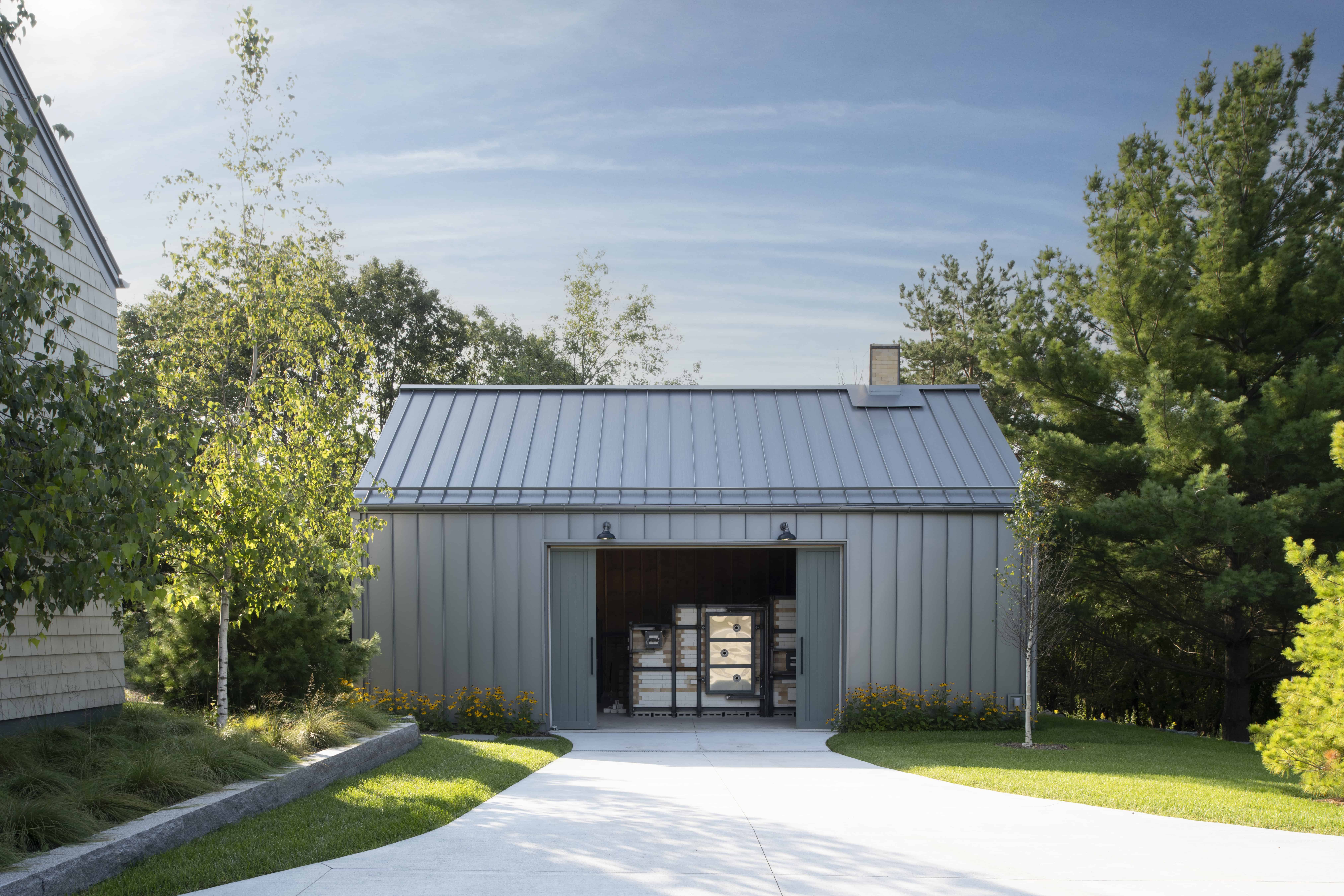
The paved courtyard provides parking for workshop attendees and potters using the kiln. It also facilitates the delivery of wood and fuel. “It’s a work of art,” Nils says of the kiln that was built onsite by Master Kiln Builders owner Donovan Palmquist. Housing it is a metal shed structure, refined by the perfect alignment of the roof and siding seams, creating an unbroken line — a detail that’s also present on the main home.
An additional paved path connects the pottery studio to the kiln building, making it easier to roll carts full of ceramics to and fro. “The kiln has a large capacity, so firing becomes a communal activity in which artists take shifts to keep the fire going,” Portz comments, adding that the glass link connecting the studio to the main house has become a beloved hangout area.
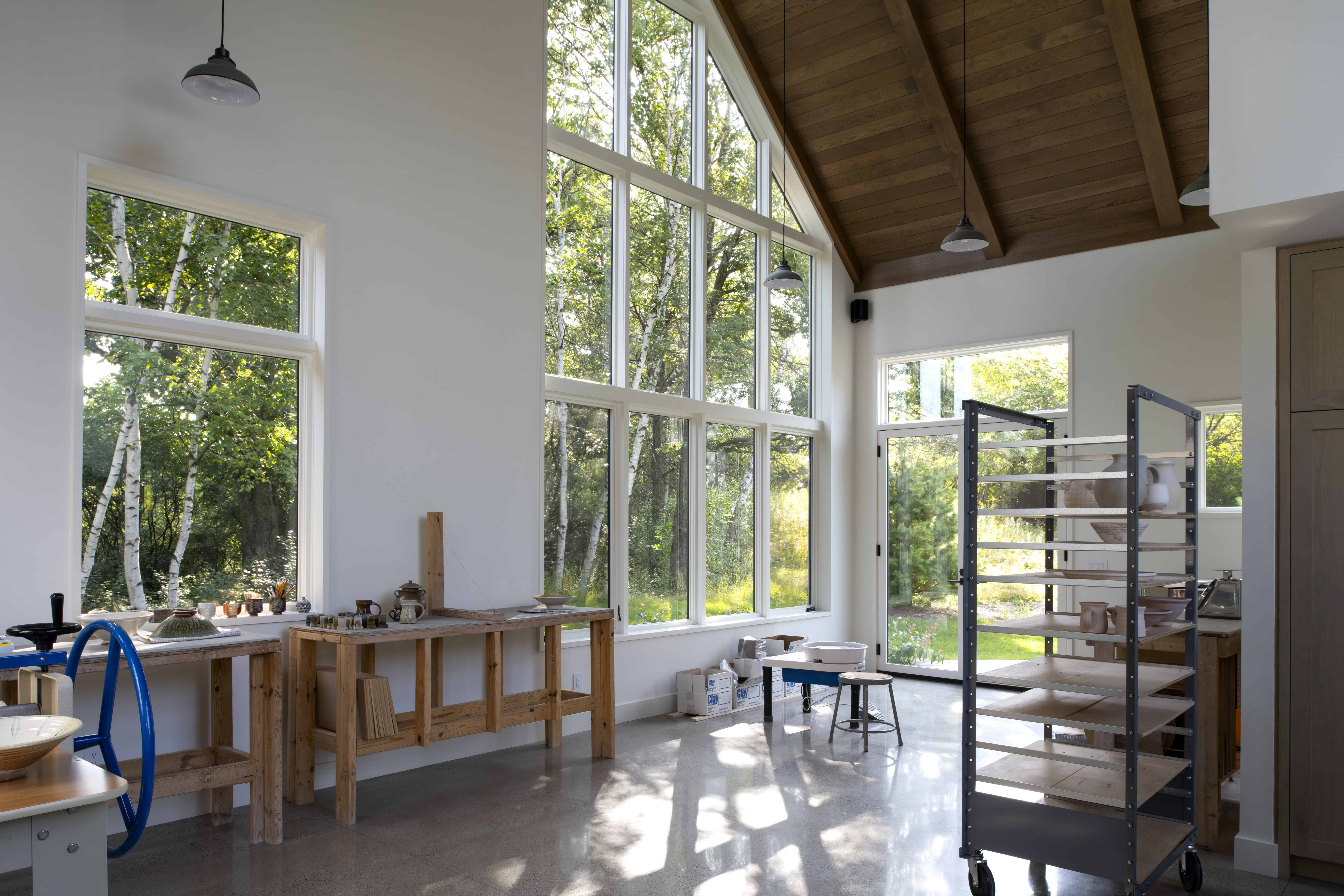
The 900-square-foot pottery studio is light-drenched and airy, and aims to inspire with its high, wood-clad ceilings and large windows facing northeast and southwest. The space is designed for easy cleanup, too, given the messy nature of throwing pottery. Concrete floors with a central drain and waterproof baseboards can easily be hosed off, and the plumbing is equipped with special traps to filter out clay.
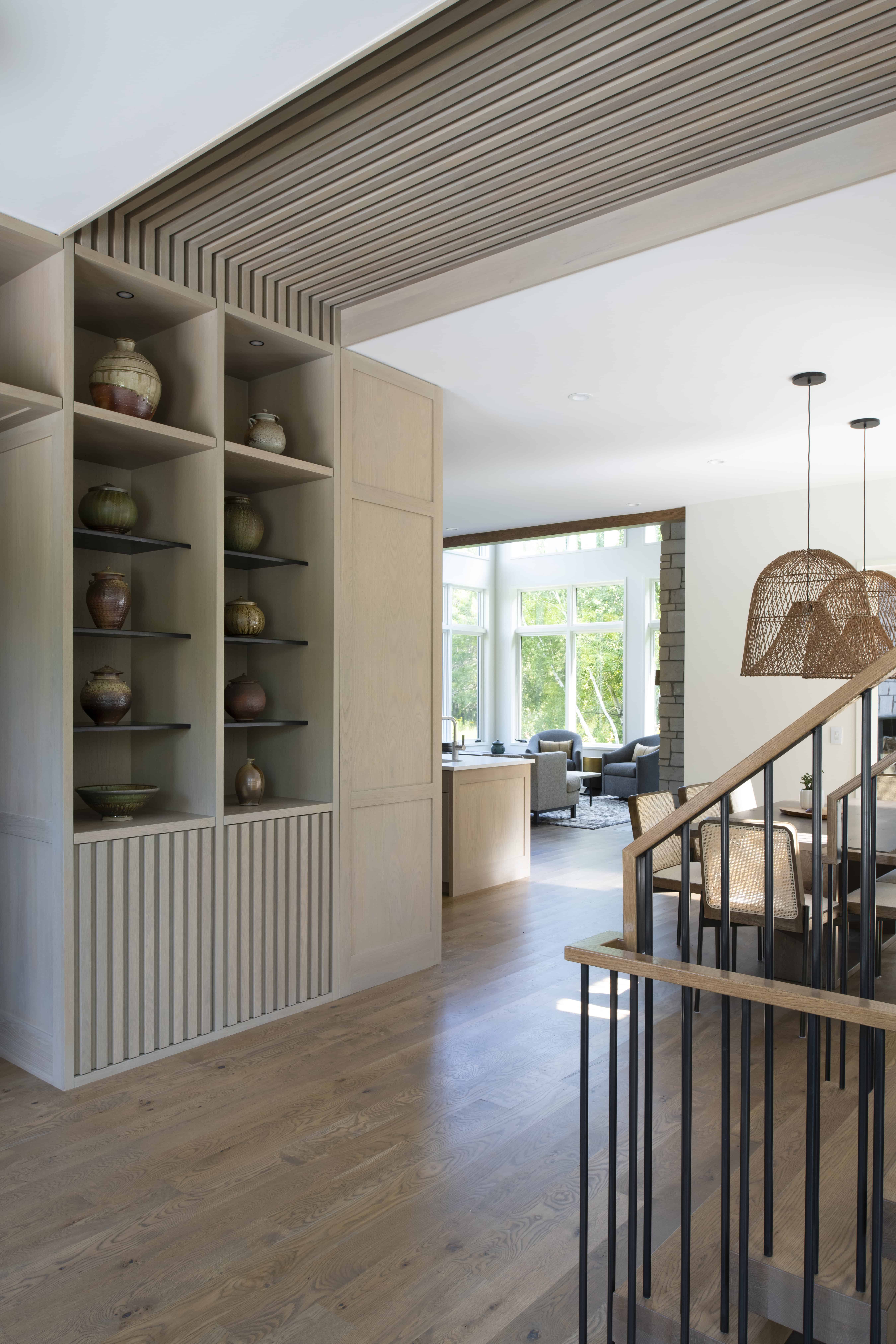
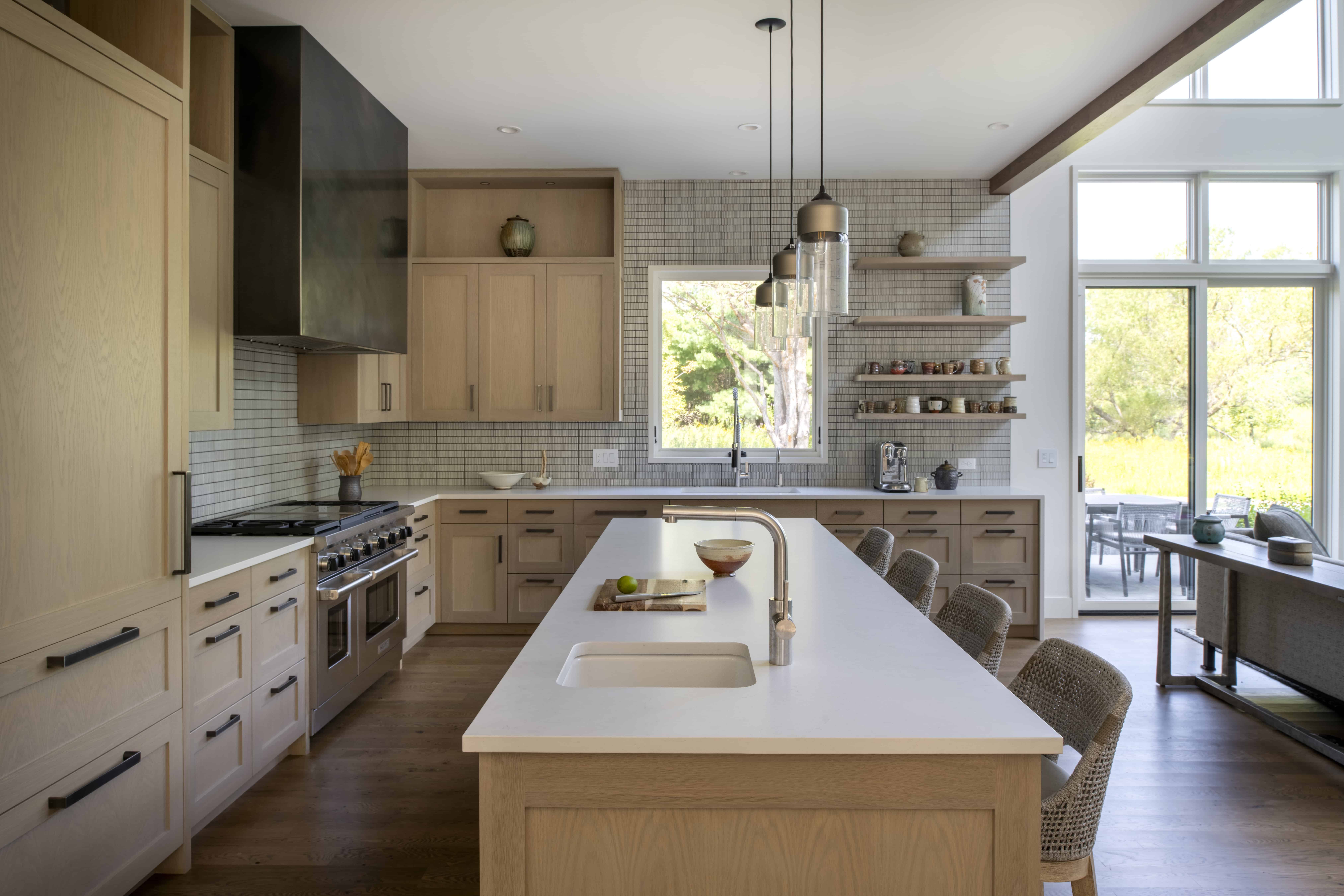
The 3,600-square-foot residence is laid out simply, featuring an open dining/kitchen area and great room that celebrates the surrounding environment using quiet, natural materials like white oak woodwork and a wall of 17-foot-tall windows overlooking the woods. A soaring limestone fireplace anchors the space. On the second floor, there’s an open sitting loft, a primary suite and an office. Two small guest bedrooms and a family room are on the lower level.
One of the residence’s standout features is the small (but tall) screen porch with a wood-burning fireplace and wood slats on the upper part of the windows. “We had some fun here, using the slats to achieve a sense of balance with the adjacent forms of the home and creating some light play,” says Anderson. When Bobick first saw the detail during the design phase, he raised a practical question: “How does one clean the windows?” This led to a slight design modification, hinging the slats so they can swing open for cleaning. “As a job site supervisor, I think about how the house will function as an actual living space, beyond just beautiful design,” he explains. “And I try not to present a problem without also offering a solution — being an asset versus a pessimist.”
The retreat has become the family’s favorite weekend getaway, so much so that the owners may consider making it their full-time home once the kids grow up — a not-so-empty nest filled with nature, community and lots of pottery.
Project Partners
Builder: Hagstrom Builder
Architect: PKA Architecture
Landscape architect: Aune Fernandez Landscape Architects