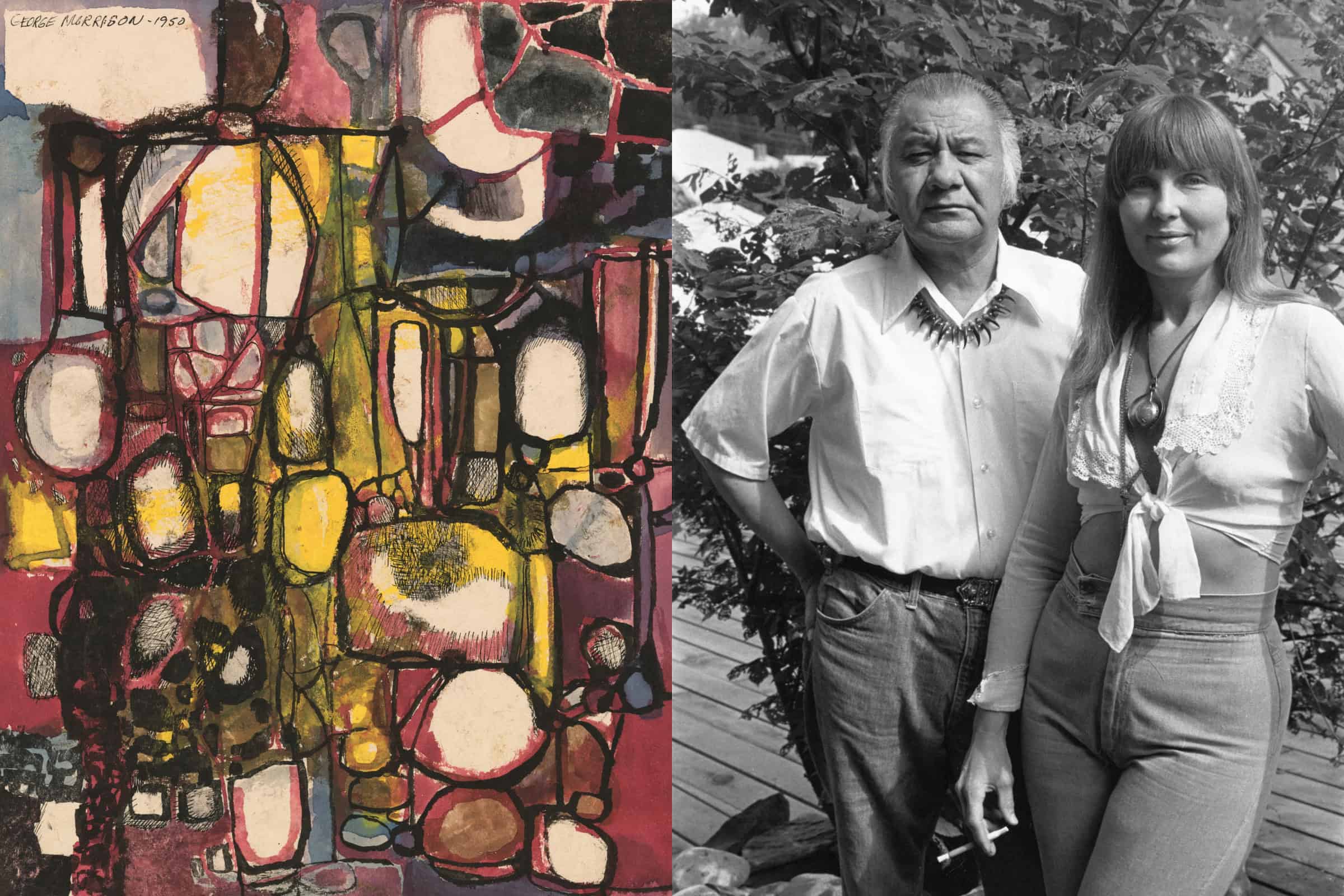
The year was 1943, and Minnesota artist George Morrison bought a one-way train ticket to New York City, forever changing the arc of his artistic life. Now, the Metropolitan Museum of Art has opened a solo exhibition of the Ojibwe painter’s early work, The Magical City: George Morrison’s New York, featuring 35 paintings and drawings, plus rare archival material.
“Morrison’s life and work have inspired generations of artists,” says Max Hollein, the Met’s Marina Kellen French director and chief executive officer. “Anchored by works from his time in New York City, this meaningful exhibition celebrates the artist’s creative achievements and explores how his American Indigenous perspective shaped his unique cultural legacy.”
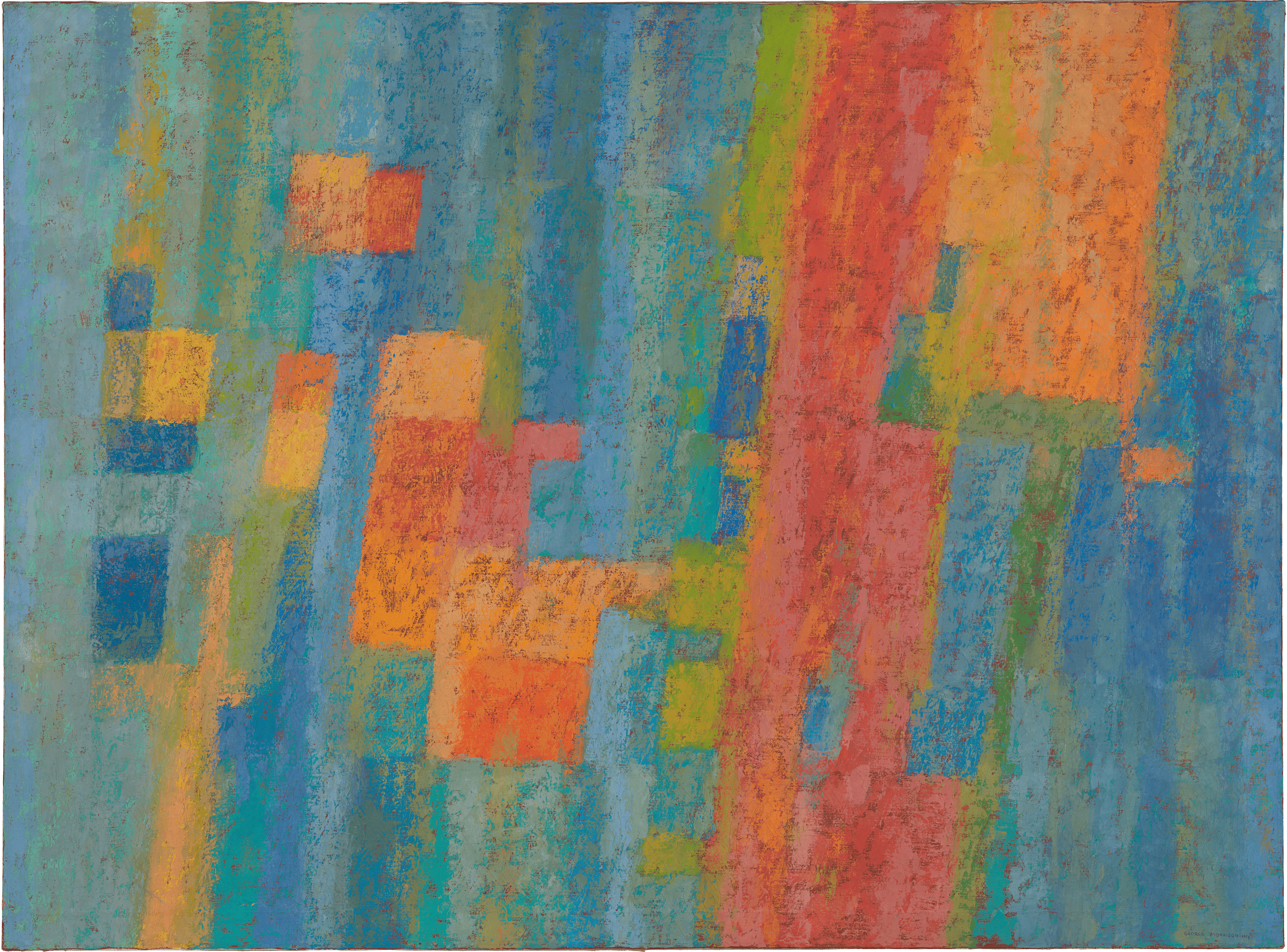
Photography provided by the Metropolitan Museum of Art
Born in Chippewa City, Morrison (Wah-wah-ta-ga-nah-gah-boo and Gwe-ki-ge-nah-gah-boo, Grand Portage Chippewa) overcame many challenges, including poverty, cultural barriers and a life-threatening childhood illness. He went on to become a leader of the American Abstract Expressionist movement, which he helped shape collaboratively and behind the scenes.
Morrison affectionately referred to New York City as the “magical city,” and lived there during a pivotal time, when painters like Jackson Pollock were experimenting with new kinds of art. And right by Morrison’s side for a part of that time was his then wife, Hazel Belvo, who remains an established Minnesota painter and educator in her own right. The two married in 1960, and Morrison brought her to New York City for the first time. “The city was wonderful seen through George’s eyes,” she recalls. “In one week, he showed me many things: Cedar Street Tavern, the Met, MoMA, the Whitney, Chinatown and the Circle Line boat tour.”
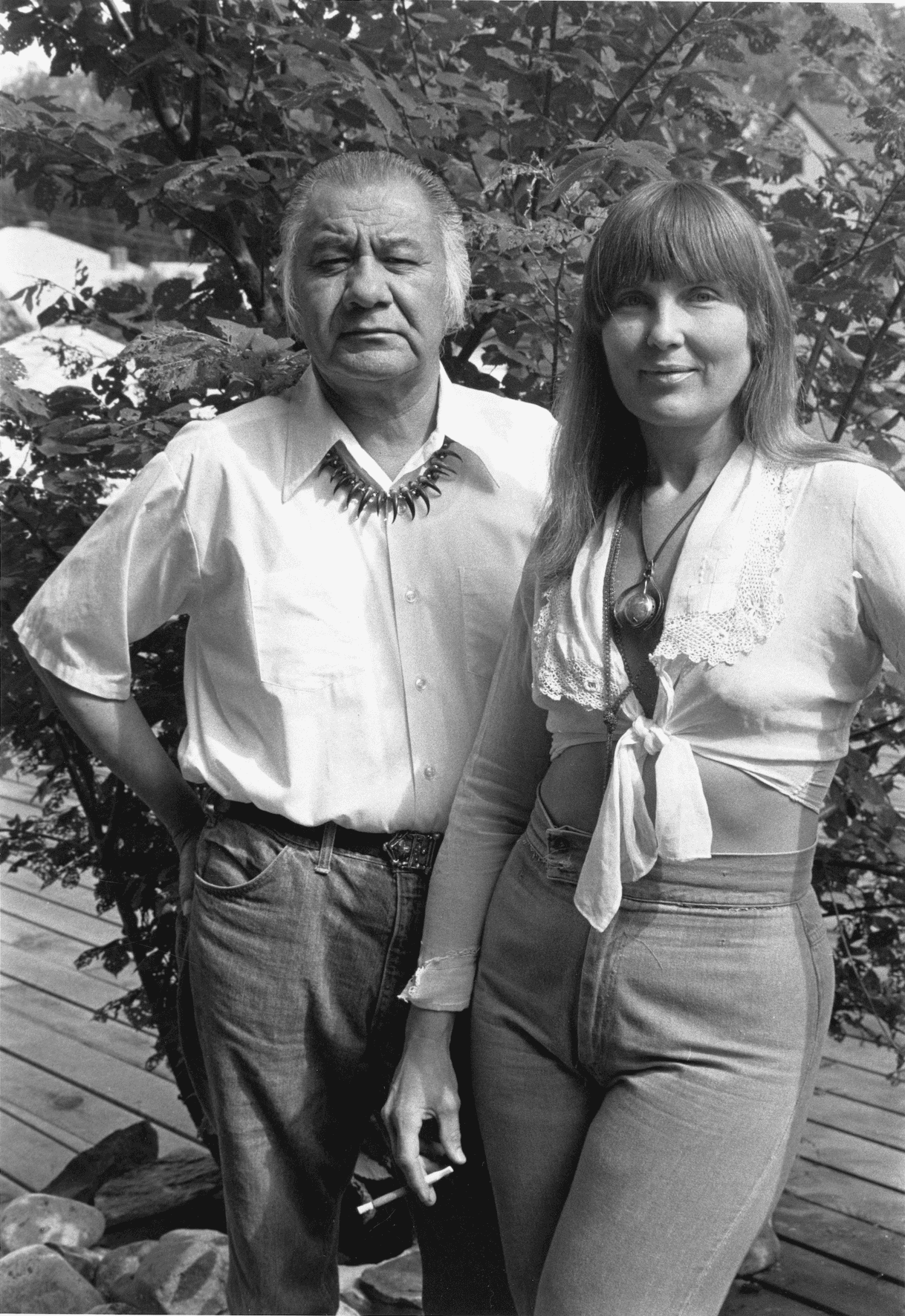
Photography provided by the Minnesota Historical Society
Belvo, who consulted with the Met on this exhibition, recounts those early days when artists all over New York City were living in industrial lofts, which offered essential studio space. “We found a great spot on the corner of Avenue A and 6th Street,” she recalls. “It was a floor-through unit big enough for both of us to work, and a small nursery for our son, Briand. During that time, there were gallery openings on Tuesday nights with wine and cheese, a Salvador Dalí appearance at the Whitney Biennial, events termed ‘happenings’ led by performance artist Allan Kaprow and parties attended by Andy Warhol.”
Throughout those years, Morrison formed important connections with many of his peers, including Willem de Kooning and Louise Nevelson. But he had an especially close friendship with fellow painter Franz Kline. “When our son, Briand, was born, we carried him to Franz’s studio to be ‘baptized,’ making Franz his godfather,” Belvo reminisces.
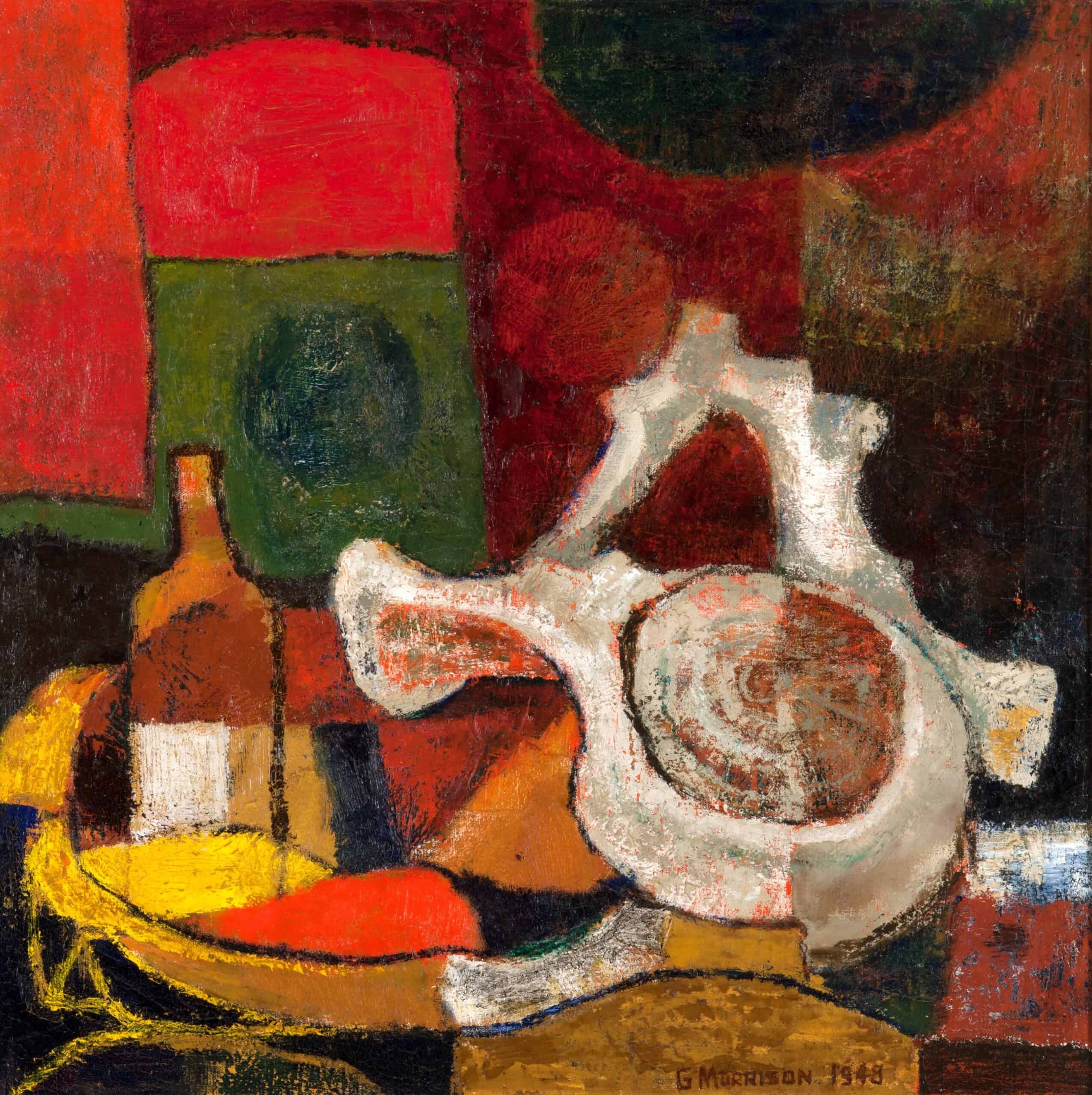
Photography provided by the Metropolitan Museum of Art
Throughout his life, Morrison commonly used mosaic patterns in his art. But it wasn’t until his time at the Art Students League of New York that his work became more abstract. The Magical City touches on key influences during that time period, like literature and music.
“Jazz was our constant companion in the studio and in life,” Belvo explains. “We would go to hear Thelonious Monk play at the Five Spot Cafe, and I would sit with him on the piano bench. And at Birdland Jazz Club, we listened to Miles Davis and John Coltrane. When we moved, we always thought we could make a good home so long as we had our books, turntable, records, radio, musical instruments and my plants, as well as sleeping bags for the kids.”
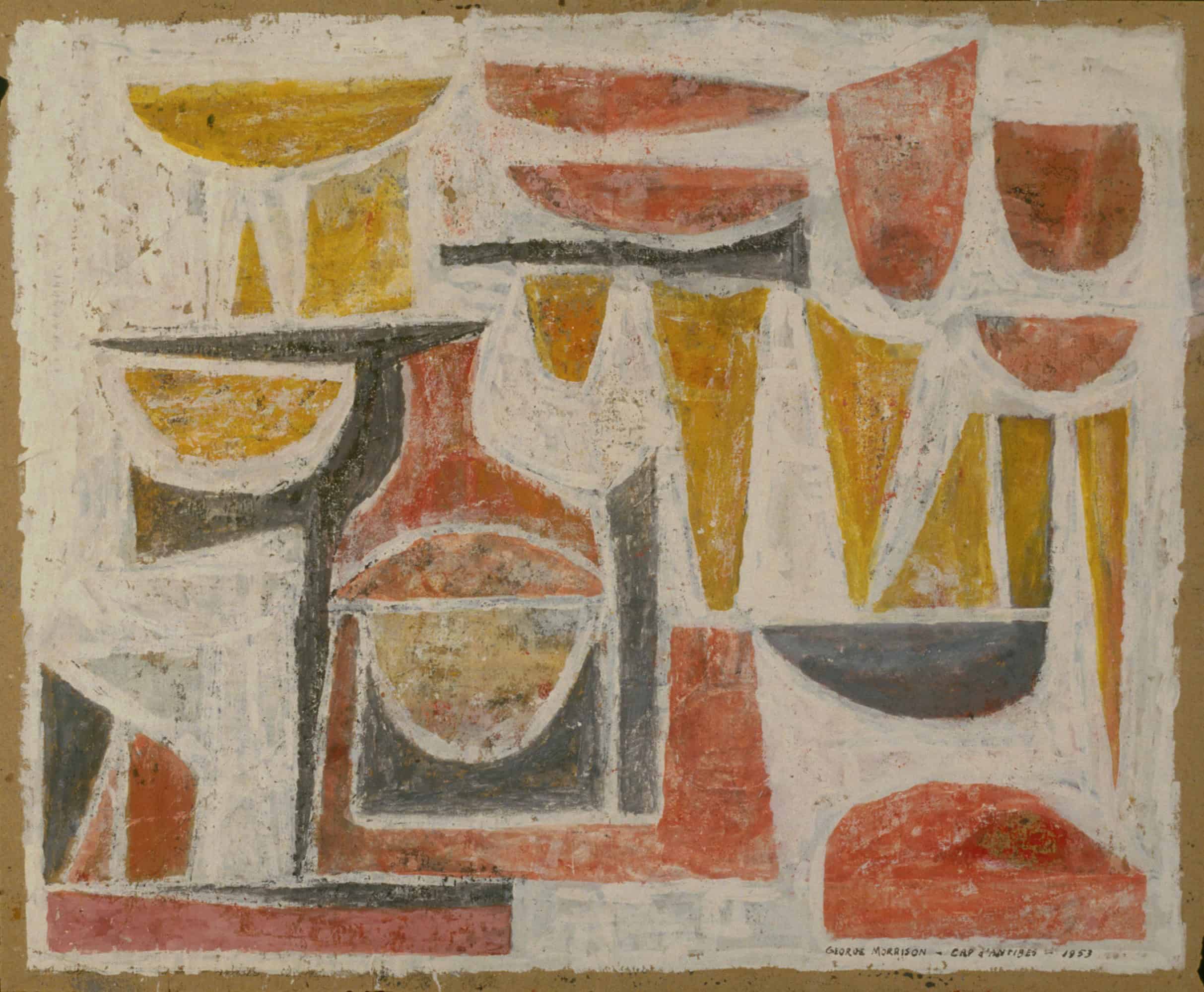
Photography provided by the Metropolitan Museum of Art
Indeed, it was this simmering cauldron of fresh ideas that stayed with Morrison long after he and Belvo moved back to Minnesota in 1970. And while the horizon lines of Lake Superior would forever inspire Morrison’s art, it was New York City’s urban landscape that fostered this deep appreciation.
“George always talked about the city as a place where he could walk down the street and be anyone, from any origin or class,” Belvo recalls. “He felt the freedom of anonymity, how it offered expansion of his intellectual and creative life. It was a fertile time, and it’s impossible to convey the full richness of the experience.”
In celebration of Native American Heritage Month this November, view The Magical City: George Morrison’s New York at the Metropolitan Museum of Art. The exhibition runs through May 31, 2026.