There’s nothing more universal than food. And lately, artists and creators have been using it in surprising and showstopping ways. From sweet treats on a mammoth scale to fresh vegetables dangling in midair, food is now being served with a touch of Picasso.
No one knows this better than David Stark, founder of his namesake New York City design firm. It’s his job to turn charity events, brand launches and milestone celebrations into unforgettable experiences. And chances are, food will be baked into the magic. Be it a thicket of baguettes popping up from the table or an aerial garden of vegetables, Stark and his team are creating a quiet revolution.
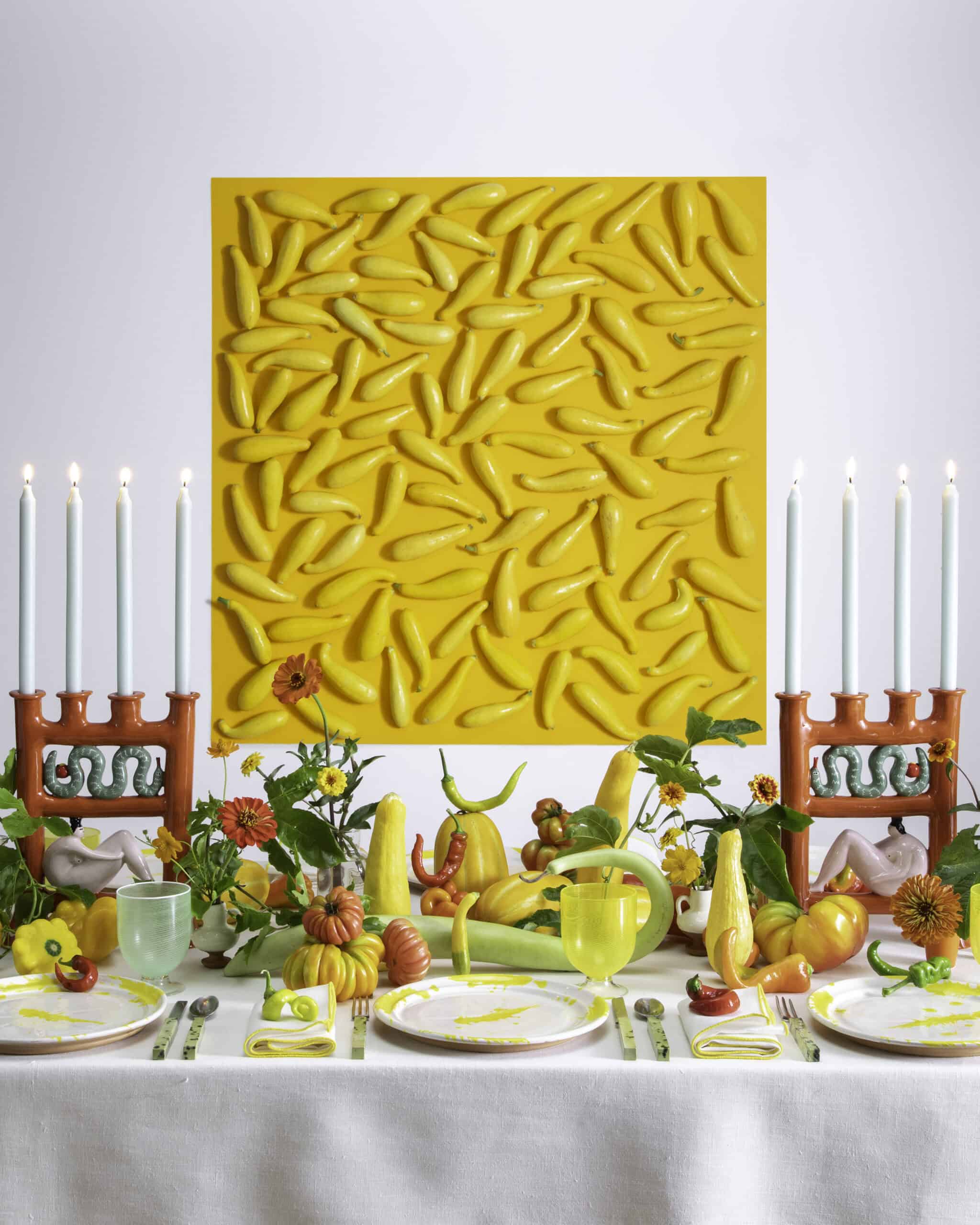
Artwork by David Stark
“I think food as an artful medium is striking a chord because it’s about ingenuity, not necessarily about extravagance,” explains Stark. “These displays use everyday materials — bread, potatoes, tomatoes — in unusual ways, spotlighting artisanal bakers, organic farmers and heritage crafts. Unlike flowers, food can do double duty as art and sustenance. It’s an accessible spectacle that’s rebellious in our digital age — beautiful for a moment, then consumed and shared.”
Brands like UNIQLO, Martha Stewart and Victoria Beckham for Target have turned to Stark for events that spark wonder. At a recent private party, humble leeks and spring onions dangled above the dinner table. At another celebratory gathering, a chandelier was fashioned out of ornamental corn. And for a very memorable bar mitzvah, an oversize food landscape made from cereal box sculptures and a giant pizza box turned into a photo op.
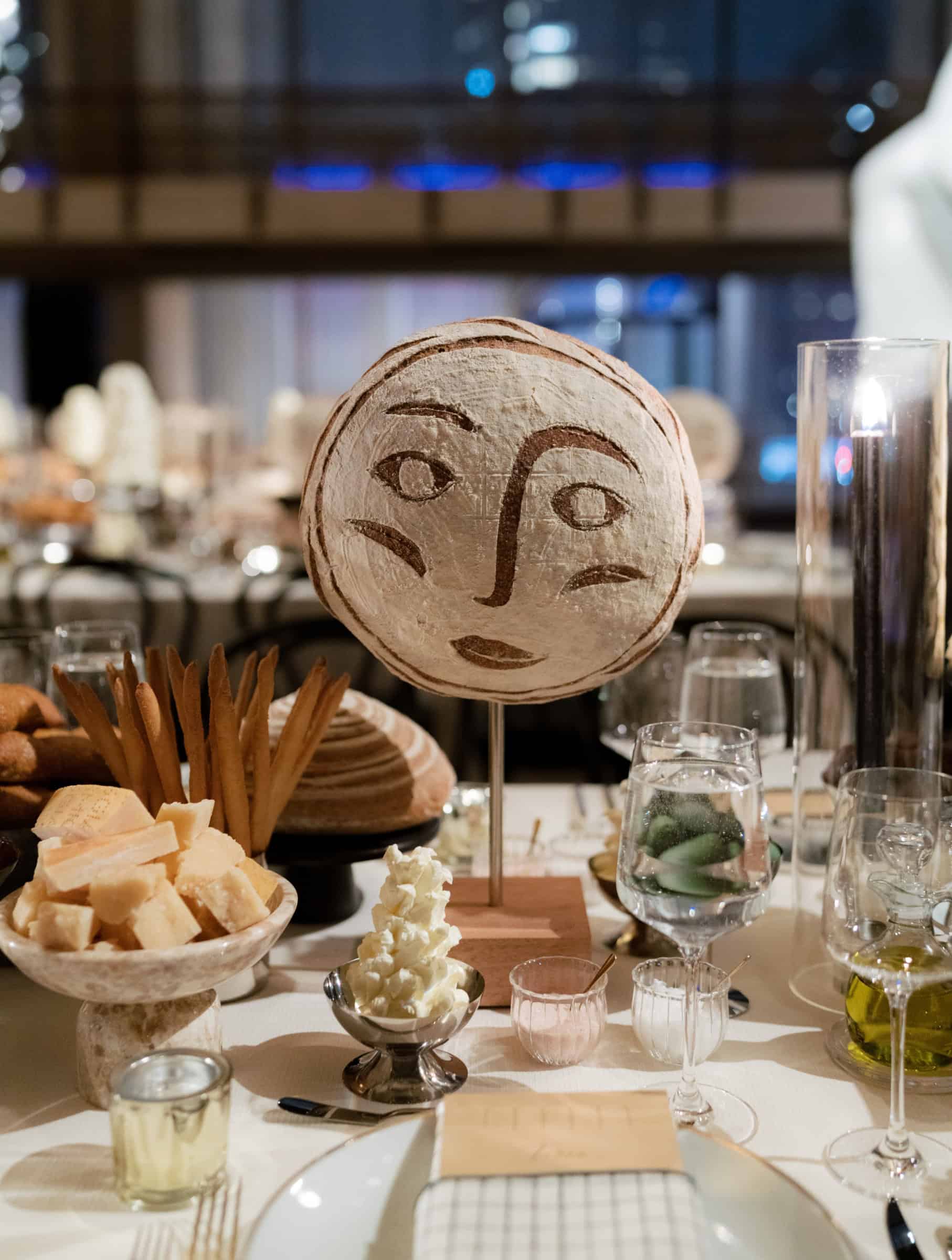
Artwork by David Stark
But it was a recent New York City foodie wedding that truly enchanted, featuring a baker’s fantasy instead of traditional flowers. Here, tabletop butter topiaries were set alongside a parade of round bread loaves designed to look like faces.
“We’ve worked with butter and bread faces before, but the repetition of elements at this scale was a lot of fun to see in action,” shares Stark. “And the best part? Guests were raving, ‘That’s so Ally and Max!’” That’s when I know we’ve nailed it. Everyone wants an event that feels personal. They’re not looking for pretty anymore; they’re looking for true. For experiences that land in the body, that surprise people who think they’ve seen everything.”
Of course, this bond between food and art is nothing new. Sixteenth century Italian painter Giuseppe Arcimboldo created puzzle-like portraits composed entirely of fruits, flowers and vegetables. In the 1960s, Andy Warhol used Campbell’s Soup cans to illustrate that everyday, mass-produced objects could be art — blurring the boundaries between consumerism and advertising.
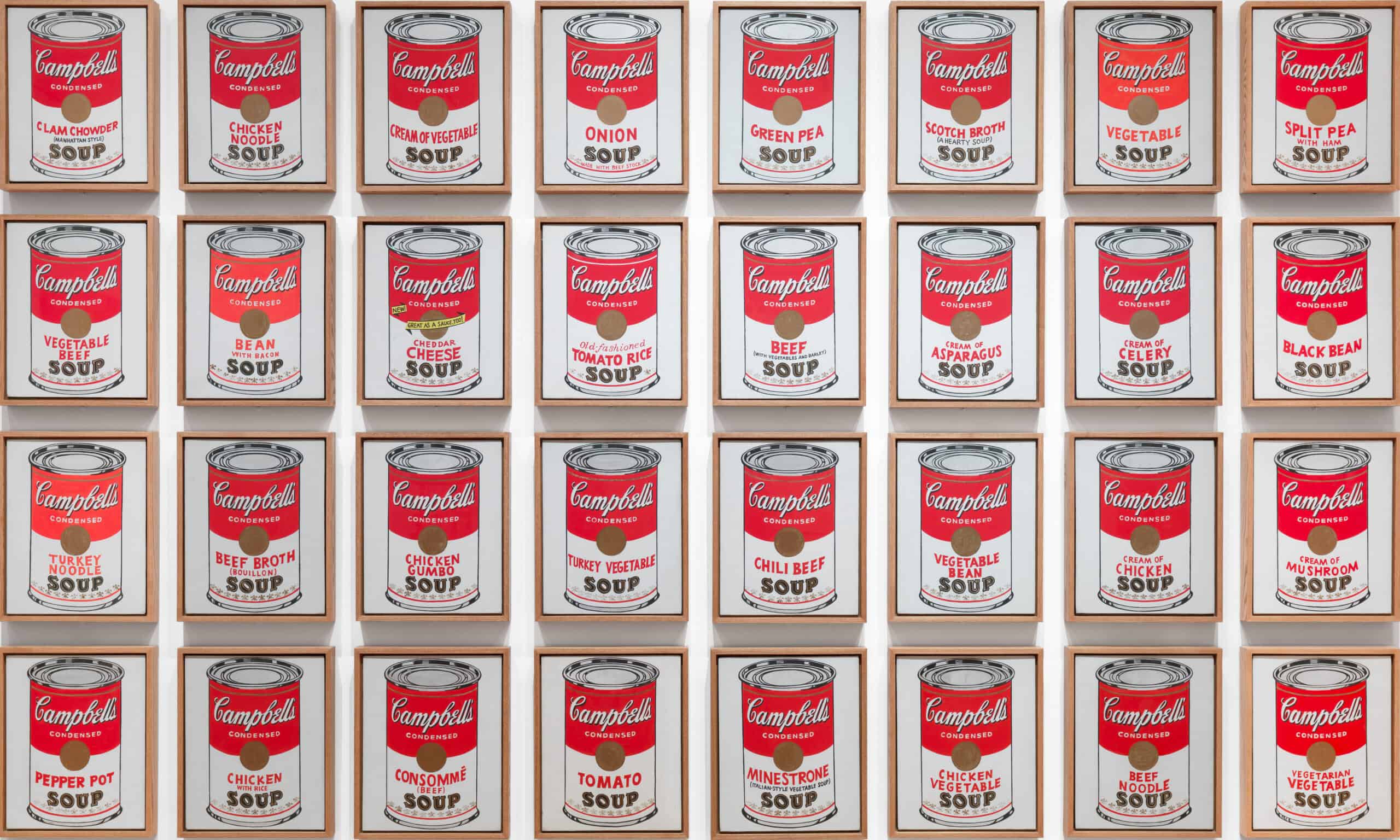
Artwork by Andy Warhol Provided by The Museum of Modern Art
But it was the Dutch painters in the 1600s who took the food-art connection to a deeper realm, creating still-life paintings of sumptuous cuisine alongside other objects. Yet on closer look, these works were really about the transience of life. That half-peeled lemon, slightly rotting food and silver pocket watch? All gentle reminders of the certainty of death.
“Food presented artists with endlessly rich subject matter, a vehicle to represent nature and demonstrate special skills in this arena, as well as a means to embed works with symbolic, hidden meanings,” explains Rachel McGarry, chair and curator of European art at the Minneapolis Institute of Art. “Such paintings decorated dining rooms and galleries and invited viewers to decode and interpret their elements. The vanitas theme was ubiquitous. The Latin word ‘vanitas’ means emptiness, thus the theme explores the emptiness of earthly life and possessions.”
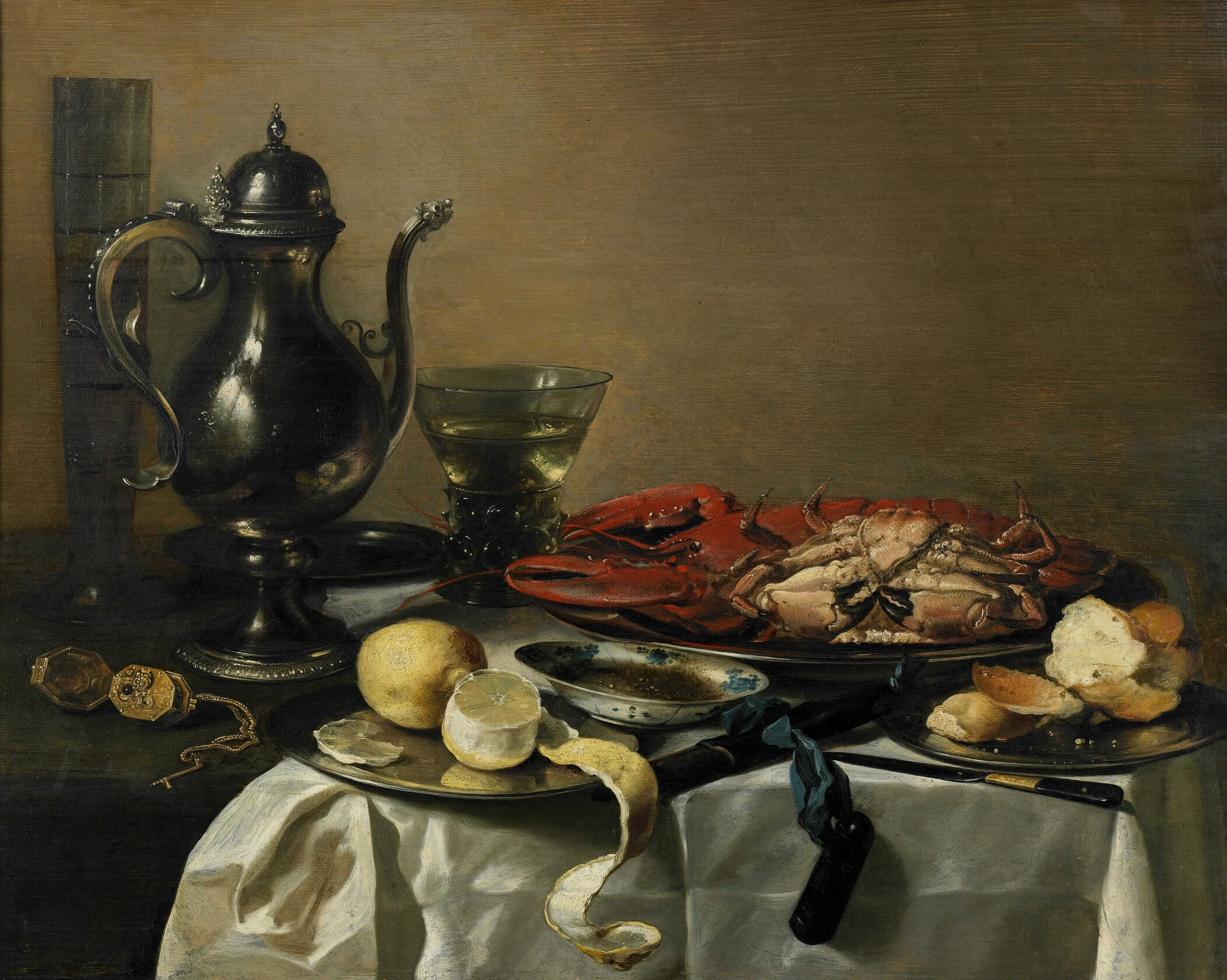
Artwork by Pieter Claesz provided by the Minneapolis Institute of Art
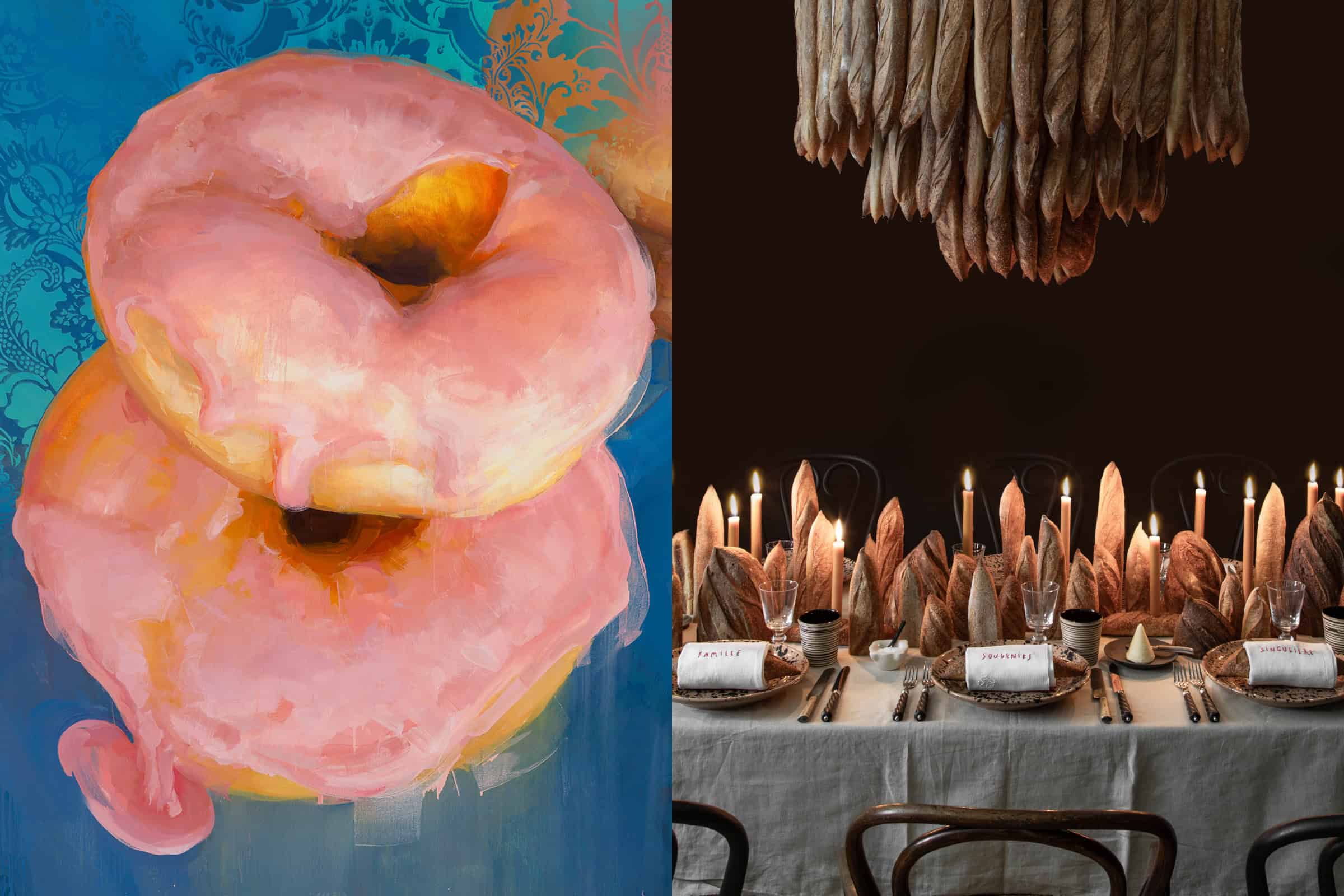
Even today, artists use food to layer meaning into their work. That’s the case with artist Emily Eveleth, who has painted only one type of food for 30 years: doughnuts. Thanks to her classical style, simple pastries become delicacies lacquered in shimmering glazes and frothy powders, taking on the look of formal portraits.
“Doughnuts are everyday objects that, more than most others, remind us of the body and its satisfactions,” says Eveleth. “As such, they give us room to project our desires onto them. Every item of food exists somewhere on a spectrum between need and desire, and the clash between needs and desires is fierce and complicated these days.”
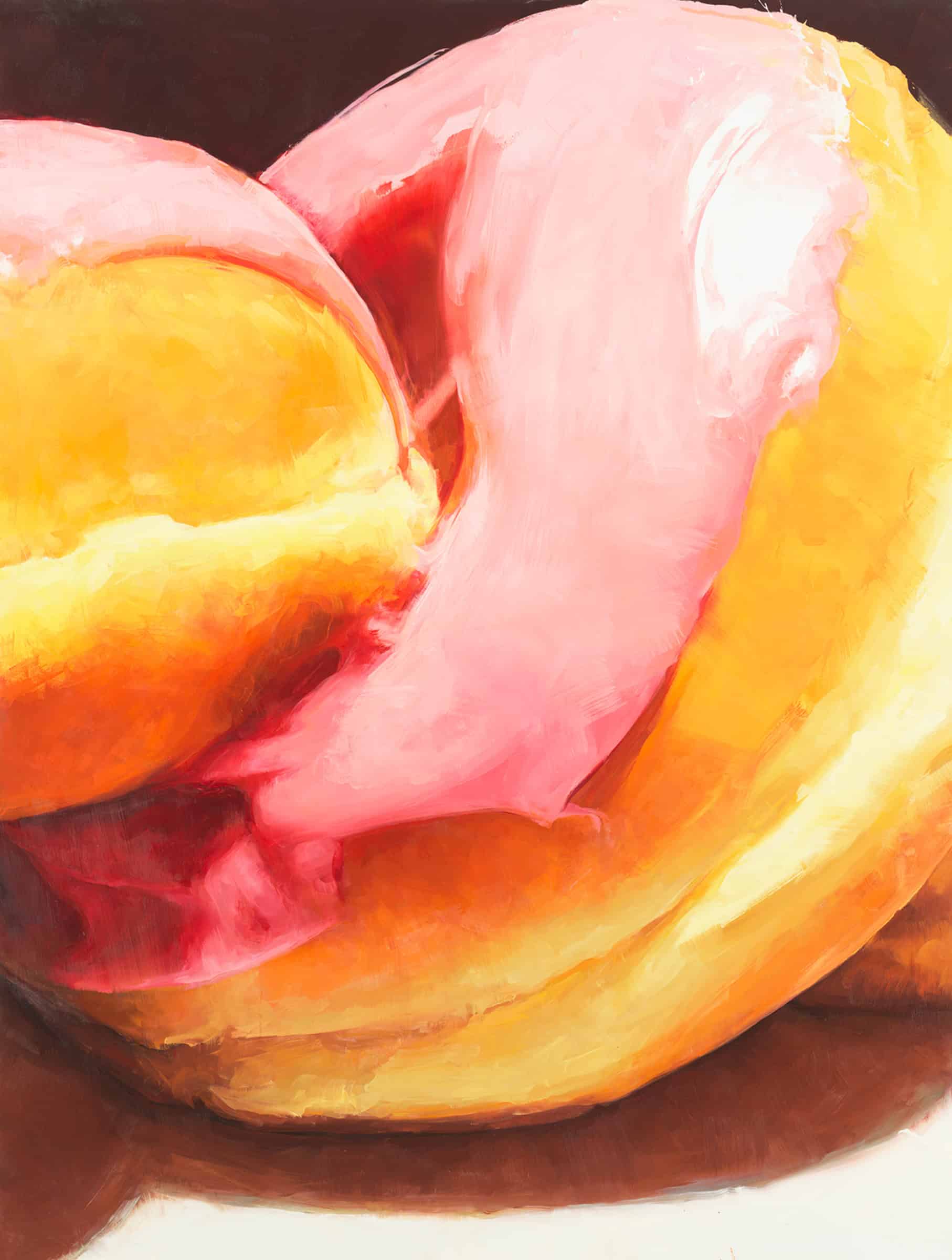
Artwork provided by Emily Eveleth and Miles McEnery Gallery
In her most recent exhibition at Miles McEnery Gallery in New York City, the colorful confections were set against backdrops of silky greens and patterned pinks. Fleshy pastries painted with a sensual glow offer some intriguing food for thought.
“Food is everything from a loaf of bread to the height of luxury, combined with a strong sensuous component,” Eveleth sums up. “So food has long been a subject for artists, because art about food is never just about food.”