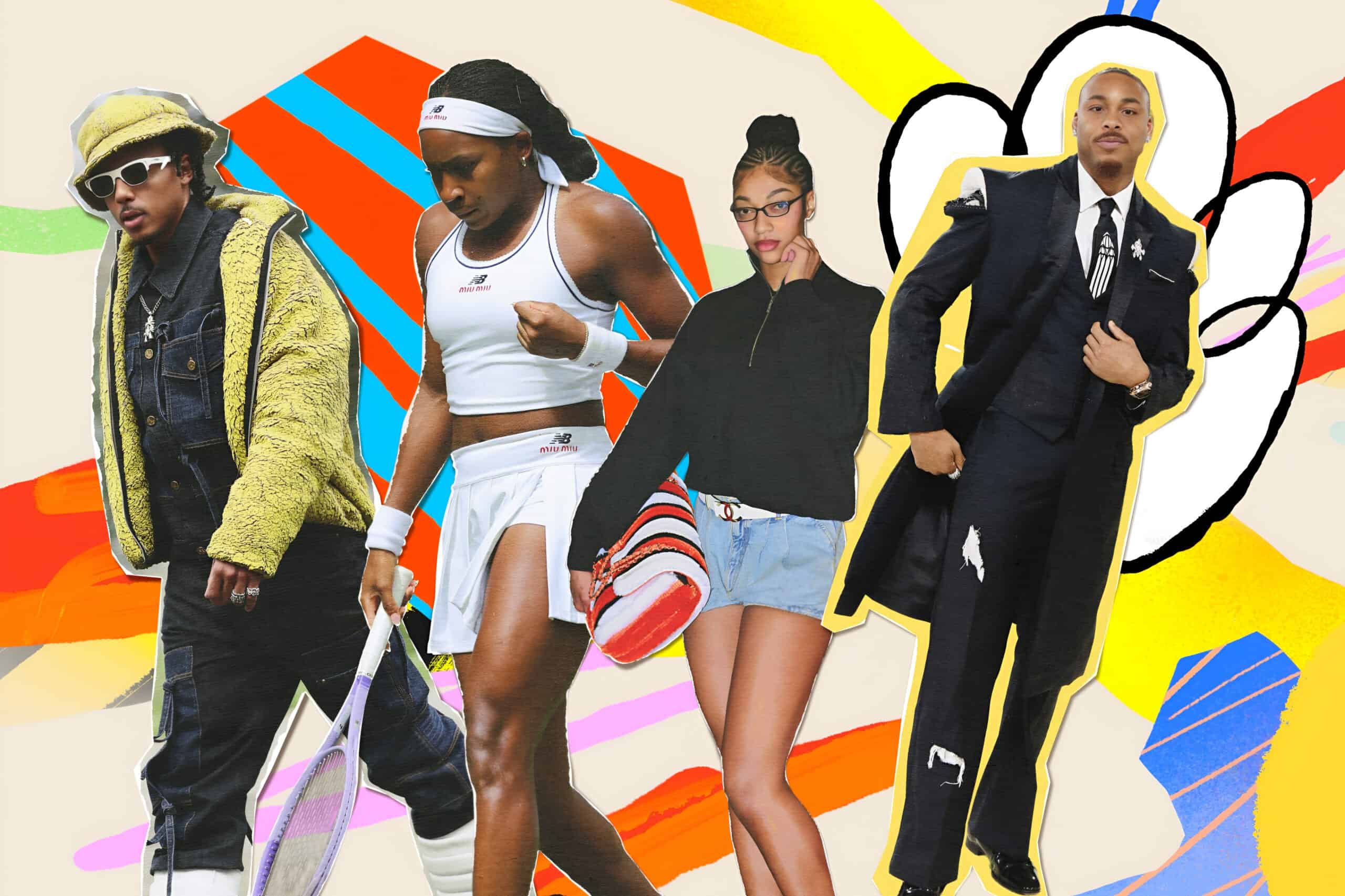
For a moment this summer, fashion belonged to a statuesque blonde with a magnificent Hermès bag collection, a signature hairstyle and a trademark pose. Not a supermodel, a hot new designer or a mega-influencer, but the Norwegian soccer team’s star striker turned media darling, Erling Haaland.
Playing at the World Cup, Norway might have lost out in the tournament’s quarterfinals, but Haaland still won the popularity contest thanks to his very online, very good vibes. Already a superstar in Europe, he has now charmed the United States — and become a fashion fixation. His first public appearance after arriving back in Europe? Swapping shorts and shin pads for an ivory silk twill suit, crepe de chine shirt and bejeweled frog brooch at Dolce & Gabbana’s ultra-exclusive Alta Moda couture show held in Taormina, Italy, alongside fellow well-heeled guests like Jennifer Lopez, Christian Bale and Monica Bellucci.
Haaland is one-of-a-kind, but he’s not alone. Whether you’re a fair-weather armchair expert or a bleed-your-team-colors die-hard, you know that elite athletes — Super Bowl winners, NBA champs, Formula 1 drivers, Grand Slam tennis players — have become the fashion industry’s MVPs as of late. Even participants in more niche sports such as fencing and figure skating are being courted by some of the world’s biggest brands.
Luxury lines no longer see engaging with athletics as optional. Sports — be that the players themselves, the stadiums or the culture surrounding them — are now one of the main arenas where brands can express themselves. They also pose a huge commercial opportunity. Rather than a passing trend or a marketing gimmick, this is a fundamental realignment of cultural power. And it’s only set to intensify.
At times, 2026’s courts, fields and arenas have served more looks than the average Fashion Week event, for players and spectators alike. As the basketball season reached its crescendo and the New York Knicks won their first NBA championship in more than 50 years, courtside seats at Madison Square Garden looked more and more like a runway show front row, complete with color-coordinated Chrome Hearts looks (we’re looking at you, Timothée Chalamet).
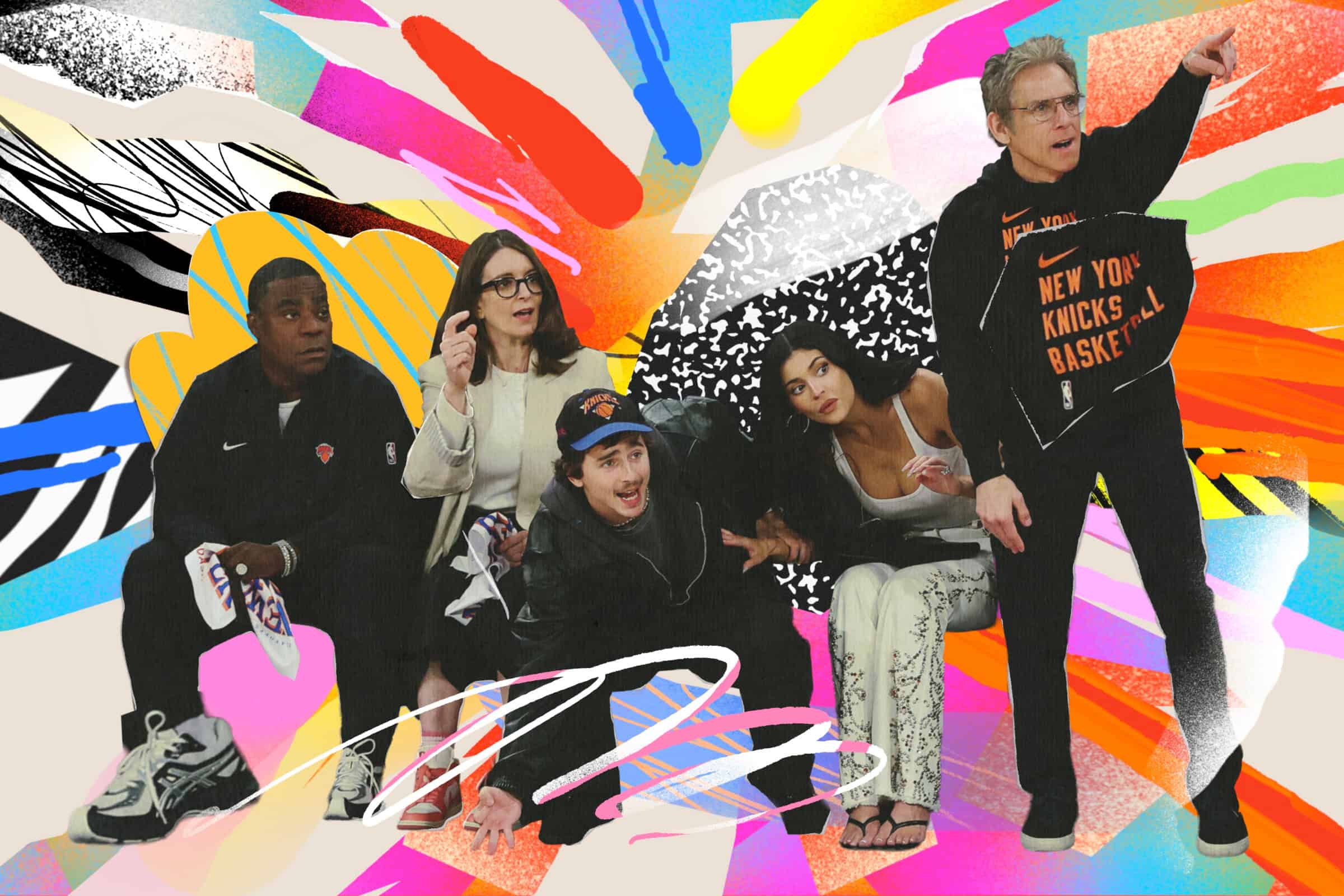
Illustration by David Milan
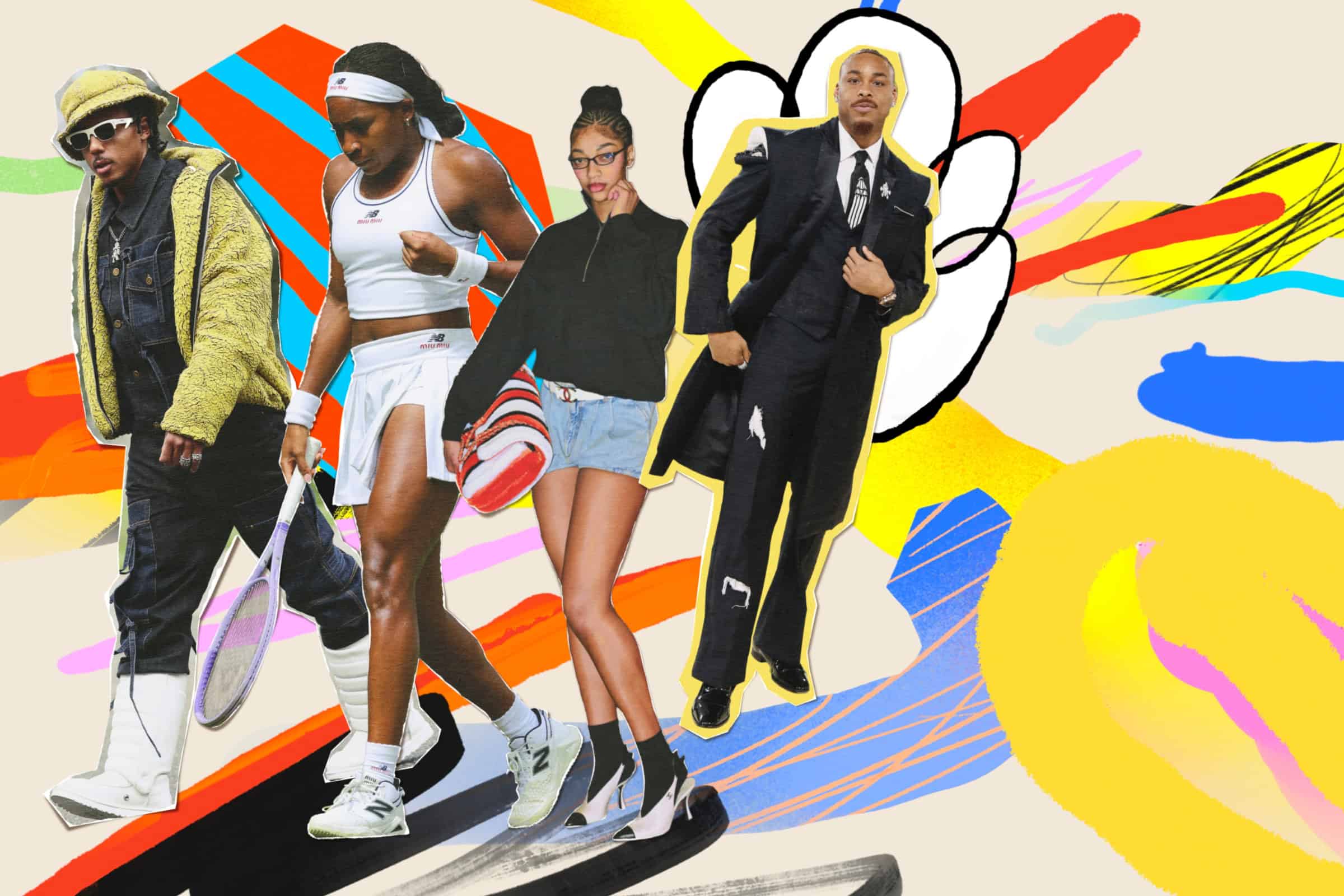
On the other side of the pond, a similarly stylish scene played out as Coco Gauff donned the latest chapter of her New Balance x Miu Miu collection on court at Wimbledon. Before the championship kicked off, Gucci threw a dinner for Jannik Sinner, complete with a bevvy of fashionistas in attendance. Aryna Sabalenka is also part of the Gucci family, meaning the Italian house has scooped both of the current world No. 1s as ambassadors. Not content with conquering tennis alone, Gucci’s next play is for Formula 1; the luxury house will be the title sponsor for the Alpine team starting next year.
For the World Cup, Spanish brand Loewe, now helmed by American duo Jack McCollough and Lazaro Hernandez, was behind its national soccer team’s travel looks. Uruguayan designer Gabriela Hearst created bespoke suits for her home country’s squad. Fashion brands are investing in sports in a way that would have been considered illogical (absurd, even!) a decade ago. The plop-a-logo-on-a-shirt sponsorship no longer cuts it when it comes to cutting through the noise. Instead, it’s about building deep, layered partnerships. It’s a reframing of the narrative, which is no longer just about performance. Rather, luxury houses are considering athletes as cultural figures beyond the field/court/track and, crucially, portraying them that way, too.
In turn, athletes are pushing fashion boundaries, challenging the old rules or completely ignoring them. A new generation of players sees style as an extension of their personal brand. Even sport’s biggest names — Angel Reese, Joe Burrow, Lamine Yamal, Eileen Gu — know the power of posting about their sartorial selections. It broadens their appeal, establishing their public identity as someone who exists beyond game stats.
“Everyone in fashion is trying to work out how to integrate with sports and vice versa,” says journalist Daniel-Yaw Miller. Why has the crossover intensified so much in recent years? Miller — who writes the endlessly fascinating SportsVerse newsletter, a twice-weekly dispatch about the intersection of sport, fashion, business and culture — says there were a couple big catalysts.
First: the pandemic. With the rhythm of life completely disrupted, that period saw brands “trying to get more creative in how they spoke to consumers,” he says. The resulting luxury slowdown also sped up the need for change. “Many of the usual tactics for engagement and marketing just didn’t work anymore,” Miller adds. Sports stars connected in a different way.
Second: The Summer 2024 Olympics in Paris had a monumental effect on the intersection of athletics and aesthetics. “It was the perfect collision — the epitome of the sports world in arguably the fashion capital of the world,” says Miller. “That was when companies like LVMH started to invest in big moments.” And when an industry titan like the French luxury conglomerate does something, well, the rest naturally follow.
The relationship between sport and style is a symbiotic one. Fashion brands need relevance and reach (and alignment with excellence is always welcome, too). The biggest athletes want cultural capital that extends beyond their playing years. The result? One of the most fruitful creative and commercial partnerships in contemporary culture.
Arguably, however, the fashion brand needs the player more than the other way around. Especially when you consider these alliances in the context of the crudest metric: number of followers. For instance, Kylian Mbappé, a Dior ambassador since 2021, has 136 million Instagram devotees, dwarfing the maison’s mere 46.5 million. An elite athlete comes to the table with a ready-made audience.
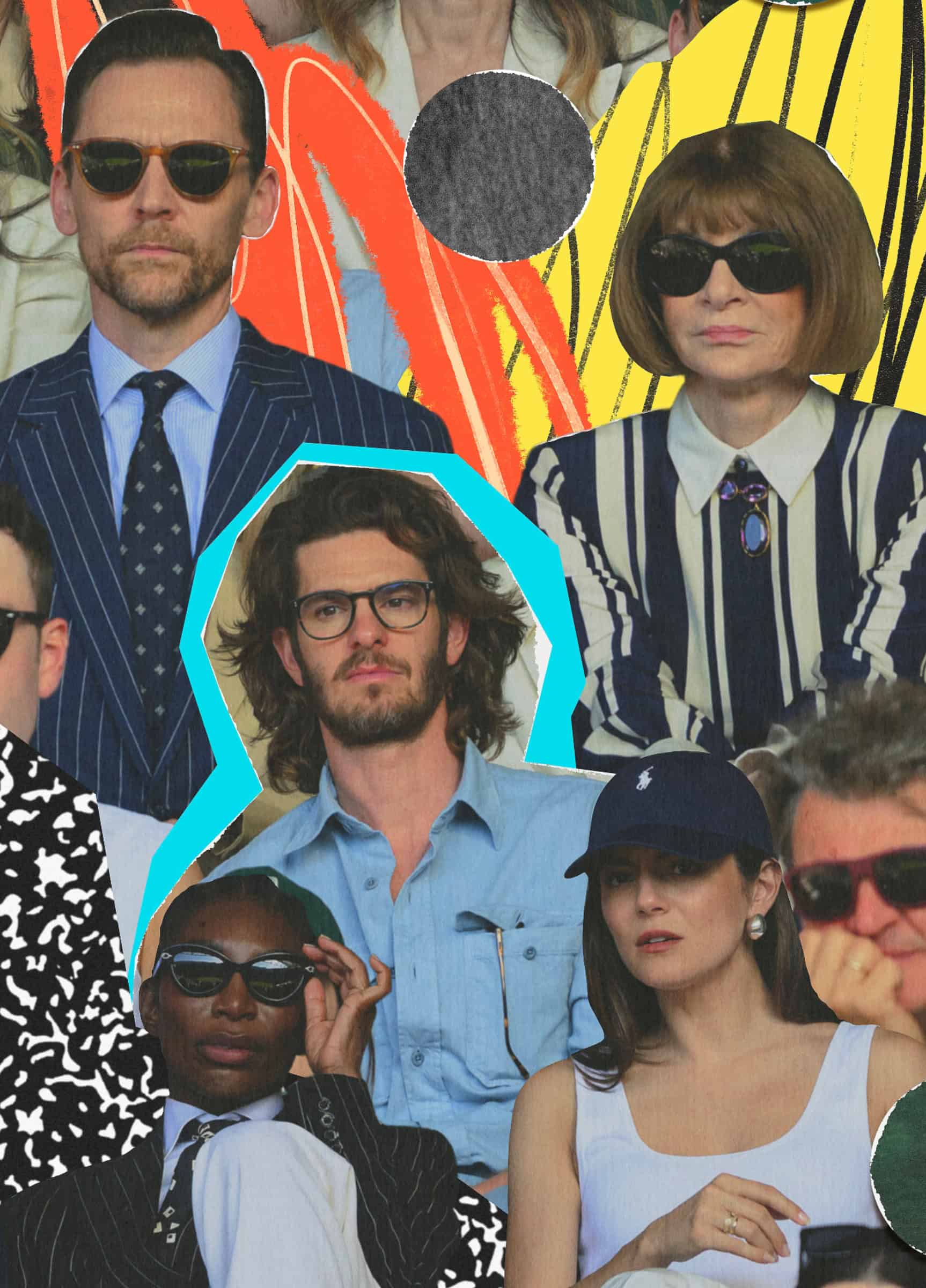
Social media changed the game, according to Jordan Clarke, founder of Footballer Fits. The digital platform celebrates soccer players’ style, from their boots to their bling. What started as a side hustle in 2020 is now a full-time gig, with more than four million social media followers. “The player gets to control the narrative of what they’re doing away from the field rather than the media posting paparazzi shots of someone leaving a nightclub,” Clarke says. “Social media has helped crystalize the connectivity between the player and the fan.”
Until relatively recently, the commercial opportunities presented to athletes were limited, predictable and often uninspiring. Sure, there were the envy-inducing endorsements, and those kinds of collabs with household names like Nike will always be highly coveted. Beyond that, if a player had enough charisma (and ab definition), maybe he could score an underwear campaign, like soccer’s Raphinha or basketball’s Jalen Green recently posing for Calvin Klein. But that was pretty much it.
The link-ups with luxury fashion houses are a newer phenomenon, and the sheer volume of them is quite revealing. You can see the alignment most explicitly in campaigns, where spokespeople are often shown in non-sporty contexts. For example, Angel Reese became the first athlete to appear in a Victoria’s Secret campaign and on its runway. Fellow WNBA player and Olympic gold medalist Breanna Stewart stars in a fall/winter 2026 Stone Island ad. NBA All-Star guard Shai Gilgeous-Alexander appeared in the Levi’s “Behind Every Original” campaign. And Travis Kelce — a hot commodity for several reasons — teamed up with Tommy Hilfiger as a “creative collaborator.”
Look at soccer, too: AMI’s Alexandre Mattiussi scooped zippy Portuguese midfielder João Neves, while fine jewelry house Messika nabbed Barcelona and France defender Jules Koundé — one of soccer’s most outré fashion boys — for its spring/summer 2026 digital campaign, smouldering in diamonds and an unbuttoned shirt. Meanwhile, Louis Vuitton’s “Speedy” campaign featured still life shots of basketball legend LeBron James’ and English soccer star Jude Bellingham’s bags overflowing. The biggest luxury maison in the world realized it didn’t even need these famous faces in its ads; proximity to them was enough.
Offline, too, it’s clear how intertwined sports and fashion have become. Freestyle skier Eileen Gu and WNBA star Caitlin Clark sat front row at Prada’s fall/winter 2026 show in Milan. The Nigeria soccer team might not have qualified for the World Cup, but goalkeeper Maduka Okoye was invited to the Jean Paul Gaultier couture show in Paris. This year’s Met Gala — co-chaired by Serena Williams, with Paralympian Aimee Mullins and basketball player A’ja Wilson serving on the host committee — had an impressive athlete turnout, including the WNBA’s Paige Bueckers and Winter Olympics breakout star (and newly minted Louis Vuitton ambassador) Alysa Liu making their carpet debuts.
The NFL itself has also gotten in on the action, appointing Kyle Smith as its first-ever fashion editor in 2024 — a statement of intent and an explicit signal for how seriously it values the relationship between sports and style. Having previously styled the likes of Joe Burrow and Justin Jefferson, he now manages the relationships between fashion houses and athletes, captures style-focused content with players, and helps run the NFL and NFL Style Instagram accounts.
“It’s really important for athletes to have helmet-off opportunities,” says Smith. “Fashion is a really great vehicle for athletes to express themselves, and it helps fans get to know who they are out of their uniform. Young people these days are so exposed to fashion, and they understand that you can be interested in sports and fashion. When I was growing up you had to choose: sports or fashion. That’s what I love about Gen Z — they’re very multifaceted.”
But does any of this actually resonate with the true fan? Is, say, a Barcelona season ticket holder going to feel compelled to buy diamonds because Koundé was dripping in them for Messika? According to Miller, it’s less about a direct return on investment and instead about alignment. “It’s more about associating your brand with culturally relevant people in the world right now, many of whom happen to be sports people,” he says. “Having your brand associated with someone like that is very powerful from a marketing sense.” It seems to be a surefire shortcut to cool.
How brands, and in turn we the fans, see athletes has undergone a hard shift in the public imagination in recent years. They are still easily idolized, but perceptions have become more nuanced. Players are no longer just equipped to sell sneakers; they are tastemakers with considerable cultural clout. For them, surely it’s a welcome change. After all, a shoe deal expires. But a relationship with a heritage fashion house built around personality and aesthetic can long outlast an on-field career.
Excellence is, or should be, synonymous with what a luxury brand stands for. Aren’t they all using different language to say the same thing? “We are the best of the best!” Precision, dedication, performance, rarity: What fashion house doesn’t want to align itself with the qualities of the elite athlete? Plus, isn’t there something innately human about pro athletes — even if what they do often seems superhuman — in that they are pushing their physicality to the limits? Their success can’t be outsourced to AI. They can’t shortcut their way to the podium by going viral.
Of course, none of this is without risk. The flip side of the intense loyalty that an athlete garners from their base is the equally intense emotion from arch rivals. As much as you can draw people in who might never have discovered you, you can unintentionally antagonize others, losing them before you even got them. Consider too the brutal instability of a player’s career. Injury, loss of form or an inexplicable off-season impropriety are all very real risks.
Fortunately, big brands and their big contracts have safety nets built in to reduce that risk, and star athletes still tend to be more secure options than other high-profile celebrities. There will always be scandals in sports, but the top-of-their-game player will, by necessity, live a pretty un-rock-n-roll lifestyle. “They’re not going to trash a hotel room; they’re not going to be snorting drugs,” says Sunita Kumar Nair, author of ACE: The Times & Style of Tennis. “They’re very clean living and a safe bet for brands that want to put millions into advertising.”
Not all collabs are formalized in contracts. An emerging opportunity lies in the “tunnel fit” phenomenon — the name given to the carefully considered, obsessively documented ensembles worn upon arrival to an arena. Spearheaded by NBA players in the nineties, it was recently popularized by NFL stars, who have turned the otherwise unremarkable walk from car to locker room into a genuine fashion event.
“I’ve learned so much about what makes a top player, and one of those things is that they only do what they want to do,” says Smith. “In the world of social media, every brand is looking for authenticity. We understand that an influencer is talking about a sweater because they’re getting paid to talk about that sweater. Meanwhile, when an athlete wears something, it’s because they want to. What players wear in the tunnel is their choice, meaning they can actually bring a lot of authenticity to a look.”
The idea has since spread and is increasingly gathering pace in other sports. French national soccer team Les Bleus lead the pack, donning knee-high boots, skirts, cropped boxy jackets and funny hats into the Clairefontaine training center. At this summer’s Wimbledon, Naomi Osaka stepped onto Center Court wearing a custom kimono-inspired gown designed by Hana Yagi that cemented the advent of the tennis arrivals look (also to note from the All England Club: Taylor Fritz in custom Boss tailoring and Marta Kostyuk’s ballet-style pleated tutu dress).
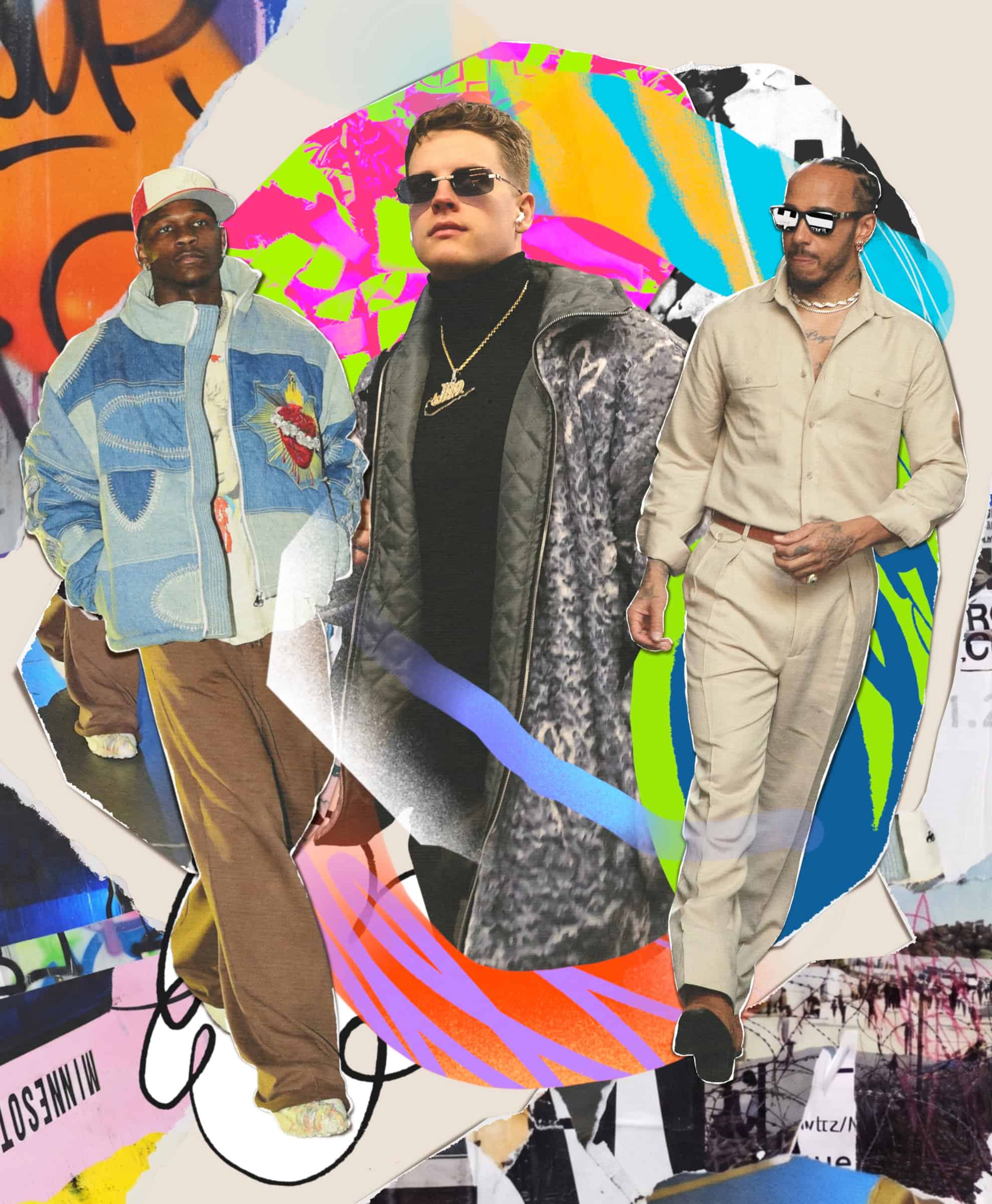
For brands, the commercial and cultural potential of the tunnel fit is huge. It’s an engaging, high-frequency showcase. For athletes, pre-game looks offer an opportunity to build identity beyond the sport. And for fans? It’s a chance to see clothes on bodies not shrunk by GLP-1s (increasingly rare on more traditional red carpets and press junkets). It also satisfies our desire for authentic storytelling; we want to know what’s happening before and after the points are scored.
There is certainly a vigor to seeing clothes on an athlete. The clothes come alive and become associated with highly charged moments. “The [tennis] court feels very stage-like to me,” says Kumar Nair. So when you buy an iteration of something a sports star has played in, you (in the right circumstances) get to be “associated with something very happy, very triumphant, very glorious.”
Of course, there have always been athletes who cared deeply about what they wear. Kumar Nair cites 1920s French player Suzanne Lenglen, who worked with couturier Jean Patou on her court looks. But they typically had to operate within the framework of rules and regulations, rather than taste and personality. Performance potential often came before stylistic flair: Will these shoes help me run faster? Will this helmet properly protect me? There are also diktats unique to each discipline and even location to consider, such as Wimbledon’s famously all-white dress code.
Even so, some sports stars have found ways to express themselves despite the constraints. Look at tennis great Andre Agassi with his pop-rock mullet and denim shorts or golfer Ian Poulter’s signature flashy garb that clashes with the sport’s conservative reputation. There have been other flourishes and subversions — haircuts, tattoos, jewelry, Flo-Jo’s six-inch-long nails — that prove that the instinct is there. What has changed is the scale, the legitimacy and the infrastructure.
There is also a deeper cultural shift at play on the men’s side of this story. In an era often shaped by toxic masculinity, the flamboyance of the modern athlete serves as a radical antidote. When a star sportsman — considered by many to be the archetype of the alpha male — is unafraid to step into more theatrical, expressive, even outright “feminine” territory, it’s a pertinent counter-narrative to the noxious impulses of the so-called manosphere. Haaland isn’t just carrying a Birkin; Koundé isn’t just wearing a skirt. They’re reframing what a male athlete is allowed to be and embodying a more nuanced, expansive vision of modern masculinity. They’re at the apex of a traditionally macho sport yet confidently, unapologetically wearing clothes that would once have invited ridicule or prejudice. That matters. This is secure masculinity in motion.
“I don’t think there’s anything more masculine than being yourself in a world that judges you, in a world that points fingers, in a world that loves to criticize behind a keyboard,” says Footballer Fits’ Clarke. “These athletes are wearing the clothes they want to wear and having the hairstyles they want while knowing there are going to be millions judging them.”
Sport’s fashion moment also coincides with athletes’ desire to say something — and stand for something. Explicit demonstrations of politics and beliefs are becoming the norm, and clothing presents another platform for this. In that kimono, Osaka was proudly repping her nationality, not shrinking herself into the confines of a sport historically dominated by white players. Erstwhile, the look for the 2026 Winter Olympics Haitian delegation by Italian-Haitian designer Stella Jean was originally envisioned to feature revolutionary hero Toussaint Louverture, but the International Olympic Committee forced the removal of the historical figure due to political symbolism rules. Jean kept the horse alone as an enduring emblem of the slave revolt that created the world’s first Black-led republic. It was widely considered the best fit of the competition.
It’s not only the players who attract attention, but also the entourage surrounding them and the fan club cheering them on. Recent history has given the WAGs — the “wives and girlfriends,” as coined by the British tabloids during the 2006 World Cup — a cultural rewrite. Formerly the object of disdain and ridicule, they are today influencers, entrepreneurs and brand builders in their own right. Their taste, style and clothing are all part of the arsenal of communication at their disposal.
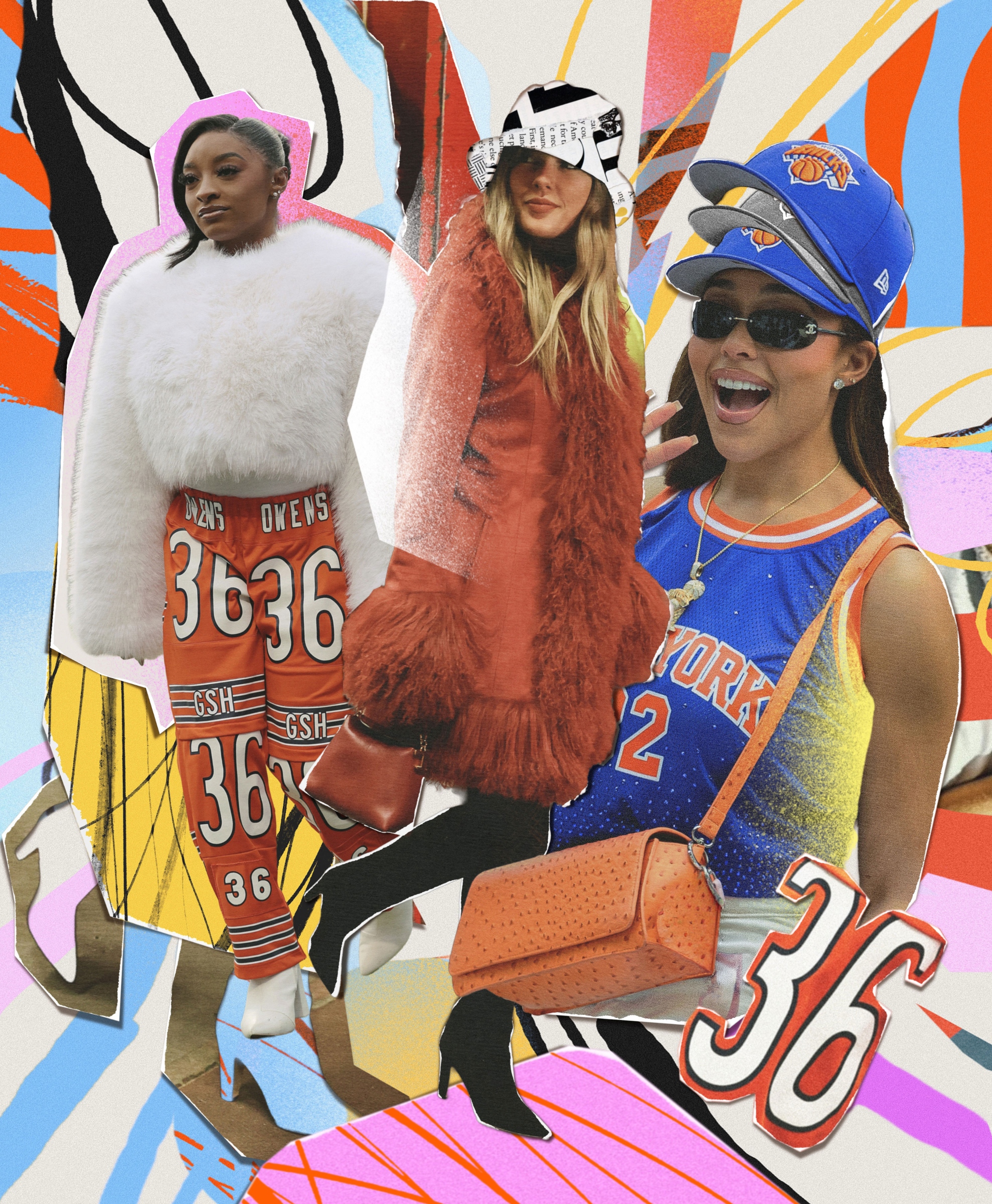
Victoria Beckham, one of the OG WAGs, was always bigger than just someone’s wife — yes, even someone like soccer icon David Beckham. The former Spice Girl has shown enormous grit, drive and talent in building up her respected fashion business and booming beauty division. Elsewhere, there’s Jordyn Woods, who is freshly married to Knicks center Karl-Anthony Towns and has her own handbag line, Woods by Jordyn. Her auspicious orange bag, considered to be a lucky talisman during the NBA Playoffs, recently went on display at the Guggenheim Museum in New York City. The Formula 1 WAGs now boast Kim Kardashian among their ranks. Hey, since the moment she went public with Travis Kelce, even Taylor Swift is technically a WAG. These plus-ones have officially recast themselves as main characters.
Given how saturated the sports-meets-style landscape is, the real question is: Where do we go from here? Smaller, more specialized sports should get more attention. The college sports economy also offers a massive opportunity. And women’s sports remain woefully overlooked. Surely it’s time to move beyond the safety net of big names in big sports. “Women’s basketball leagues, like Unrivaled, are really challenging the old-school leagues for attention and relevance,” says Miller. “There’s opportunity across the board, and brands can find more cost-effective deals when they look slightly outside the mainstream.”
Whatever the scale of the brand, the sport or the player, it would be ill-advised to ignore the power of the fan. Fashion’s sporty makeover reaches all the way to the stands and the streets, transforming how everyone engages with sport through clothing. As athleisure infiltrated the casual closet, a counter-movement emerged in actual workout looks, which are embracing a more characterful, analogue approach. In particular, vintage sportswear — the faded track top, the retro jersey, the reissue of a decades-old design — has become a language of its own. It’s a way of signaling taste and knowledge, of wearing sport as culture rather than merely function.
It’s also a way of capturing a moment. Online marketplace StockX, where prices for sneakers, clothing and other collectibles fluctuate dynamically based on real-time supply and demand, saw a major uptick in interest for Spain soccer shirts during the World Cup. The first spike came on July 14, just after Spain secured its place in the final, with another a few days later — most likely from fans rushing to get their jerseys in time for the big game. Interestingly, however, the largest sales jump followed Spain’s win, peaking after the final whistle. Isn’t that more about buying into a vibe than anything? It’s another way of making the celebration last long after the confetti has dropped.
Indeed, the fan does not play a reactive or passive role in this conversation. We are the protagonists. The likes of Spike Lee and Timothée Chalamet at Knicks games helped catapult the coverage to a much wider audience. No wonder fashion brands clamor to dress the fan, too.
But beyond the multi-million-dollar mega-brand deals and the A-listers in their premium seats, the intersection of sport and style is expressed in its purest, simplest form by the fan wearing their team’s shirt, cap or scarf. Shorthand for belonging, it’s a gesture that connects the individual to the community. In an increasingly siloed, arguably devastatingly divided world, choosing to don your team’s colors means something real, something profound.
Ultimately, sport is a manifestation of our shared humanity. Even when we’re cheering on different sides, we’re united in our appreciation of common values: persistence, discipline, cooperation. To support a team or player is to allow yourself to feel the biggest luxury of all: hope. Who wouldn’t want to opt into that? We suspect the style game has only just begun.