Impressionist painter Claude Monet once remarked that Venice was “too beautiful to be painted.” But in 1908 he took that sentiment back, producing 37 canvases encapsulating the fabled city, imbued with a luminous, almost ghostly, glow. Now, a blockbuster exhibition at the Brooklyn Museum in New York City takes us inside this under-explored collection — which forever changed the acclaimed artist’s legacy.
“Monet found the lagoon city to be an ideal environment for capturing the evanescent, interconnected effects of colored light and air that define his radical style,” explains Lisa Small, the museum’s senior curator of European art. “These paintings depict magnificent churches and mysterious palaces, all conjured in prismatic touches of paint.”
Photography provided by the Brooklyn Museum
It was Monet’s wife Alice Hoschedé who encouraged him to take the trip, hoping the diversion would reinvigorate the 68-year-old artist during a pivotal moment in his career. The painter had already gained great notoriety for his work, and at his home in Giverny, France, he began experimenting with water lily paintings — but the task of capturing these aquatic blossoms was not going well. So he abandoned the canvases and packed his bags for Italy.
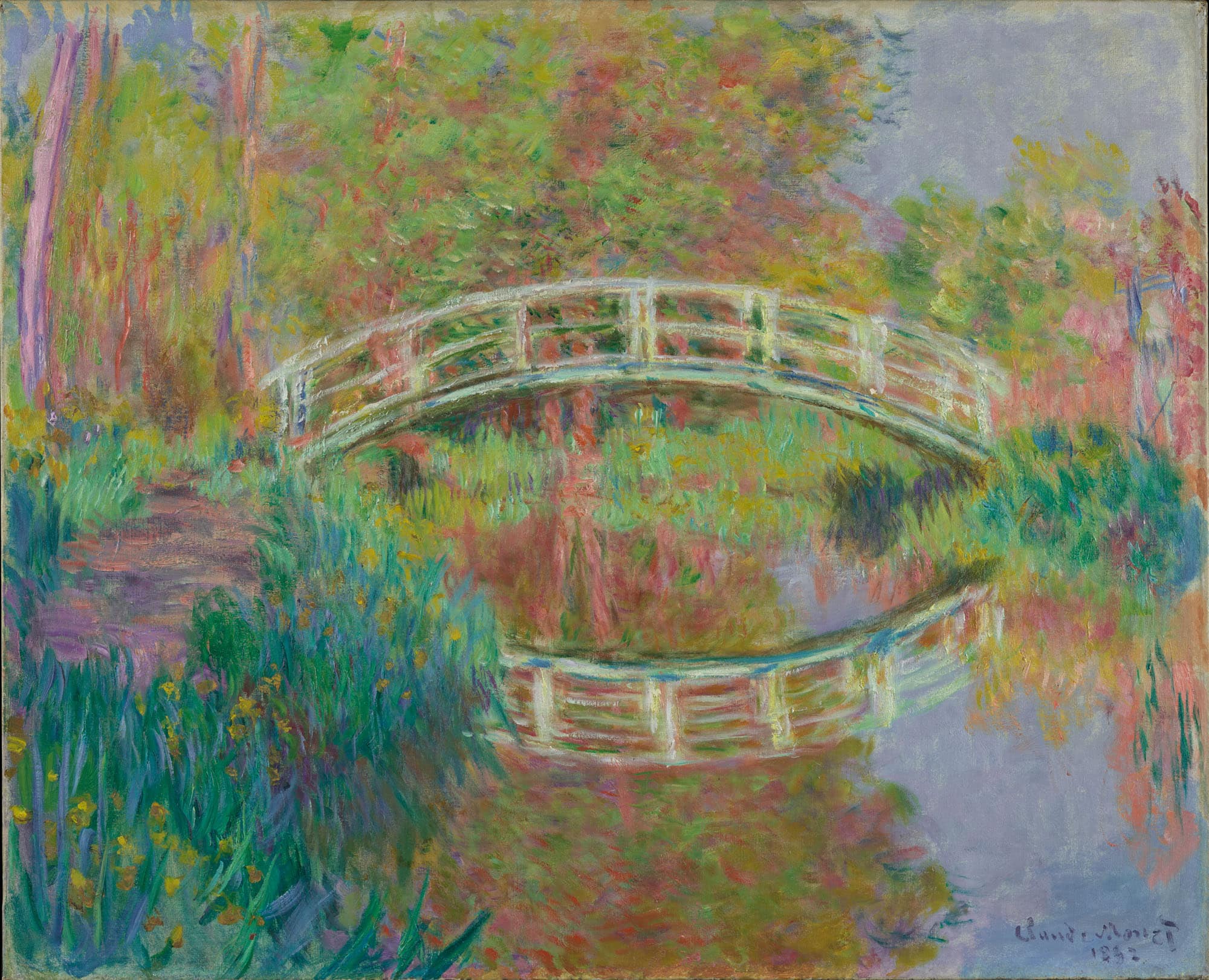
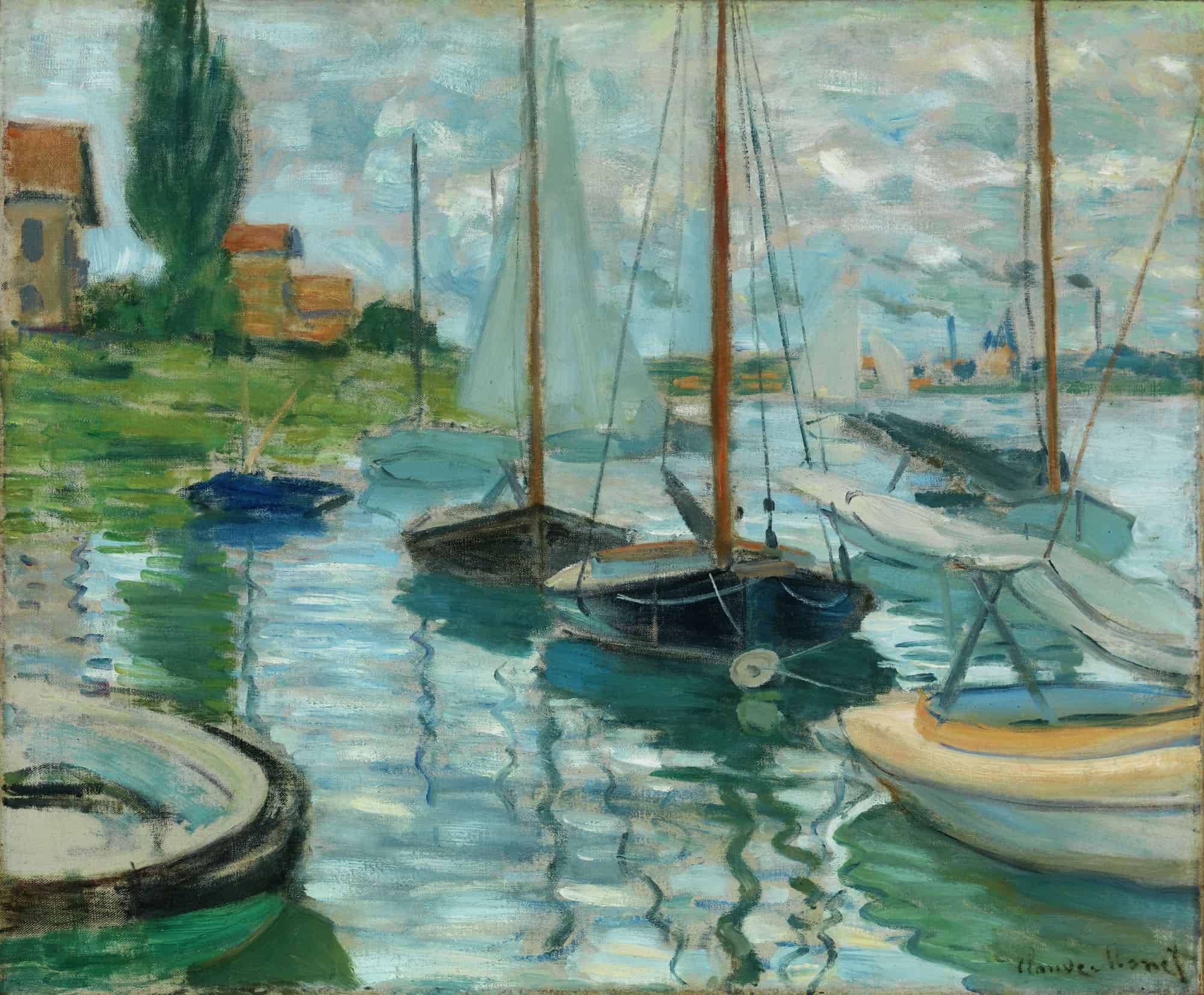
In the museum’s Monet and Venice exhibition — the largest showcase of the artist in New York City in more than 25 years — we can follow along on his whirlwind European travels. Walking through the atmospheric galleries feels like a treasure hunt, with 19 Venetian paintings sprinkled throughout. Placed alongside many of the artist’s paintings of Paris and London, the works highlight Monet’s lifelong fascination with light and reflection.
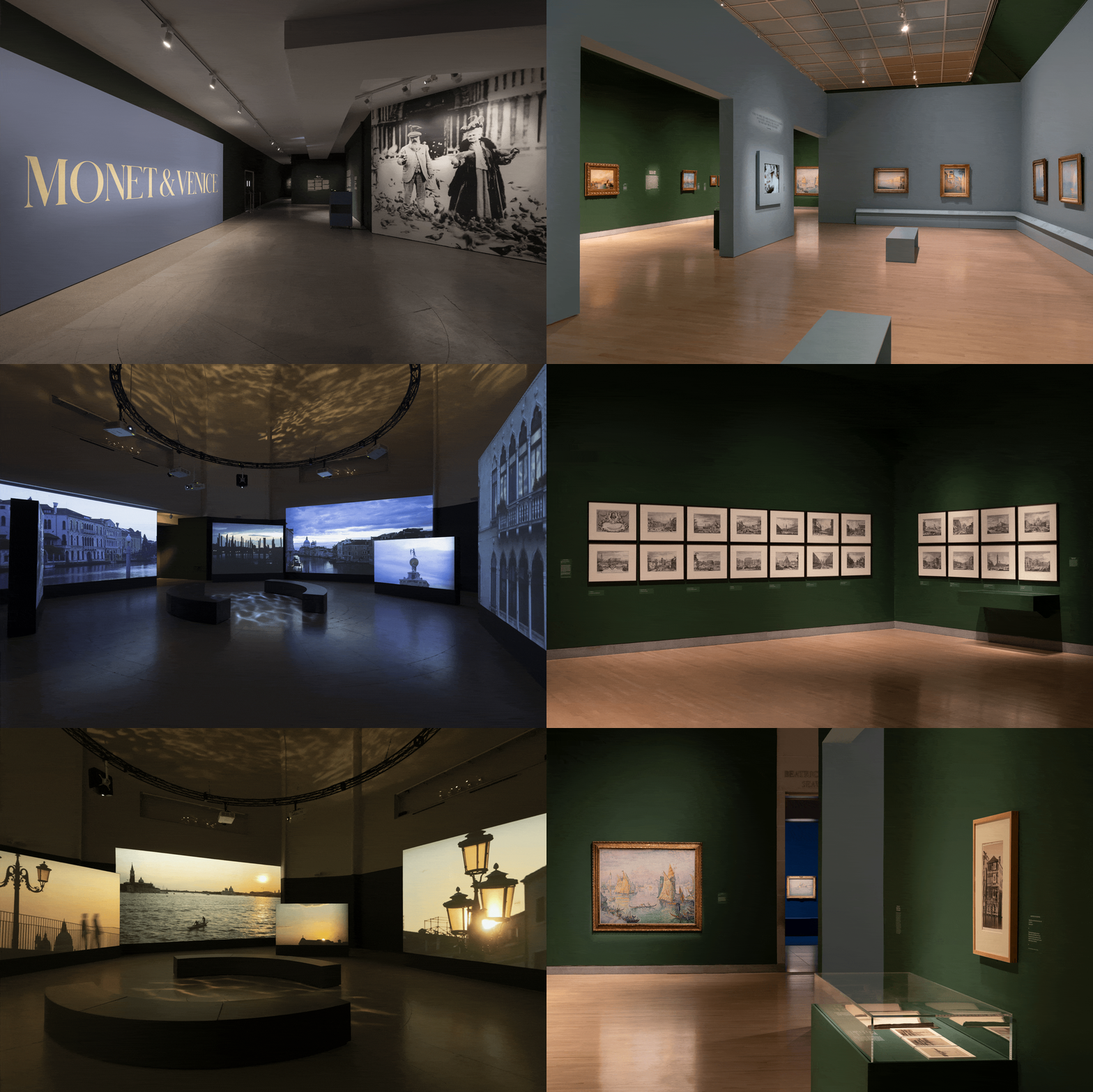
More than 100 artworks, books and ephemera have been included in the multisensory exhibition, where visitors are immersed in Venetian splendor. There is even an original symphonic score for the show, inspired by actual field recordings captured in Venice. Those sounds are heard throughout the galleries, alongside photos and film montages that whisk us to this beloved destination.
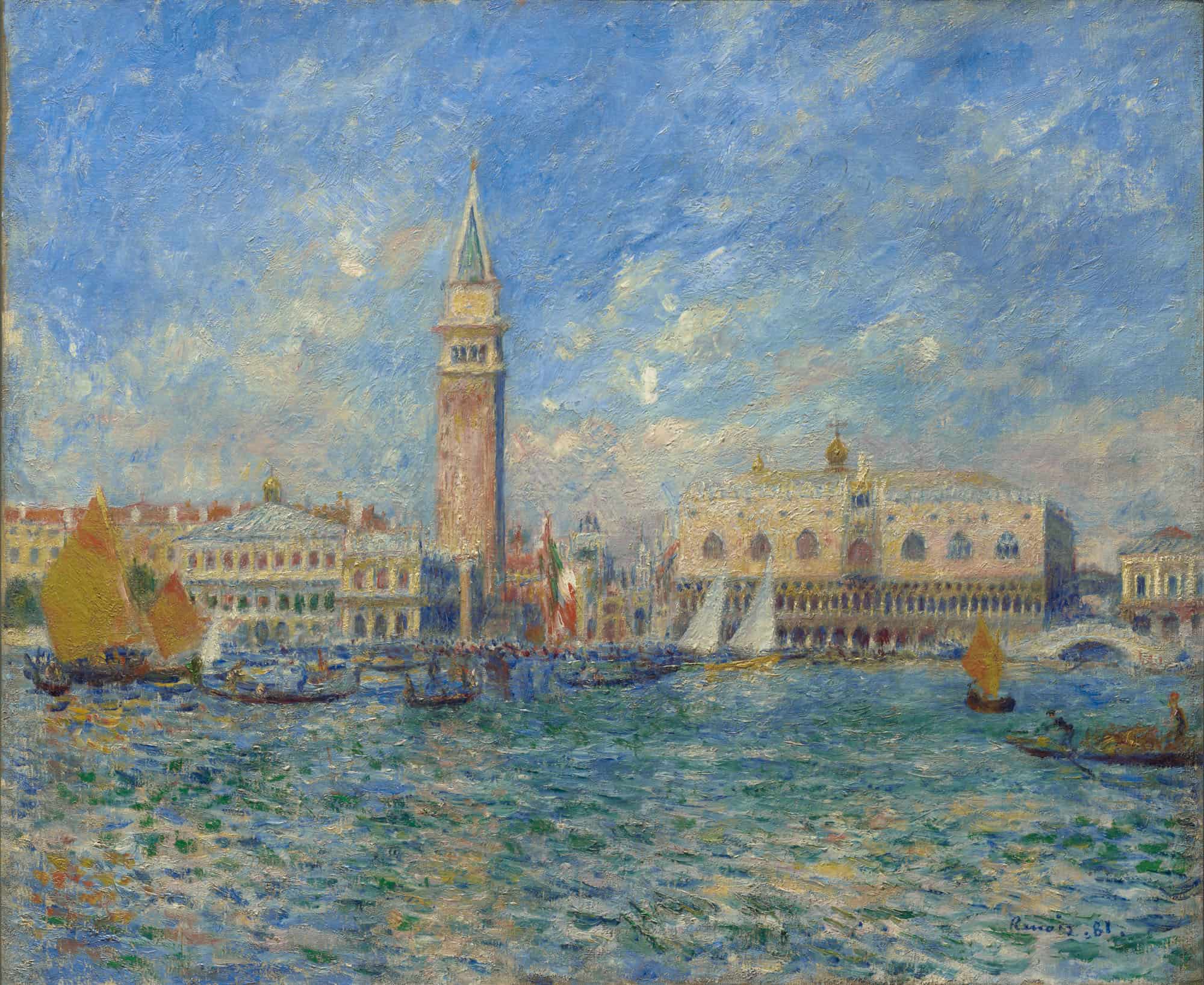
It’s not just Monet’s paintings here; we also see Venetian canvases by notable artists like Canaletto, J.M.W. Turner and Pierre-Auguste Renoir. But unlike those bustling scenes, Monet’s interpretation of the city is perfectly still — absent of all human form. It’s as if the artist was all alone in this romantic locale, merrily painting its majestic churches and sinuous canals.
“Other painters paint a bridge, a house, a boat … I want to paint the air in which the bridge, the house and the boat are to be found — the beauty of the air around them,” Monet famously said. “And that is nothing less than the impossible.”
During Monet’s two-month stay there, the artist had a strict painting schedule, working from early morning right up until sunset. He chose to divide the days into two-hour intervals, moving diligently from spot to spot. This way he was able to paint iconic sites like the Palazzo Ducale or San Giorgio Maggiore in the same consistent light.
When Monet was busy painting away, Hoschedé was often at his side, writing letters and postcards to friends and family back home. Seeing the actual letters in the exhibition feels both intimate and alive — especially a letter she wrote to her daughter Germaine, where she extols her time in Venice as “living in a dream.” Then referring to her husband, she confides: “Venice has got a hold of him and won’t let go.”
Hoschedé also mentions more personal matters, like Monet’s sometimes stubborn moods: “What crazy and sad days I am going through,” she writes, revealing the artist’s emotional turmoil. “Monet, who sees that everything changes, cannot really tear himself away from his motifs — you know him, from the extreme jumps, from the beautiful to the ugly. I need a great energy and a good dose of courage because, alone like this, it is painful.”
Looking back, the couple had no idea how consequential this Italian voyage would become. Upon returning home, they planned to travel back to Venice. Sadly, Hoschedé became gravely ill and passed away in 1911. Filled with grief, Monet isolated himself in his studio to finish the canvases he had started in Italy. Then in 1912, the Venetian paintings were shown to great acclaim at Galerie Bernheim-Jeune in Paris. They would become the last new works Monet would show publicly.
More than anything, the Venetian respite gave Monet a fresh perspective. Once back in Giverny, he finally finished his water lily paintings, eventually showing them to an astonished public in 1909. They were an artistic triumph — a painterly experiment in which Monet boldly abandoned the horizon line, pushing artistic boundaries of abstraction. Later, when he reflected on that magical voyage to Italy, the Impressionist painter concluded: “My trip to Venice has had the advantage of making me see my canvases with a better eye.”
Experience the Monet and Venice exhibition at the Brooklyn Museum through February 1.