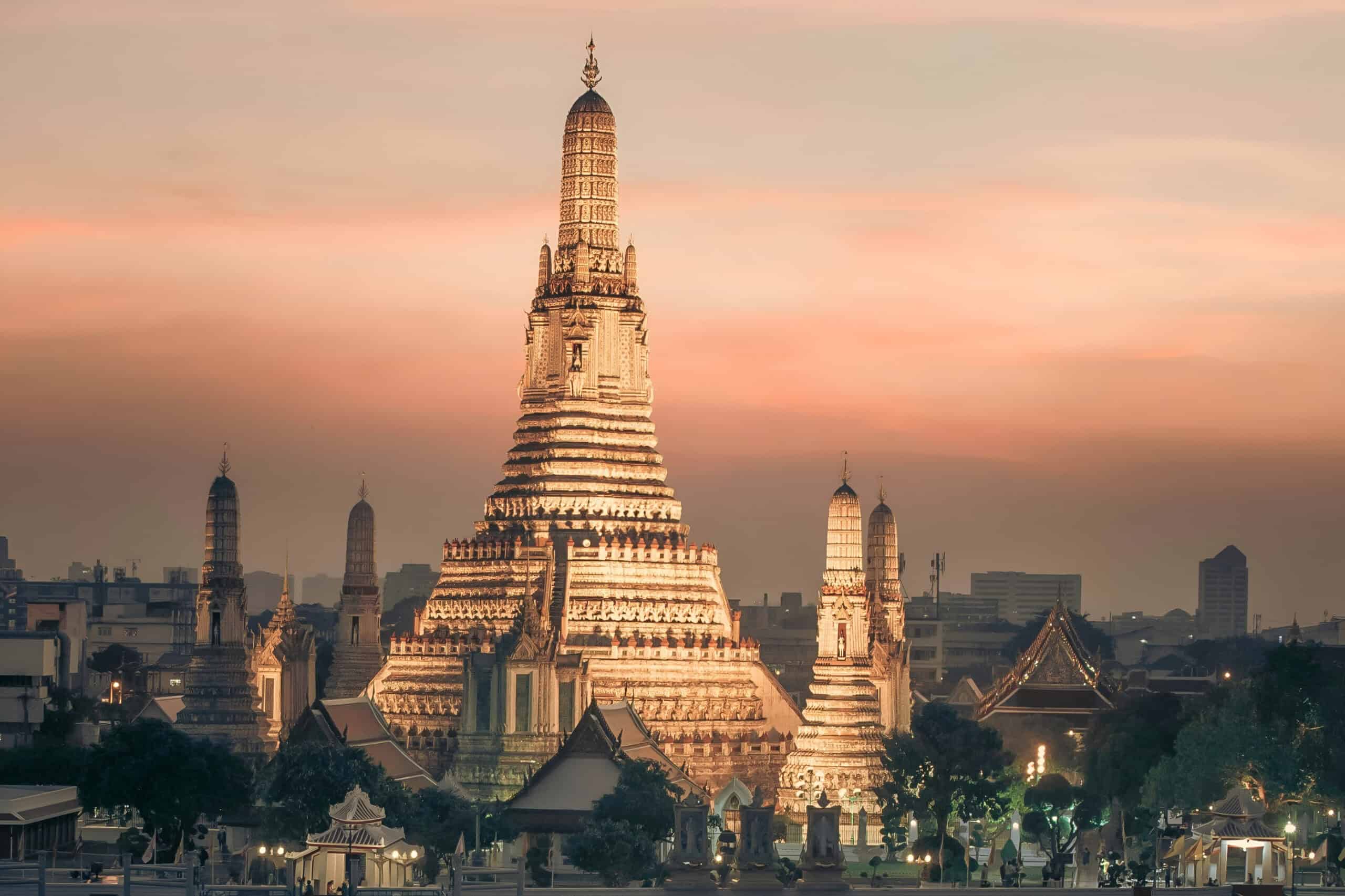
Historic temples and glamorous palaces juxtapose with crowded night markets and modern skyscrapers in a city that’s home to more than 11 million people. Bangkok’s design identity fuses traditional craftsmanship with contemporary urban innovation — a visual fingerprint that’s especially noticeable in the Bang Rak creative district. The city also lays claim to having more restaurants (six) on William Reed’s World’s 50 Best Restaurants list than any other city, so whether you want to explore Michelin-starred tasting menus or no-frills street food, you are certain to eat well. While Bangkok’s reputation for being loud and, at times, chaotic is well-earned, so is Thailand’s nickname — Land of Smiles — because out of that chaos flows heartfelt hospitality.
Photography provided by Capella Bangkok
Stay
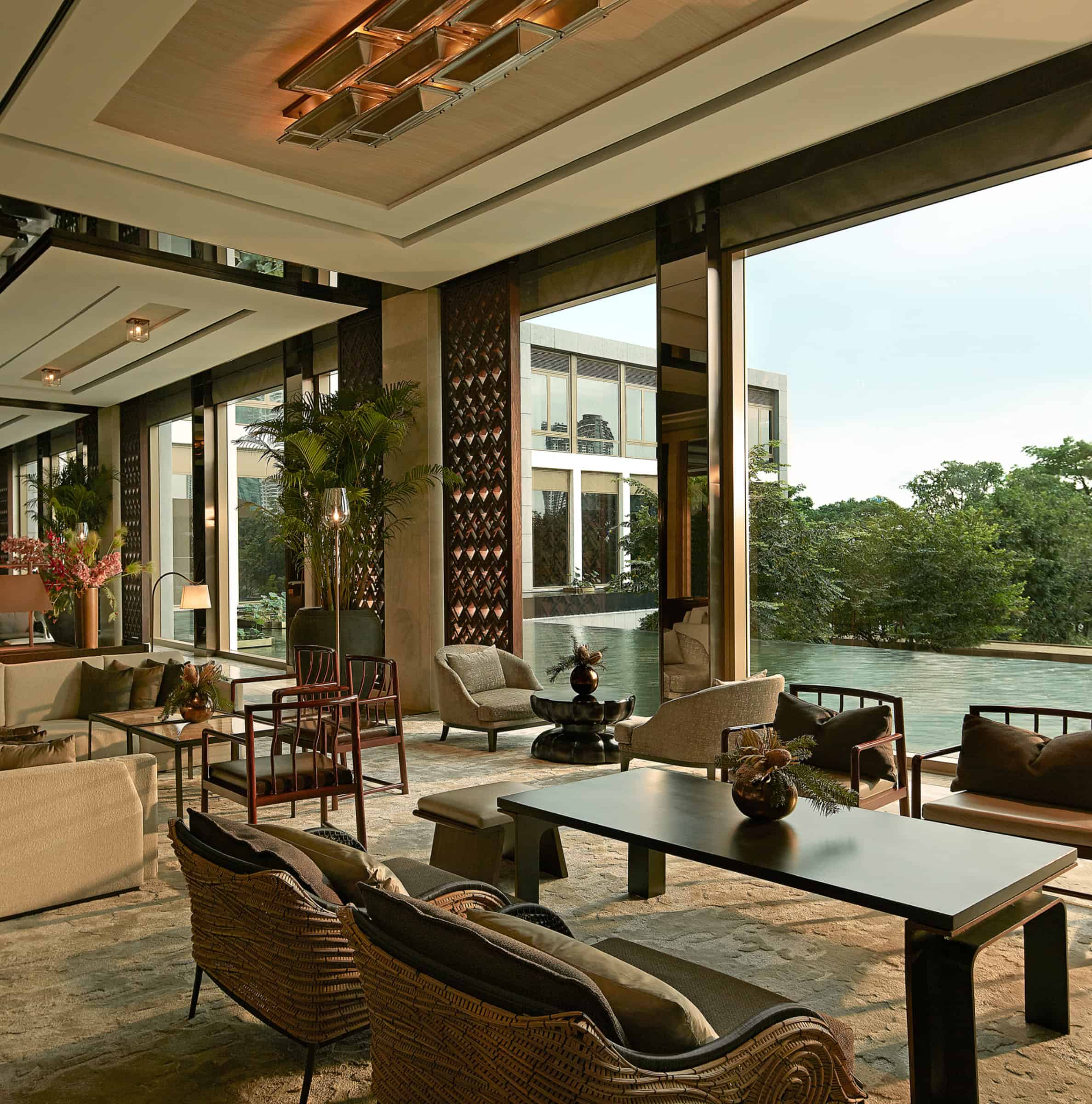
A paragon for discerning taste, Capella Bangkok boasts 101 rooms offering shaded balconies with daybeds and Chao Phraya River views. Check-in occurs in the living room, setting the tone for a relaxed residential ambiance, with complimentary refreshments like Thai iced tea and egg waffles throughout the day. The hotel’s “culturists” (essentially a concierge/butler hybrid), are just a text away, whether what you want is a lunch recommendation or a class in language, art or history. A thoughtful array of massage styles including ancient Thai tok sen (hammer massage) and Shang Dynasty-inspired harmonized qi (a Traditional Chinese Medicine technique used to balance the body’s vital energy), plus water therapy sessions at Auriga Wellness like 60-minute magnesium revivals melt away stress.
Capella’s restaurants, meanwhile, have enviable range. Côte by Argentine chef Mauro Colagreco offers multi-Michelin-starred haute cuisine inspired by the French and Italian Riviera, and a mercurial, Champagne-forward wine list, while Phra Nakhon offers Thai classics alfresco. Dive into rich curries, refreshing salads, and wok-fried proteins and produce for a delicious lesson in Thai cooking. Chefs from both restaurants harvest herbs and edible flowers from the onsite greenhouse garden daily before service.
Photography provided by Nusara
Dine
Brothers Thitid “Ton” and Chaisiri “Tam” Tassanakajohn are among the city’s most prolific restaurateurs. Over the past decade, they’ve worked with small organic farmers to grow heirloom and indigenous ingredients, the backbone of their menus across their dozen restaurants.
The Tassanakajohns’ crown jewel is Nusara. Named for their late grandmother who was a seamstress, the eatery is currently ranked 35th on the World’s 50 Best Restaurants list. The ground floor lounge is decorated with rolls of fabrics and spools of thread in their grandmother’s honor, and dinner begins with Champagne and snacks on the fourth floor terrace overlooking the glittering Wat Pho Buddhist temple.
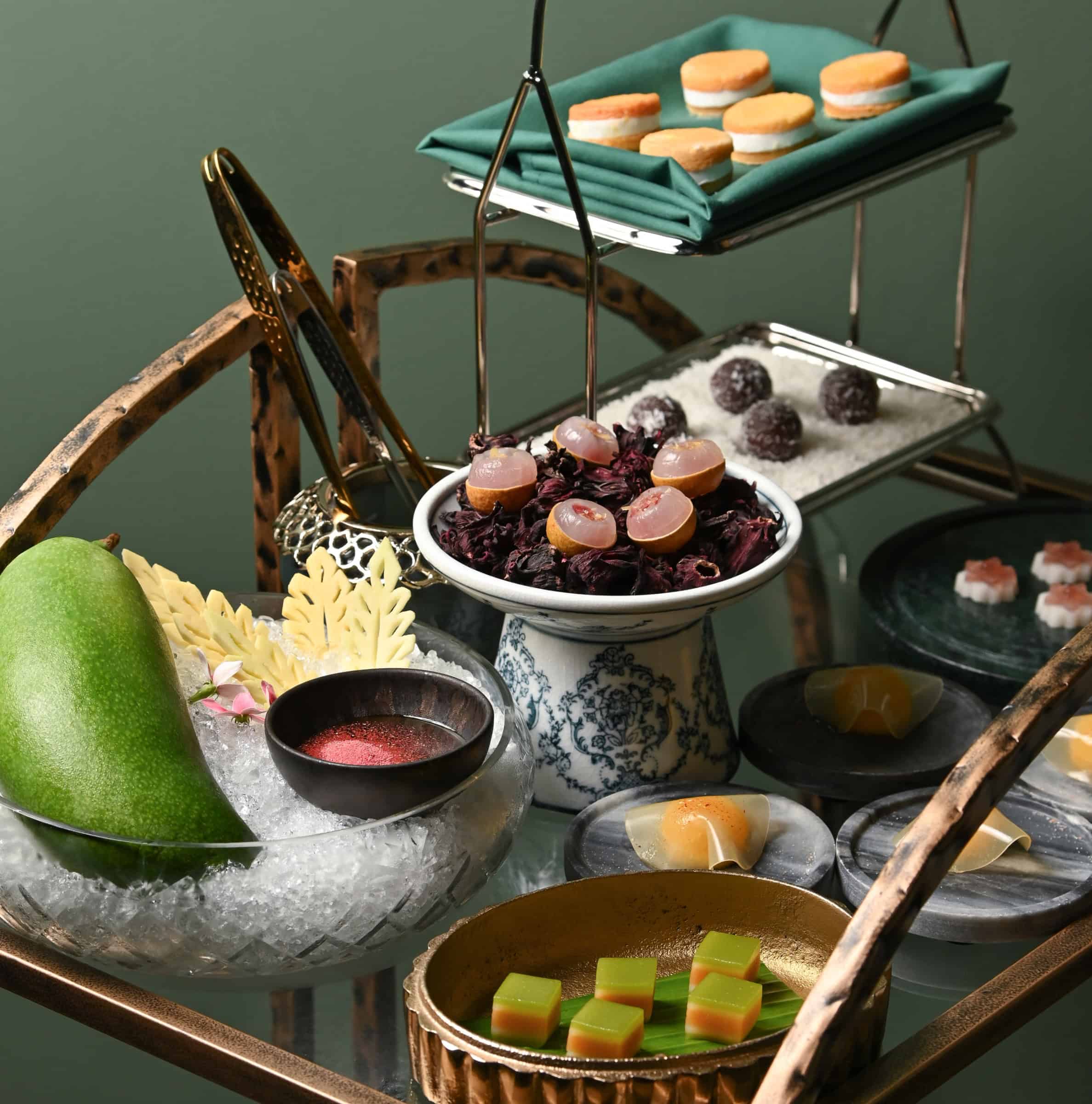
Decadent platters of raw ingredients like tropical fruits, lotus plants, Thai caviar, spices and shellfish are presented and explained before each course, to help diners better understand the complexities behind Thai culinary traditions. “We want our guests to discover that Thai ingredients are second to none,” explains Ton.
Photography provided by Yothaka International
Shop
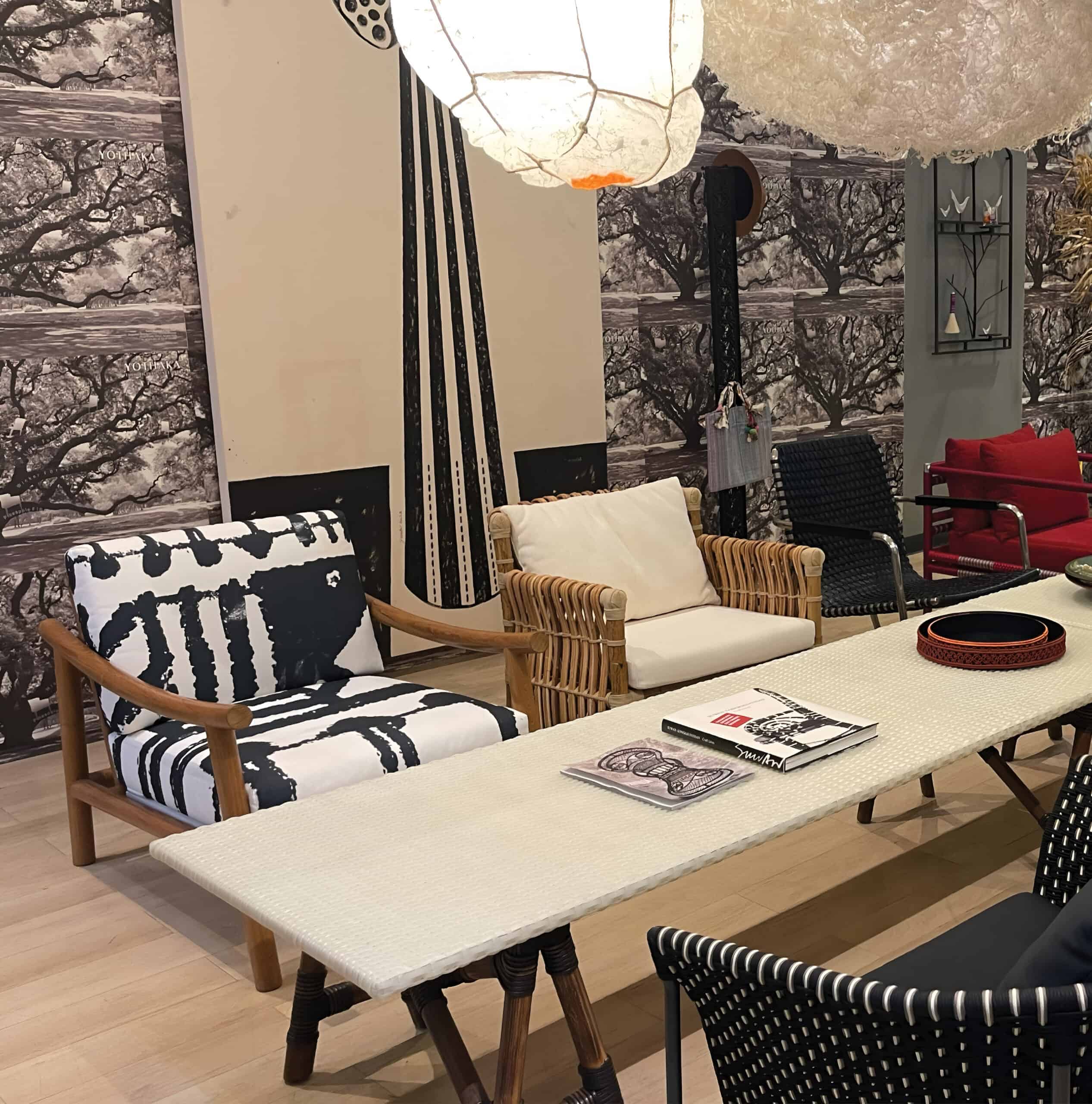
Furniture manufacturer Yothaka International is best known for intricate furniture and home accessories woven from natural materials such as bamboo, rattan and water hyacinth stalks. A pioneer in the use of this fast-growing invasive plant species in an artistic and eco-friendly way, founder Suwan Kongkhunthian recalls carrying his lunch to school in banana leaf boxes as a child and has thus always gravitated toward organic materials.
From Yothaka’s origins in 1989, Kongkhunthian has expanded to making leather cord furniture, outdoor furniture made from polyethylene, and a wide range of handmade home accessories including baskets, trays and mirrors. Recently, Yothaka designed custom furniture for dozens of luxury hotels, including Capella Bangkok, The Siam, and Four Seasons resorts in Koh Samui and the Maldives. Their showroom is open Monday through Friday by appointment only.
Photography provided by Jim Thompson Heritage Quarter
Do
Jim Thompson was an American spy, architect, entrepreneur and art collector who revived Thailand’s silk industry after World War II. Thompson established the Thai Silk Company Ltd., before mysteriously vanishing in 1967. In collaboration with local weavers and silk farmers, he created colorful fabric prints and wide-legged silk twill fisherman pants that are now iconic. His creations can be found in lifestyle boutiques at Bangkok’s premier malls.
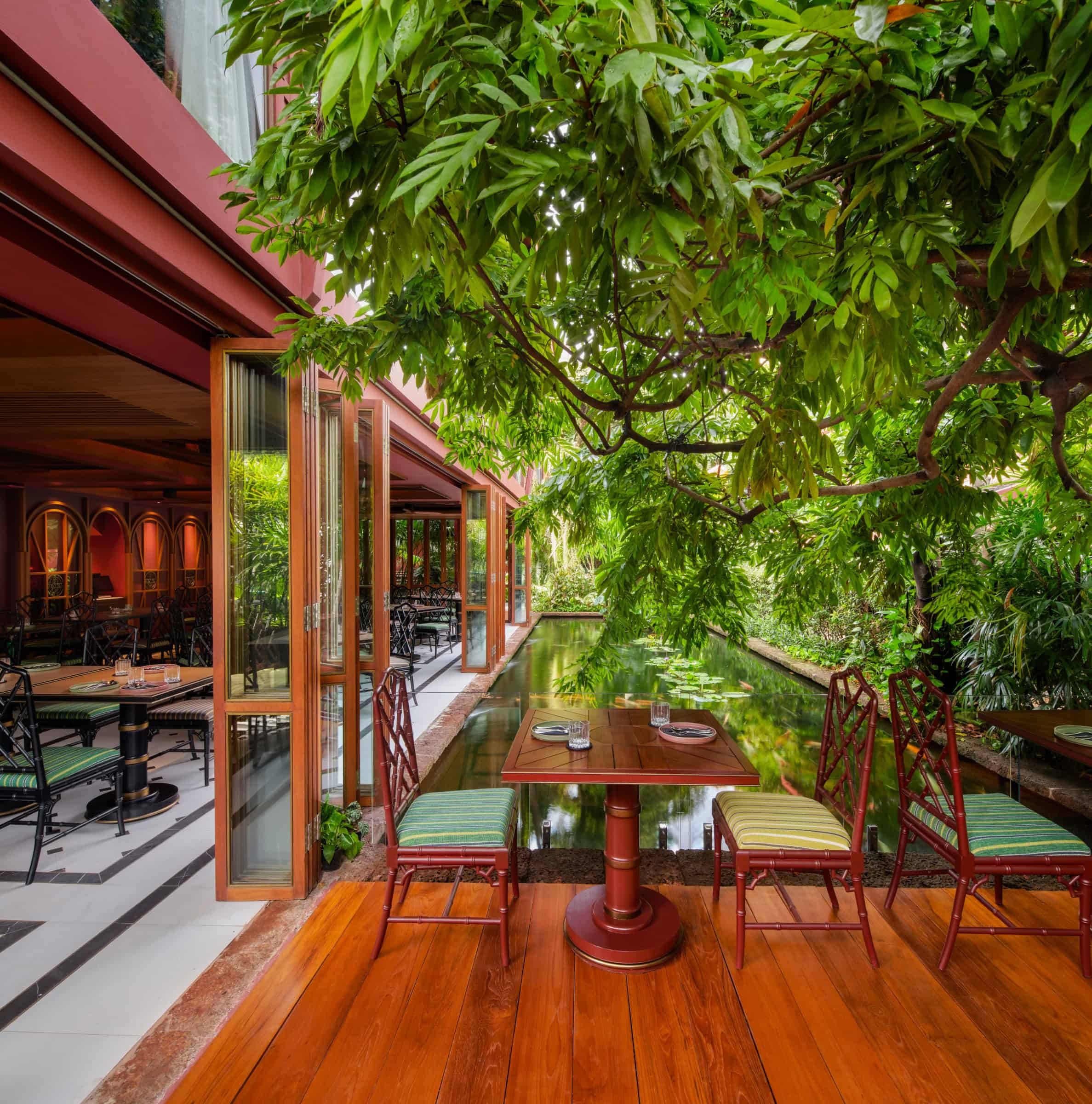
Thompson’s Bangkok home comprises six traditional teak houses elevated on stilts, which opened to the public as a museum following his disappearance and offers enlightening exploration. The painstakingly preserved examples of Thai architecture house Thompson’s collection of Southeast Asian art and antiques, with guided tours available.
Within the same compound, there’s also a four-story art center with rotating exhibitions and a cinnabar-hued retail store offering men’s and women’s clothing, accessories, and exclusive home collections.
Photography provided by P. Tendercool
Shop
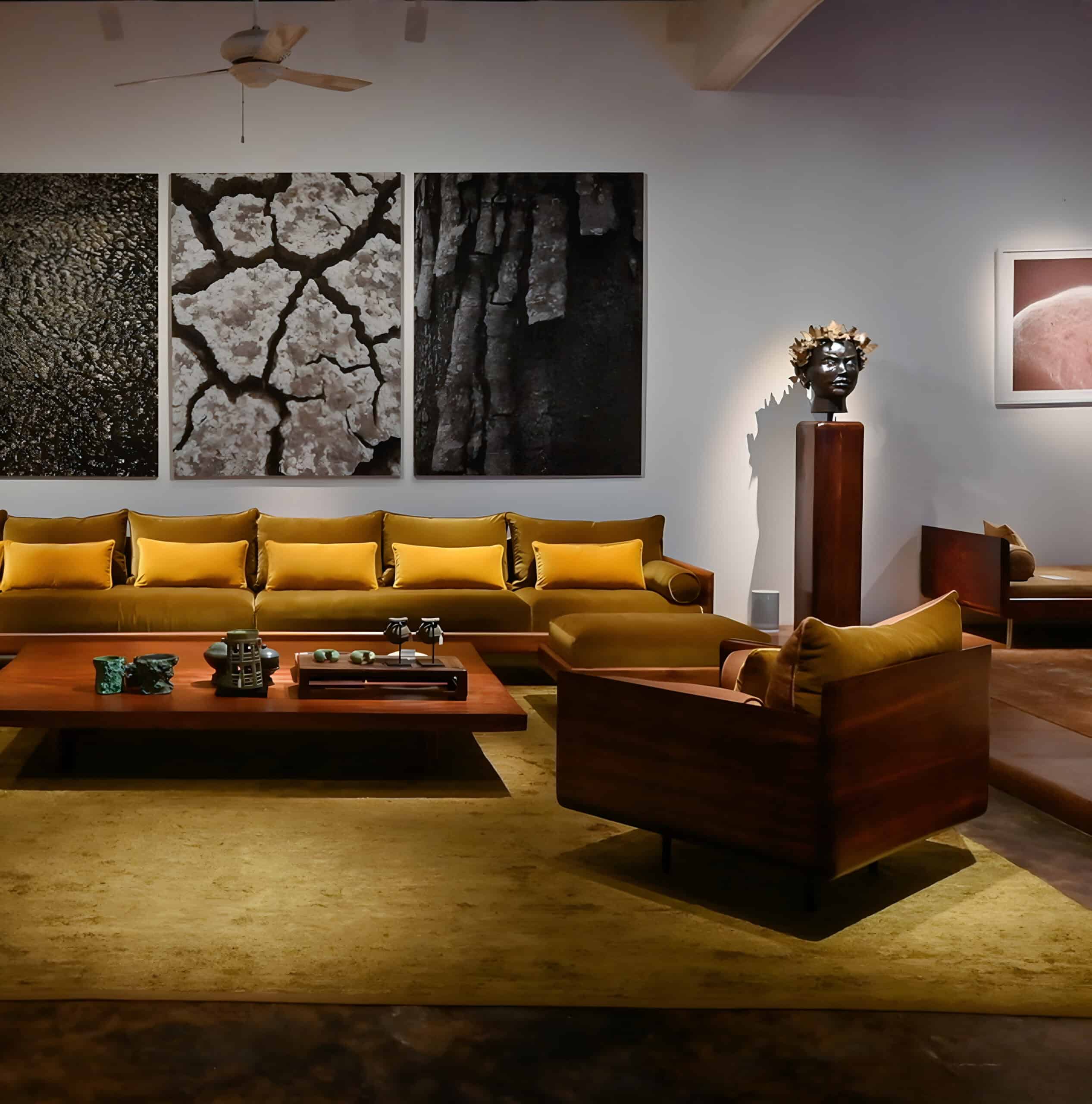
Founders Stephanie Grusenmeyer and Pieter Compernol, both hailing from Belgium, were instrumental in reviving Bangkok’s Creative District. The duo established P. Tendercool in 2009 in Warehouse 30, a 1940s art deco building that is now home to 13 merchants including art galleries and multi-brand lifestyle shops featuring Thai designers.
At P. Tendercool, guests step into the creative process and watch furniture become art, as Grusenmeyer and Compernol, who were antique dealers prior to their Thailand sojourn, transform reclaimed hardwoods, hand-cast bronze and fine leather into bespoke masterpieces. Each creation is one-of-a-kind, with inspiration ranging from the aesthetics of China and Japan to Bauhaus geometry and midcentury modern design.
Schedule a meeting for potential commissions or private tours of their gallery and workshop. Travel there by boat along the Chao Phraya River for a true Bangkok experience — all public boats stop at Sri Praya pier, a two-minute walk from Warehouse 30.
Photography provided by The Ritz-Carlton, Bangkok
Stay
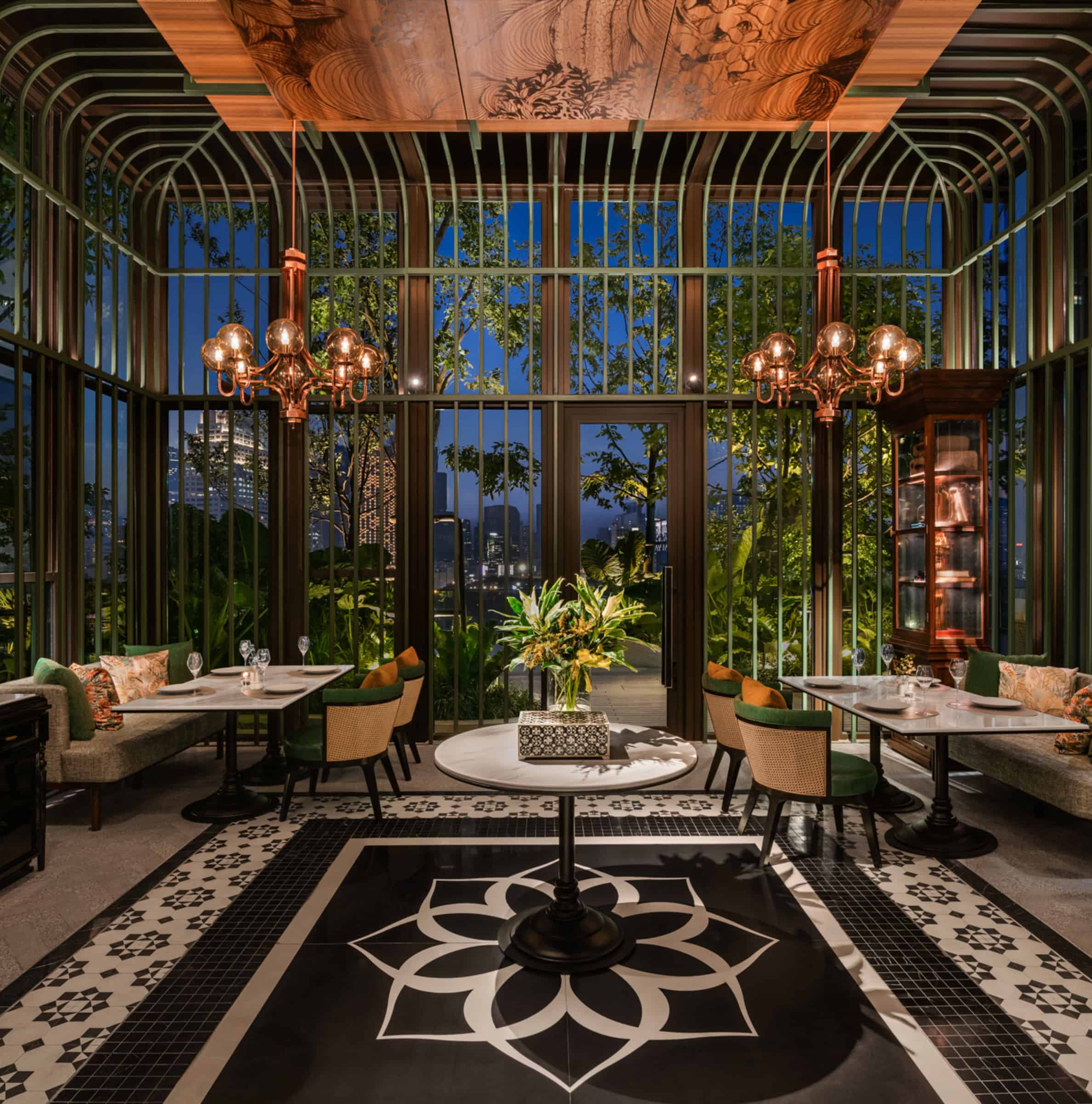
The Ritz-Carlton is among the city’s newest luxury hotels, occupying the first 25 floors of a 51-story skyscraper in the city’s new One Bangkok district. A serene glass flower pond welcomes travelers on the eighth floor lobby, and guest rooms are bright and airy, with floor-to-ceiling windows overlooking Bangkok’s largest public park. Interiors are inspired by King Rama V of Thailand (then Siam), who was credited with modernizing the country in the late 1800s, and blend art deco with Thai touches. The 1,367-square-foot Marigold suites and their spacious balconies are so above and beyond that departing is a reluctant affair.
A Thai massage in the hotel’s intimate spa is a foolproof cure for jet lag, followed by a cocktail with sweeping Lumpini Park views at the 23rd floor club lounge. Lily’s serves a standout breakfast buffet, including made-to-order Thai tea waffles and a plethora of pastries, tropical fruit and assorted local delicacies. Duet by Parisian chef David Toutain is fine dining at its best, showcasing classical French technique and a reverence for vegetables.