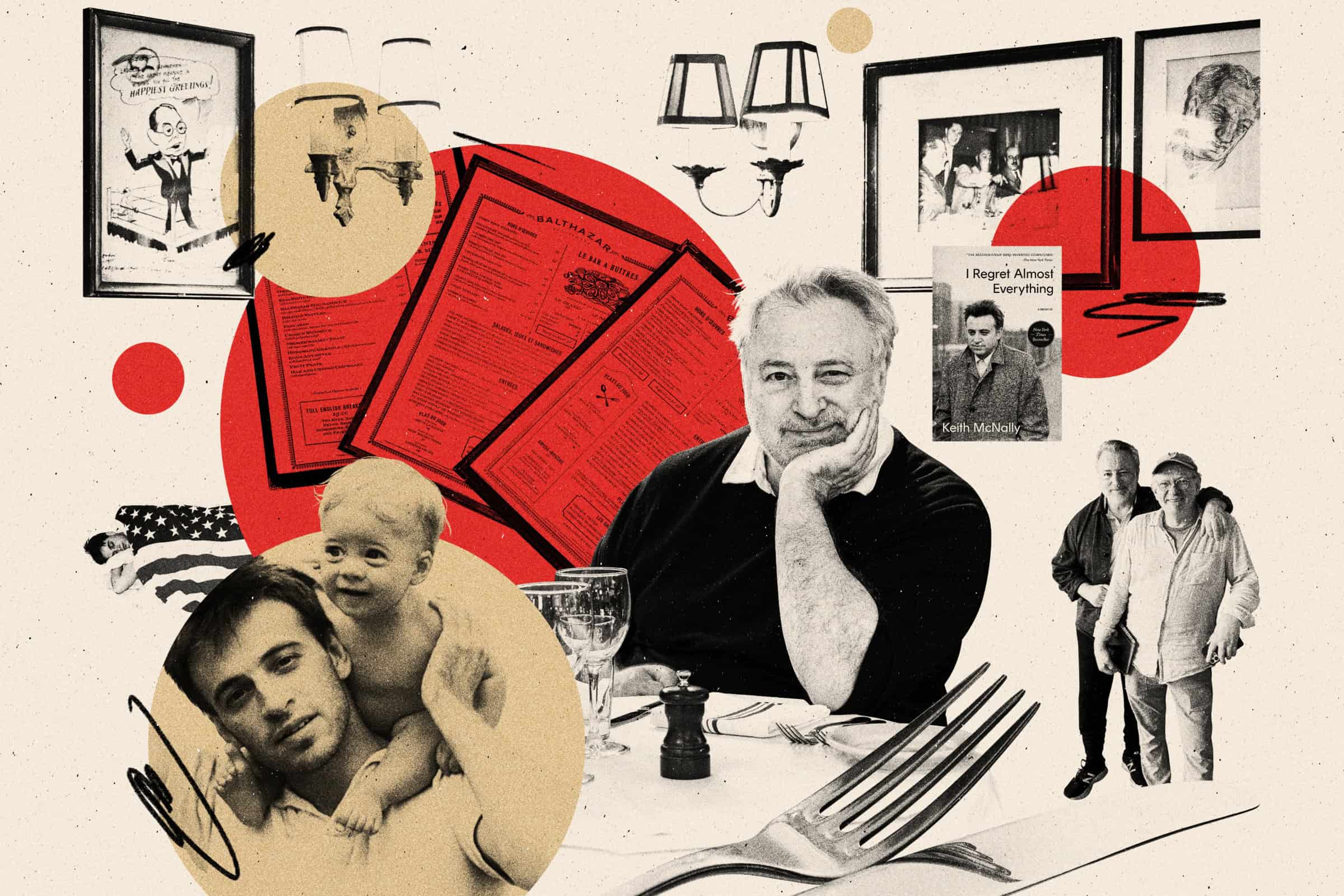
Famed New York City restaurateur Keith McNally is having a moment. His recent book, I Regret Almost Everything, takes us inside his epic restaurants, like Balthazar and Pastis. But he also reveals some very candid accounts of his family struggles, debilitating stroke and suicide attempt. Rave reviews are piling up, and the poignant memoir is praised by the likes of Anna Wintour and Martha Stewart. We recently caught up with McNally, who tells us that despite the accolades aplenty, he is not feeling like the toast of the town.
“Although I’m glad it’s selling well, I’m not entirely happy with the book,” he tells Artful Living. “There are too many words and sentences that make me cringe. Luckily, my publisher has given me permission to rewrite the book for the paperback version, which I’ve been working on every day.”
It’s this refreshing honesty, combined with a willingness to do things his way, that has made the British-born McNally American restaurant royalty. Deemed “the restaurateur who invented downtown” by the New York Times, McNally is known for iconic eateries that blend a touch of glamour with a welcoming ease. “I only build the kinds of restaurants I want to go to,” McNally explains. “The irony is the more experience I acquire, the harder it becomes. The older I get, the more nervous I am about things that were once routine.”
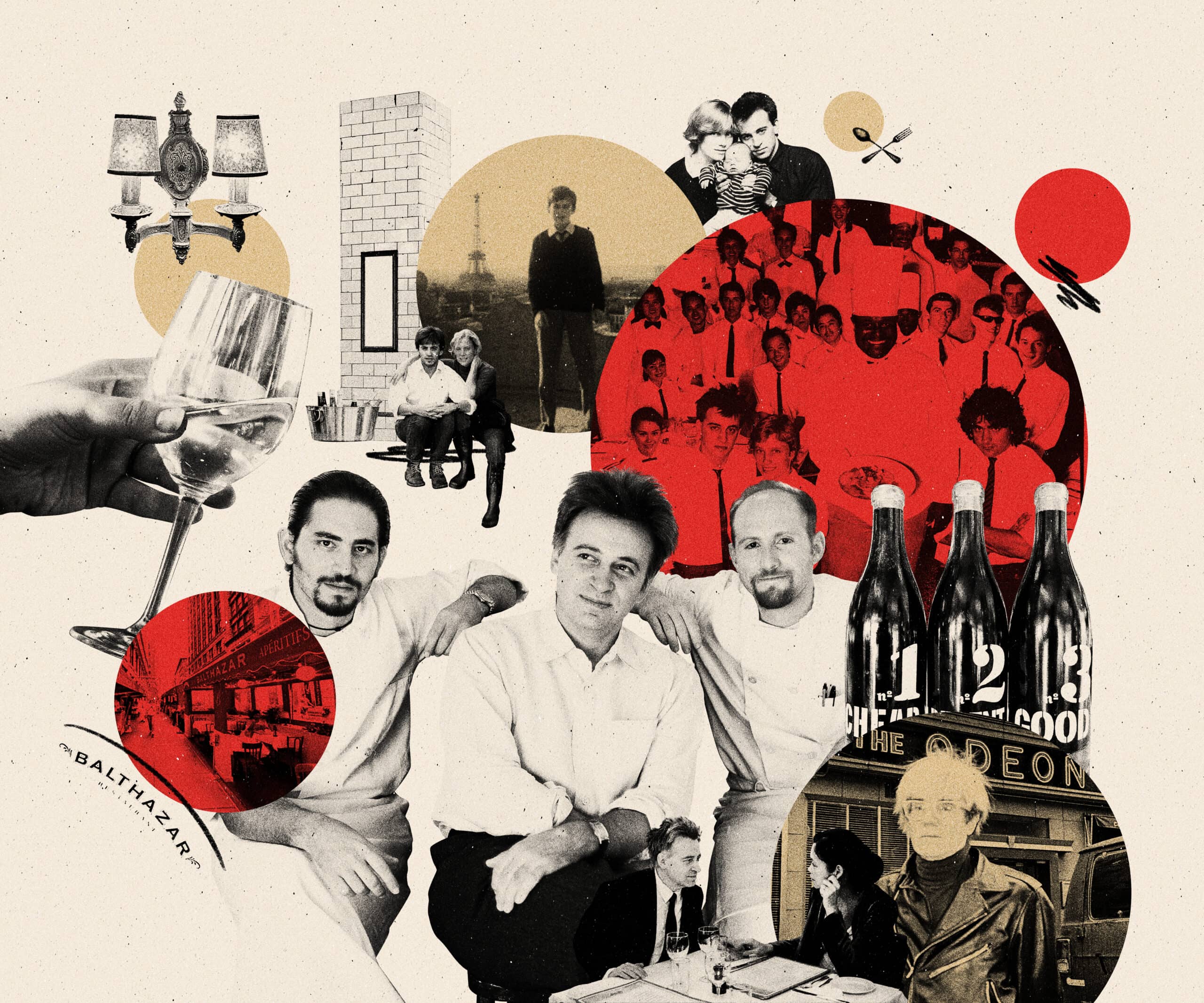
Illustration by Klawe Rzeczy
McNally was on to something in 1995 when he stumbled upon an old leather warehouse in Manhattan’s SoHo neighborhood. Inspired by classic Parisian brasseries, he transformed the space into his iconic Balthazar restaurant. “The first thing I did was block in two of the windows and replace them with mirrors,” he writes in his book. “Like plays and films, restaurants work best when they create their own universe. To be reminded of the outside world while dining is like hearing the doorbell ring while making love.”
Part of Balthazar’s lasting success is its moody, atmospheric interior. With its ochre-hued walls and layered lighting, the room emits a seductive glow. Turns out, McNally has a knack for creating spaces that feel like they have always been there. “Good design, like good cinematography, should never strain to be noticed,” McNally explains. “It should appear as natural and effortless as if it had fallen into place. The moment a designer’s hand becomes conspicuous, the game’s up.”
And he is just as opinionated about customers, reminding staff to keep an eye out for the shy person walking in. Savvy New Yorkers, he says, will always find a table. But it’s the quieter ones who need attention. So too with female diners eating alone. To welcome them, McNally always sends over a complimentary glass of Champagne. Yet despite all this restaurant savoir faire, McNally says he is “the least hospitable person in the hospitality business.”
The entrepreneur grew up in the working-class East End of London. He recalls being ashamed of his family’s prefabricated home with its thin walls. Early on, he acted in the London theater, where he became enchanted with stage lighting. McNally moved to New York City in 1975 and began working at restaurants. Then five years later, he opened his first eatery on a quiet street in Tribeca. “Through no intention of our own, the Odeon quickly became the epicenter of the downtown art scene, with Andy Warhol, Jean-Michel Basquiat and Julian Schnabel mixing with the likes of Anna Wintour, Lorne Michaels and the cast of Saturday Night Live,” McNally recounts in his memoir.
But the book is about more than just restaurants. It’s also a frank and moving account of McNally’s personal life with his five children and two marriages ending in divorce. And in breathtaking candor, he writes about a moment in his life that changed everything.
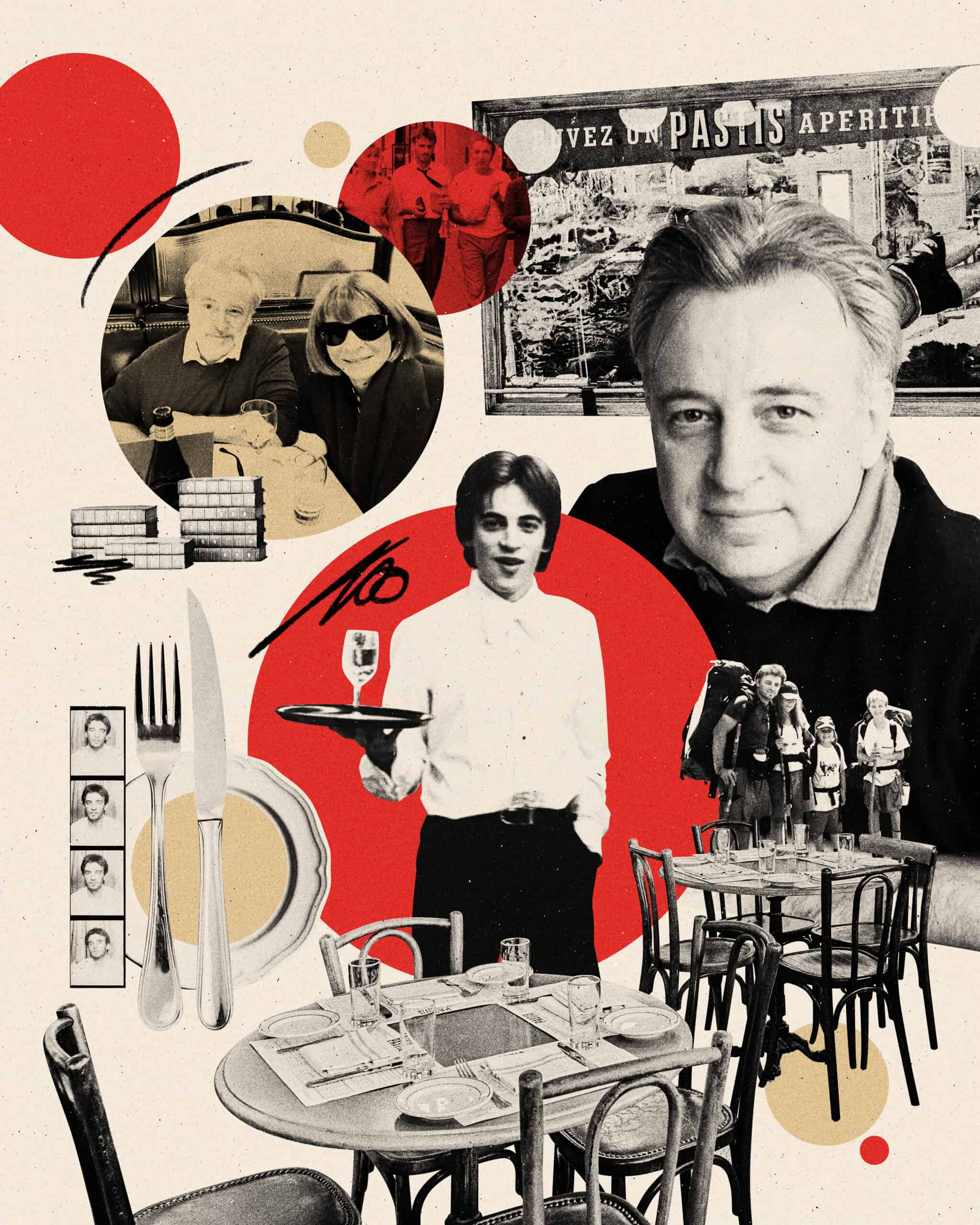
It was 2016, and McNally was living with his second wife in London. One day, he noticed a strange metallic tingling sensation in his fingertips. Hours later, he woke up in the hospital, having suffered a stroke. The episode affected his speech and paralyzed the right side of his body. In an instant, he had lost the ability to walk and talk.
To this day, McNally has difficulty speaking and is unable to use his right arm — daily struggles he finds embarrassing. “By degrees, I grieve every day for the physical person I used to be,” he admits. “The intensity may differ, incidents may make me happy, but the loss is always there. Grieving isn’t a finite process with a beginning and an end. Regardless of what the experts say, closure is always ajar. The truth is that nobody gets over anything. Eventually the accumulation of all the things we never recover from registers in microscopic detail upon our faces.”
Everything came to a head in 2018, when McNally was staying with his family in their Martha’s Vineyard home. By then, he was deeply depressed, coming to terms with his physical inabilities and facing a failed marriage. So he decided to take his own life. “I locked the bedroom door and methodically transferred 38 Ambien and 15 painkillers into a bowl and scooped the pills into my mouth in handfuls, washing down each mouthful with water from a small plastic bottle,” McNally recounts. “Then it was done. The line ‘Things we can’t untie’ from a Leonard Cohen song drifted into my head.”
It was McNally’s young son, George, who found him unconscious on the bedroom floor. The restaurateur was rushed to the hospital, where he began the prolonged process of healing. When a counselor told him that children who lose a parent to suicide are far more likely to kill themselves, he decided he wanted to live.
During this period of recovery, McNally found a surprising source of strength: Instagram. Isolated in his apartment, he became a social-media sensation, connecting directly with the world and passionately speaking his mind. Today, more than 200,000 followers read Balthazar’s nightly dining reports or get McNally’s colorful take on the day. “As a result of having a stroke, my voice was shot to pieces,” the author tells us. “At the same time — and not unconnected — I think my writing has improved. The only time I feel normal is when I’m writing. Unintentionally, Instagram became my voice.”
His Instagram voice positively exploded in 2022, when he took on English actor/TV host James Corden, accusing him of bullying a Balthazar staff member. It instantly caused a frenzy in the United States and across the pond. “Within hours of the Corden post, the number of my followers shot up from 58,000 to 73,000,” McNally reveals in his book. “My post had gone viral and each hour that passed, my followers increased by 5,000. I felt like I’d hit the jackpot of a slot machine, and thousands of gold coins were spilling out in front of me.”
That willingness to challenge celebrities struck a chord — as did his disdain for culinary events like the James Beard Awards. McNally attended the 1998 awards ceremony and loathed the “self-indulgent” acceptance speeches, writing in his book: “When I was nominated in 2010 for the country’s Outstanding Restaurateur, I stuck to my promise and refused to go to the ceremony. I sent my daughter Sophie instead. Surprisingly, I won. Sophie collected the medal on my behalf and handed it to me the next day. A week later, disgusted with myself, I threw it in the garbage.”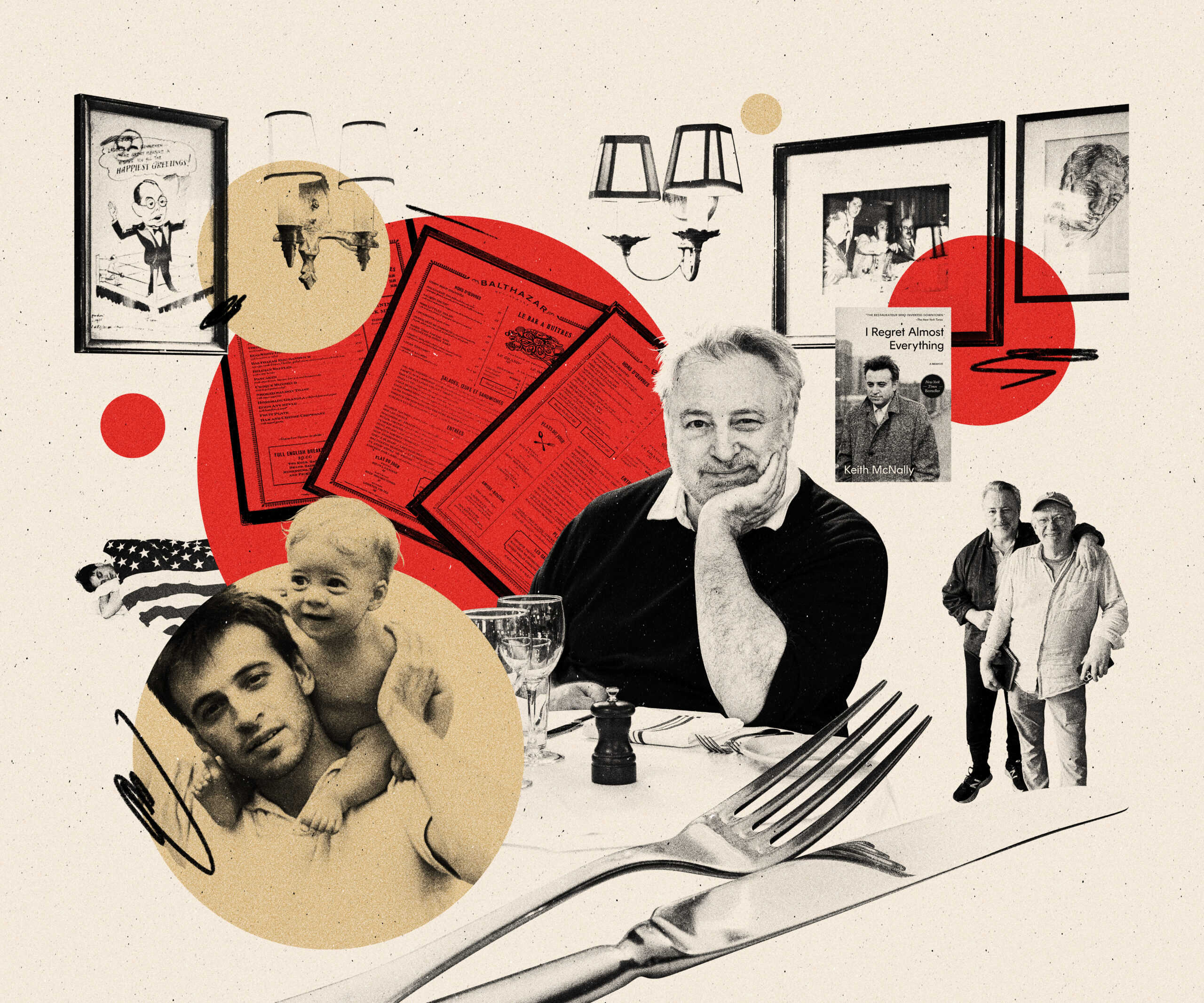
These days, McNally is busy writing a play, which he tells us is “moving at a snail’s pace.” And he continues to rework his memoir, polishing the prose to become “crisper and tighter with fewer adverbs and adjectives” and incorporating more stories, especially of his personal life.
Although McNally spends hours every day writing, he struggles with a certain aspect of the process: “Unfortunately, there’s a conflict between the person I want to be and the person I know I am,” he shares with us. “My book falls between the two. But surely, most people feel a similar division within themselves. The people I truly admire don’t seem to have it.”
Since his stroke, McNally tells us, he is touched by the smaller things in life, like acts of kindness or unexpected encounters. “I was quite down when leaving Cafe Luxembourg a month ago,” he shares. “And a complete stranger who was entering as I was leaving recognized me and, without being effusive, gently told me how much she liked the book. The understated manner in which she complimented the book meant the world to me.”
So for now, McNally will carry on running his restaurants and making his opinions known. More than 50 years ago, he came to the United States without a firm plan, and today, he’s one of the country’s leading restaurateurs. In many ways, he has been living the American dream — albeit in his own irreverent way: “Happenstance might have made me an Englishman, but I chose to be a New Yorker,” McNally concludes. “And, hopefully, I’ll die as one, too.”